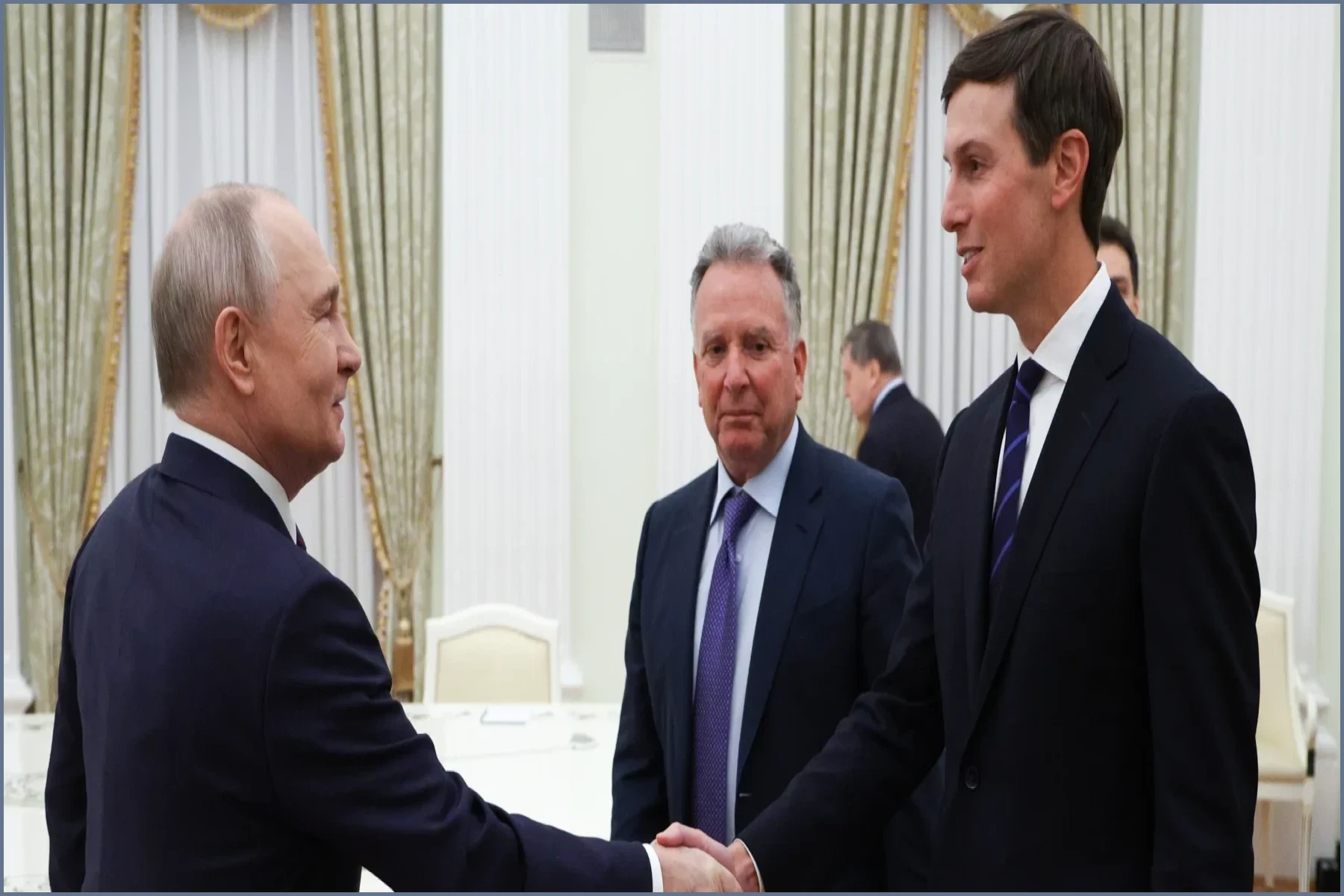
U.S. President Donald Trump's envoys, Jared Kushner and Steve Witkoff, met with Russian President Vladimir Putin at the Senate Palace in the Kremlin on Thursday. The high-level meeting occurred as Washington seeks to generate new momentum in peace efforts following two days of U.S.-mediated negotiations between Russian and Ukrainian delegations in Abu Dhabi, the capital of the United Arab Emirates.
The Abu Dhabi talks, which concluded on Wednesday, represented the first direct discussions between representatives from Moscow and Kyiv in nine months, a period during which the push for peace had largely stalled. While the two days of negotiations did not yield a major breakthrough, the delegations reached an agreement to conduct a large-scale prisoner swap. The exact number of individuals to be exchanged remains to be announced. Kushner noted that while the delegations agreed on many of the principles, they remain apart on some of the methods required to accomplish a lasting peace.
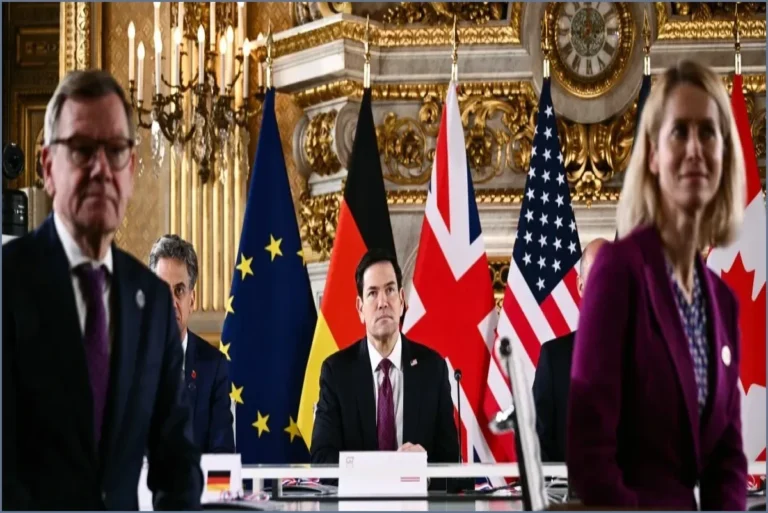
Following their two-hour session with Putin, the U.S. envoys were scheduled to fly to Dublin, Ireland, to meet with Ukrainian President Volodymyr Zelenskyy as the conflict approaches its five-year mark. Kushner stated that a primary goal of the meeting with the Russian leader was to obtain his blessing for European representatives to participate in the talks, which are currently examining the continent's broader security arrangements. The United States and President Zelenskyy are pushing for Europe to appoint a single negotiator to engage with Moscow.
However, Moscow has expressed strong opposition to the involvement of European countries in direct negotiations, complaining that these nations are financing and supplying Ukraine's military effort. Conversely, many European nations remain deeply concerned about Russia's conduct and its broader intentions on the continent. Many in Europe view the inclusion of Moscow in discussions regarding postwar European security as an unwelcome concession to Putin, who has consistently described NATO's eastward expansion as a primary security threat to Russia. Putin has demanded that the trans-Atlantic alliance's troops be withdrawn from Russia's borders. Some analysts suggest that negotiators may be considering granting Russia concessions on NATO's strategy in exchange for peace in Ukraine, a possibility that has alarmed European leaders.
During the meeting, Putin reaffirmed to the U.S. envoys that any European troops sent to Ukraine following a potential ceasefire would be considered absolutely unacceptable. He stated that Russia would regard such a deployment as a security threat and a legitimate military target, adding that, in such an event, the war would resume immediately.
President Zelenskyy is currently in Dublin for a meeting of more than 40 European countries, which also includes NATO Secretary-General Mark Rutte. Speaking late Wednesday, Zelenskyy remarked that the political landscape in Europe could change in 2027, noting that changes are already occurring in the United States. While he called the proposed prisoner exchange a positive step, he insisted that Ukraine will not surrender Russian-occupied territory in return for peace. Russia and Ukraine have occasionally swapped prisoners, but both sides remain far apart in their terms for accepting a settlement.
Amid these diplomatic negotiations, fighting continues along the 1,200-kilometer, or approximately 750-mile, front line. Russia’s larger army has been held back by persistent Ukrainian resistance, while Moscow’s drone and missile strikes on Ukrainian energy facilities have disrupted heat, electricity, and water supplies to cities, sapping public morale in what Kyiv describes as the weaponization of winter. The Russian Defense Ministry reported that its air defenses downed 71 Ukrainian drones overnight and claimed to have struck a drone-manufacturing plant in Kyiv, along with three other facilities producing missile fuel and drone components in the area surrounding the Ukrainian capital. The Ukrainian air force reported that Russia launched missiles and 123 drones, 73 of which were jet-powered, at Ukraine overnight, with hits recorded at 17 locations.
President Zelenskyy also reported on Thursday that Ukraine is experiencing another slowdown in the U.S. Starshield system, the military-grade version of the Starlink satellite internet service that the country relies on for defense. Military units have recorded significant disruptions, including speed restrictions that limit Ukrainian drones to 161 kph, or 100 mph. Zelenskyy stated that a military investigation established these restrictions were not random errors. Ukraine uses Starlink and Starshield for intercepting Russian drones and launching its own strikes. Last month, similar limits on drone speeds severely disrupted operations and alarmed Kyiv officials, who fear U.S. support could diminish. Elon Musk previously acknowledged that SpaceX had throttled the Starlink service in Ukraine for about a week, stating the system was not intended for offensive strikes against Russia. Zelenskyy noted that the speed limits cover operations in Russian-occupied parts of Ukraine and that Kyiv is seeking clarification from U.S. officials, stating that if decisions are being made that treat Ukrainian territory as if it is not Ukrainian, it indicates a concerning direction for the conflict.
In a separate development, a Russian serviceman was killed in St. Petersburg early Thursday when his vehicle exploded, according to Russia's Investigative Committee, the country's main criminal investigation agency. The committee did not identify the victim or specify who was responsible for the bombing. The Fontanka news outlet reported that the victim was a colonel and that a bomb in his car exploded as he drove off. Several senior Russian military officers have been killed by bombings and other attacks that Moscow blames on Ukraine, and Kyiv has claimed responsibility for some attacks on Russian soil.