Taiwan and Japan are facing significant uncertainty regarding the delivery of critical military hardware as they find themselves in a competitive queue for U.S. weapon systems. Taiwan, which was offered four different explanations in May for delays regarding a $14 billion arms package—including Patriot PAC-3 interceptors and NASAMS air defense systems—has yet to receive a concrete delivery date. Similarly, Japan has been informed by the U.S. government that the delivery of 400 long-awaited Tomahawk cruise missiles will be delayed by two years to accommodate drawdown demands stemming from the current war in Iran.
The root of this issue is a finite supply of munitions compounded by escalating global needs. Both Taipei and Tokyo are effectively waiting behind Ukraine and the resupply requirements for the conflict in Iran. While Lockheed Martin exceeded production records by manufacturing over 500 interceptors in 2024, the U.S. military expended nearly 1,500 Patriot interceptors during the Iran conflict alone. For the upcoming fiscal budget, the U.S. Army has requested over 2,700 interceptors, a substantial increase from the 357 previously funded. Taiwan’s order of 102 interceptors and Japan’s requirements are included within this total, highlighting the significant gap between current production capacity and actual defense needs.
This reliance on U.S. supply chains is being closely monitored by Beijing. Chinese military and political leaders are assessing whether they can deplete U.S. and allied stocks faster than they can be replenished. The logistical challenges are further underscored by the retooling of the AUKUS initiative in May, which acknowledged the U.S. inability to produce new submarines for Australia. Experts suggest that simply increasing funding is no longer the primary solution; rather, the challenge lies in accelerating the construction timeline for new production capacity, which currently remains a long-term goal.
Innovative approaches in the private sector offer a potential roadmap for improvement. The firm Hadrian, for example, invested $1.5 billion in private capital before securing a $900 million contract from the Navy, demonstrating a model of prioritizing capacity development ahead of government demand. The normal sequence is government demand first, then new capacity being developed. Contracts are awarded before firms invest in facilities, machines, and the people who will do the work. Flipping that model on its head could shorten the time between a shortage and the production to address it by years. Anduril has also reported a 50 percent decrease in delivery times by scaling up machine shops. On the international front, Japan is playing a key role by producing PAC-3 interceptors under license at Mitsubishi Heavy Industries. Though production is currently bottlenecked by a shortage of Boeing seekers—which are not expected to be produced in sufficient quantities until 2027—Japan and the U.S. are negotiating joint production of the PAC-3 MSE to mitigate these constraints.
To address these systemic delays, observers recommend that Washington develop a surge production roadmap involving allied industries in Japan, Australia, South Korea, and Taiwan. How quickly a country can replenish its arms is a key question of deterrence. Taken together, there’s a rough blueprint for quickly addressing production constraints. The United States can encourage the private-sector-first, public-sector-later approach Hadrian took to financing production, but only for already-approved suppliers on both sides of the Pacific. Such a strategy would focus on essential components like seekers, rocket motors, and castings. Ultimately, allies are calling for transparency, demanding that the Pentagon provide official, on-the-record delivery timelines for all funded systems, ensuring that both Taipei and Tokyo can accurately assess their defensive posture.
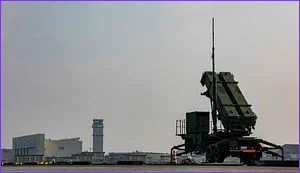
Service members with the Japan Air Self-Defense Force (JASDF) 2nd Air Defense Missile Group, set up the MIM-104 Patriot missile system during Patriot Advanced Capability-3 (PAC-3) deployment training at Marine Corps Air Station Iwakuni, Japan, Aug. 29, 2017.
You have reached the limit of 2 free articles this month.