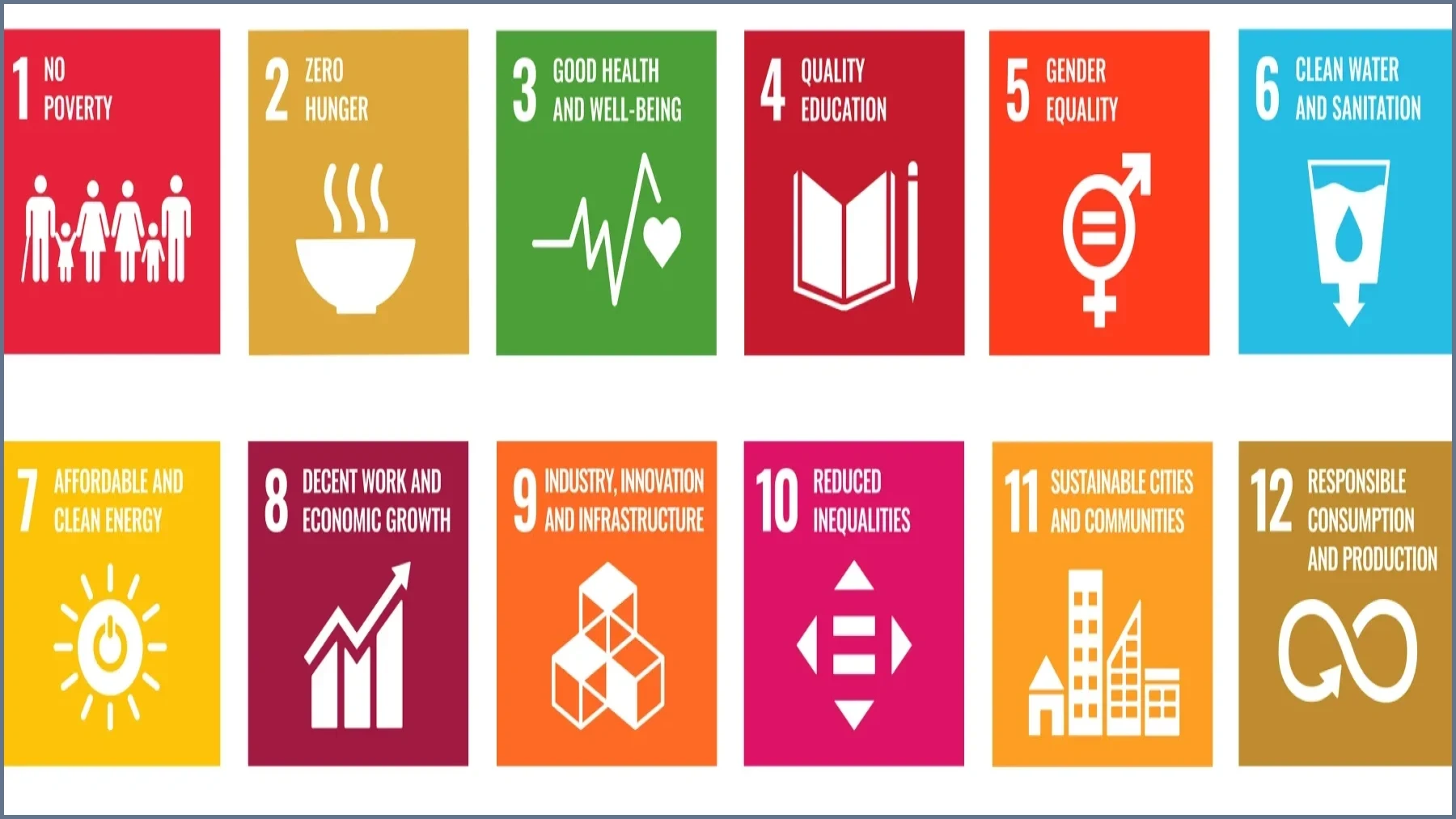
In September 2015, global leaders established an incredibly ambitious agenda designed to transform the world over the next fifteen years. The United Nations' Sustainable Development Goals (SDGs) outlined 17 overarching goals and 169 specific targets to be achieved by 2030. The list of priorities was vast and comprehensive, including:
No povertyZero hungerQuality education for allGender equalityClean water and sanitationReduced inequalitiesPeace, justice, and strong institutionsA decade after those promises were made, the 2030 deadline is rapidly approaching, and the global community is nowhere near reaching its targets. According to the United Nations' own assessments, the slow rate of progress raises fundamental questions about whether these goals were too unrealistic from the outset, whether any can be met in time, and if the entire framework should be viewed as a failure if the targets are missed.
While achieving the SDGs is not inherently impossible, doing so would require rates of progress that are historically unprecedented, according to Charles Kenny, a senior fellow at the Center for Global Development in Washington, D.C. Kenny notes that meeting these targets would demand incredibly dramatic global policy changes far beyond what even the fastest-improving nations have managed in the past.
He points to the goal of zero poverty as a prime example. While there is absolutely no moral justification for extreme poverty, Kenny explains that given the current global system and political realities, expecting to eliminate it entirely by 2030 was highly optimistic. However, experts emphasize that the goals themselves are not to blame; rather, the actions of governments have failed to match their rhetoric. Kenny points out that heads of state signed these agreements but returned home without implementing the policies necessary to accelerate progress.
Wealthier nations had several avenues to speed up development, such as increasing foreign aid, expanding trade opportunities, boosting private investment in developing economies, and permitting greater migration. Instead, many of these indicators have either flattened or reversed. Despite this, Kenny cautions against measuring success purely by whether a country is on track to hit the exact targets, as doing so can minimize the substantial progress that has occurred.
This perspective is shared by Thoai Ngo, Professor and Chair of Population and Family Health at the Columbia Mailman School of Public Health in New York. Ngo highlights that child mortality rates continue to decline annually, life expectancy is rising, and school enrollment is growing globally. He also points to the cascading benefits of gender equality, noting that keeping more girls in school has directly contributed to a reduction in child marriages and overall improvements in women's health.
Similarly, Shirin Malekpour, an associate professor of sustainability governance at Monash University in Melbourne, Australia, views the SDGs as vital facilitators of change. She argues that the goals have established a unified global direction, fostered novel cross-sector collaborations, and significantly improved international data collection and measurement systems.
Sakiko Fukuda-Parr, a professor emerita of international affairs at The New School in New York, agrees that evaluating the SDGs strictly through numerical scorecards misses their broader purpose. While missed targets indicate that global actions have been inadequate to match humanity's aspirations, she argues that having these benchmarks remains essential for driving action.
Fukuda-Parr observed this localized impact firsthand during a visit to Okayama, Japan, in September 2026. Designated by Japan as an "SDGs Future City" in 2018, Okayama has integrated the UN framework into everyday community life. Local schools, universities, non-profits, businesses, and municipal governments collaborate to build sustainable businesses, improve community health, and increase civic participation. At this grassroots level, Fukuda-Parr notes, the SDGs have succeeded as a powerful social and political catalyst rather than just a set of statistics.
However, the broader international landscape has presented severe obstacles. A succession of global crises has placed immense pressure on development efforts, according to Andrew Shepherd, a senior research associate at ODI Global and director of the Chronic Poverty Advisory Network in the United Kingdom. The COVID-19 pandemic, localized wars that drove up the cost of critical materials and fueled inflation, and the varied regional impacts of climate change have all disrupted progress. Shepherd points out that while many individuals managed to escape poverty over the last decade, these compounding crises have forced many of them back into extreme financial vulnerability.
Shepherd argues that policymakers must improve their ability to anticipate crises and focus on protecting vulnerable populations from falling back into poverty. Achieving truly inclusive economic growth that reaches marginalized groups, including women and people with disabilities, remains a significant challenge for governments. He notes that international agencies are generally highly effective at emergency response but tend to withdraw support too quickly during the recovery phase, leaving households financially vulnerable for years.
While expanding access to loans and financial services can aid recovery, Shepherd warns that it also introduces significant risks. In Bangladesh, where microfinance was pioneered, over-borrowing has become a major concern. He stresses that while digital finance and microloans are critical tools, governments must implement strong safeguards to prevent low-income families from accumulating unsustainable debt.
The need for preventive action is also critical for environmental and systemic goals, according to Ngo. He emphasizes the urgent need for greater investment in climate resilience, disease surveillance, community infrastructure, and agricultural systems. Currently, ecosystems and biodiversity continue to degrade, and ongoing conflicts are actively erasing previous developmental gains.
The statistics regarding food security and conflict are particularly stark. While chronic hunger metrics showed temporary improvements, 2.1 billion people faced moderate or severe food insecurity in 2025—representing an increase of 527 million people compared to 2015. In conflict-affected Western Asian countries, including Palestine, Yemen, and Syria, undernourishment continues to rise. By mid-2025, forced displacement reached 117 million people, civilian deaths from conflict remained elevated, and the global refugee ratio had more than doubled since 2015.
Furthermore, ecological indicators show a worsening trend. More than 48,600 species are currently threatened with extinction, and global resource consumption has reached unprecedented levels, characterized by record amounts of electronic and hazardous waste. Despite these severe setbacks, Kenny maintains that coordinated public policies and global cooperation show that progress is possible, asserting that there remains ample reason to continue striving toward the goals.
Meanwhile, the world scene hasn't helped. Repeated global crises have put pressure on the SDGs.
Kamala Thiagarajan is a freelance journalist based in Madurai, South India. She reports on global health, science and development and has been published in The New York Times, The British Medical Journal, the BBC, The Guardian and other outlets. You can find her on X: @Kamal_t.