Ukrainian defense ministry sources report that military forces continue to face operational disruptions on the Starlink satellite network, contradicting recent assertions by U.S. President Donald Trump that service limitations had been removed.
According to ministry officials, military drones traveling at speeds of 161 km/h (100 mph) are consistently losing their satellite connection. Defence personnel, who closely monitor both the civilian Starlink network and its secure military variant Starshield, stated there is currently no technical confirmation that the restrictions have been removed on the battlefield.
The ongoing disruptions follow comments made by President Trump on Thursday, where he stated that SpaceX founder Elon Musk had restored full connectivity. Trump had previously denied instructing Musk to restrict satellite access for the Ukrainian military before publicly declaring that Musk had "put it back." The Wall Street Journal reported that Trump expressed frustration to Musk regarding the capped satellite speeds during a private conversation, after which performance reportedly improved closer to standard operational levels. However, Trump declined to clarify whether he explicitly requested Musk to end the throttling.
The technical problems first surfaced last week when Kyiv reported that uplink speeds to low Earth orbit satellites were intentionally constrained. The band limit caused any Ukrainian drone exceeding 100 mph to suffer an immediate drop in connectivity, significantly impairing defensive coordination and offensive drone missions. Musk previously denied responsibility for the service slowdown, pointing out that Starshield is operated under U.S. military oversight and suggesting Pentagon involvement. In response, the White House has repeatedly denied placing deliberate limits on satellite services used by Ukrainian forces.
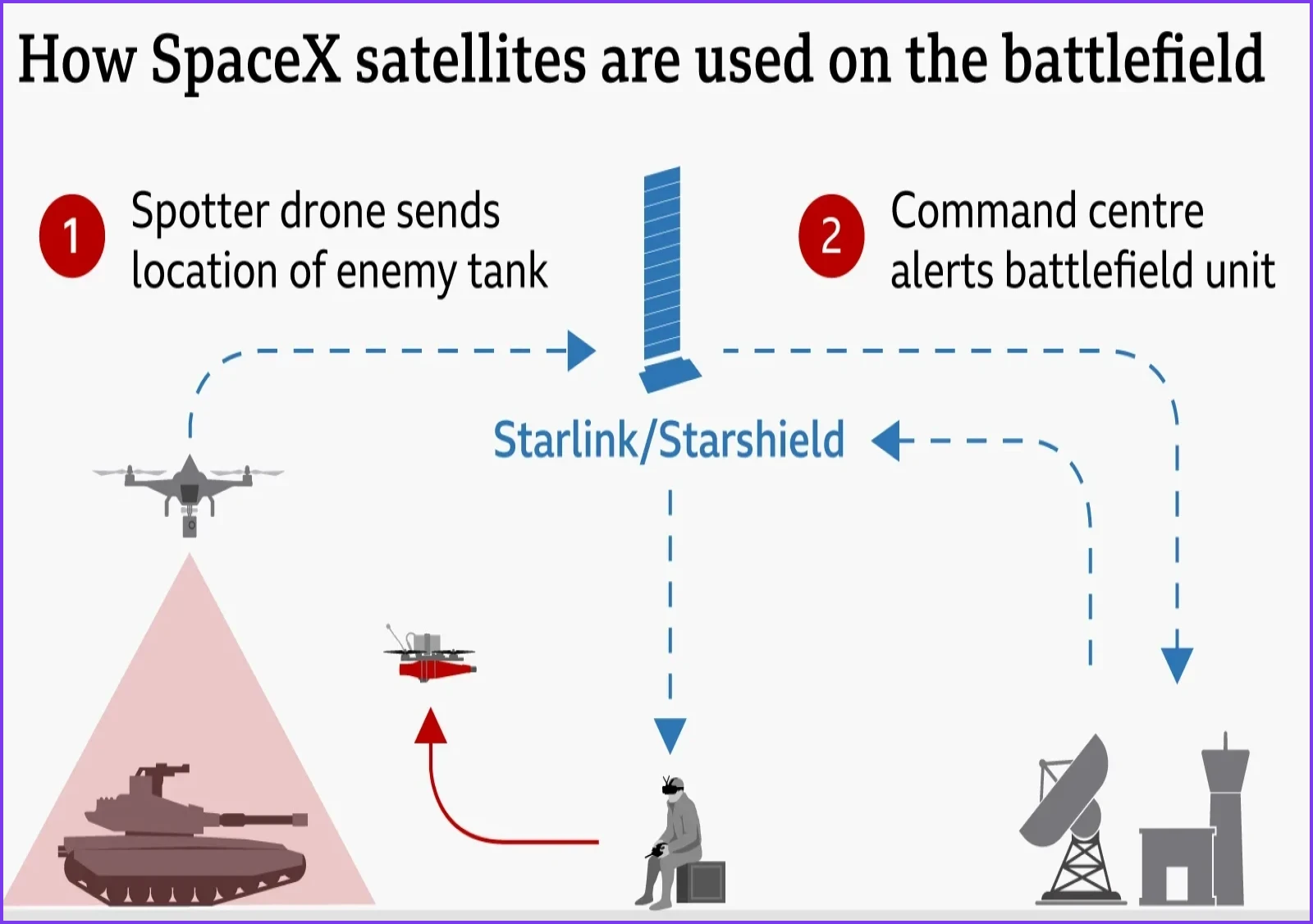
Satellite connectivity remains vital for Ukrainian battlefield operations, supported by a constellation of approximately 10,000 satellites. While standard Starlink serves civilian and general military communication, the higher-security Starshield platform allows drone operators to identify tactical targets in real time and pilot interceptor units. Russia is barred from using Starlink, meaning Ukraine does not rely on the satellite network when launching long-range missile strikes deep into Russian territory to target energy facilities.
The satellite connectivity controversy erupted alongside severe diplomatic friction between Trump and Ukrainian President Volodymyr Zelensky over Ukrainian attacks on Russian oil refineries. Trump criticized the strikes, claiming they forced global fuel prices higher, although energy market increases this year have primarily been driven by conflict involving Iran. Zelensky stated that Washington had threatened to halt intelligence sharing unless the refinery attacks ceased—a claim Trump denied. The disagreement escalated into public personal attacks, with Trump suggesting Ukraine should seek a new president and Zelensky questioning Trump's leadership abilities.
Speaking on Thursday prior to Trump's public remarks, Zelensky confirmed that normal satellite speeds had not been reinstated. He noted that he was waiting for an update from U.S. Secretary of State Marco Rubio, who had committed to providing clarification within roughly 48 hours.