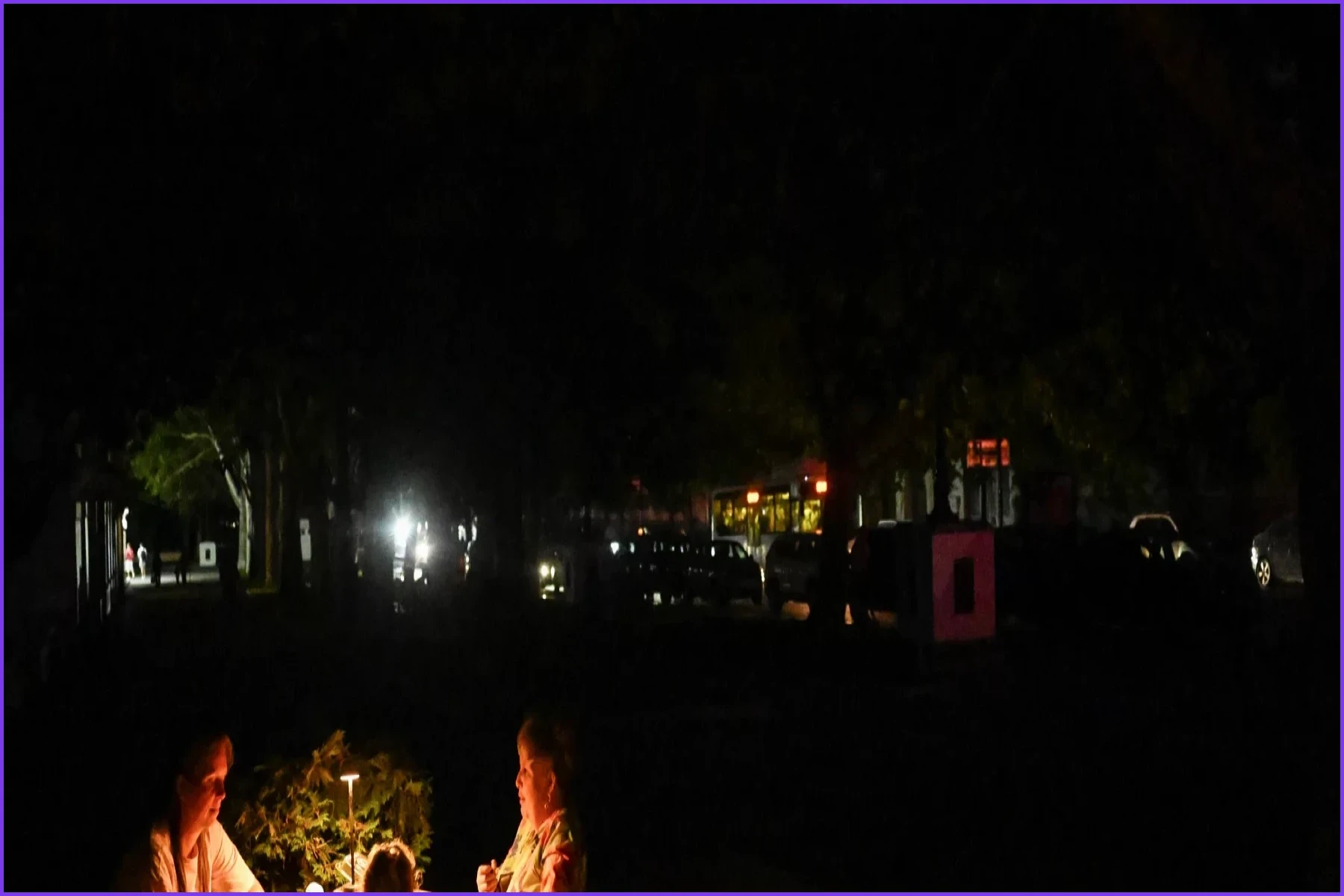
The Black Sea peninsula of Crimea, historically a bustling summer destination for families seeking beach getaways, has instead become a zone of severe disruption. A relentless campaign of Ukrainian drone strikes is systematically dismantling basic infrastructure, leading to widespread power outages, fuel shortages, and severed communication networks. The territory, which Russia seized during its initial invasion in 2014, is now facing unprecedented pressure that directly challenges Moscow's long-term control.
The impact on daily life for residents and visitors has been stark. Basic services are failing across the peninsula, which depends heavily on imports for its survival. On social media, a Russian resident described the deteriorating situation, noting that transportation is at a complete standstill, with no gasoline, fuel, or electricity available. She added that stores and banks have closed, nothing is functioning, and there is no water.
This escalating crisis has caught the attention of international military observers. Mark Montgomery, a retired U.S. Navy rear admiral who regularly travels to Ukraine to assist with military training, has been monitoring the situation closely. Montgomery pointed out that Russian President Vladimir Putin faces a severe logistical dilemma. He noted that it is impossible to sustain a massive population in a region with severely limited water, no fuel, and scarce foodstuffs, predicting that residents will eventually be forced to leave.
Since Russia's annexation of Crimea 12 years ago, the demographic makeup of the peninsula has shifted dramatically. Approximately 1 million Russian military personnel and civilians moved into the territory, while many Ukrainian residents fled. This influx has brought the current estimated population to around 2.5 million. Hanna Shelest, the head of security programs at the Ukrainian Prism think tank, explained that many Russian military families eagerly relocated a decade ago, purchasing properties and taking over homes left behind by fleeing Ukrainians.
For the Ukrainians who remained, life under Russian occupation is tightly policed. Shelest, who is based in the southern port city of Odessa, revealed the extreme measures used to suppress Ukrainian identity. According to Shelest, individuals face immediate arrest for speaking Ukrainian, possessing a Ukrainian computer keyboard, playing Ukrainian music, or displaying any other sign of Ukrainian identity.
While Ukraine has carried out sporadic strikes on Crimea in the past, its military campaign has intensified dramatically over the last two months. Rather than relying on traditional naval forces, Kyiv has leveraged cutting-edge technology to target Russian logistics. Ukraine's military reported that within a single month, it successfully struck more than 130 Russian vessels in the Sea of Azov and over 80 in the Black Sea. These daily attacks have focused heavily on the ships and ferries responsible for transporting essential goods like food and fuel from the Russian mainland.
Dmytro Pletenchuk, the spokesman for Ukraine's Navy, stated that Russia vastly overestimated its own naval power and failed to anticipate Ukraine's asymmetric tactics. Pletenchuk noted that while Moscow is now attempting to catch up to Ukrainian technology, it takes them six months to adapt, during which time Ukrainian forces continue to innovate. Consequently, he described Russia as being stuck in a "logistics dead end."
This technological shift has allowed Ukraine to effectively contest waters where it does not even field traditional naval ships. Montgomery described the Ukrainian Navy as the most successful in the world, achieving major victories without getting a single conventional ship underway. The historical context of this achievement is remarkable: Russia destroyed most of Ukraine’s naval assets during the 2014 annexation. When the full-scale invasion began in 2022, Ukrainian forces deliberately scuttled their own last major warship to prevent it from falling into Russian hands.
Despite having no traditional fleet, Ukraine fought back by launching mainland-based missiles, damaging or sinking more than two dozen Russian warships and submarines. This forced the Russian fleet to retreat from the western Black Sea to safer ports on the eastern side. Building on this success, Ukraine became the first nation to deploy highly advanced sea drones that operate both on and below the water's surface. Montgomery emphasized that these unmanned vessels are small, exceptionally difficult to track, and allow Ukraine to operate in the middle of inland seas even when Russia controls the surrounding coastline.
Although Russian forces maintain administrative and military control over Crimea, some Russian civilians have begun to depart. At the same time, Moscow has responded with its own damaging operations. The Russian Navy has targeted international cargo vessels carrying agricultural exports, such as corn, wheat, and sunflower oil, near the port of Odessa. A recent strike killed ten sailors, an escalation that Shelest noted has frightened away most international shipping. She emphasized that these targeted ships were not Ukrainian, but were targeted simply for visiting Ukrainian ports.
This blockading of sea routes comes at a critical time for Ukraine's heavily agrarian economy, which is currently at the peak of its harvest season. Deprived of its primary maritime export pathways, Ukraine is forced to rely on far less efficient land routes, threatening to deal another severe blow to its struggling economy.
Despite the success of the drone campaign, military analysts caution that Ukrainian ground forces are currently unable to launch a full-scale offensive to liberate Crimea. Ukrainian President Volodymyr Zelenskyy recently addressed this reality, stating that while the territory remains a vital part of Ukraine's history and identity, the immediate priority is preserving human lives rather than launching a costly ground assault. Meanwhile, Vladimir Putin, who initially celebrated the annexation of Crimea as a historic triumph, has remained notably silent regarding the mounting crises plaguing the peninsula.
Diners sit at an outdoor restaurant in Sevastopol, Crimea, on July 22. Ukrainian drone strikes are causing power outages, fuel shortages and cuts in cellphone service in the peninsula. Russia seized Crimea when it first invaded Ukraine in 2014, but now its hold on the territory is being challenged. Igor Ivanko/AFP via
People walk along the waterfront in Yalta, Crimea, on July 21. An estimated 1 million Russian troops and civilians have come to the territory since Russia captured it from Crimea in 2014. But daily life has become increasingly difficult due to Ukrainian drone strikes. Igor Ivanko/AFP via Getty Images hide caption