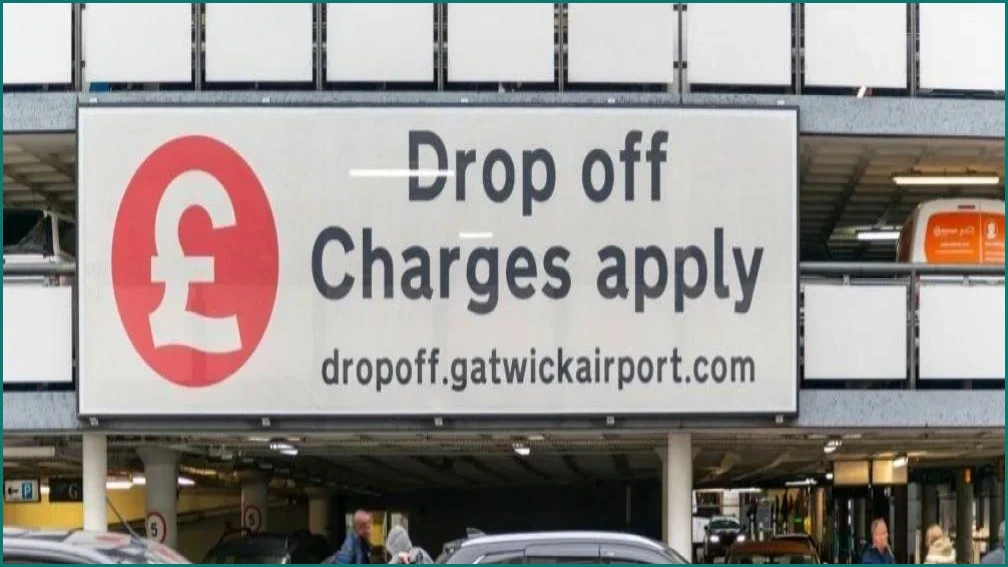
The UK government has announced a formal review of airport drop-off charges following a period of steep price increases across the country. According to recent analysis, fees at major UK airports have risen by an average of one-third since the summer of 2025. The Department for Transport confirmed the review, emphasizing that it is vital to ensure that travel remains accessible and that passengers are treated fairly. Officials have expressed a hope that airports will exercise restraint regarding further fee hikes, particularly in locations where public transport alternatives are limited.
Data highlights the scale of these increases, with drop-off charges at Gatwick and Stansted climbing from £7 to £10. Similar upward trends are visible elsewhere, as fees at Edinburgh Airport rose from £6 to £8.50, while Bournemouth, Leeds Bradford, and London City airports all increased their costs to £8. Research conducted by the RAC in July revealed that London City Airport, which only introduced these charges in 2026, is currently the most expensive on a per-minute basis, charging £8 for five minutes, or £1.60 per minute. Additionally, Belfast International Airport has increased its fee to £5 for a 10-minute window, a £2 rise compared to the previous year.
The RAC has been a vocal critic of these rising costs, describing the review as "music to the ears to drivers." Rod Dennis, a senior policy officer at the organization, noted that these fees are a growing source of frustration, with four out of five surveyed drivers labeling them a "rip-off" and only one in ten understanding the justification for the pricing. The RAC also pointed out that none of the top 10 airports in the European Union impose charges for dropping off passengers.
In response, the industry has defended the fees as a necessary component of their business models. Karen Dee, chief executive of Airports UK, argued that airports operate under different financial conditions than their international counterparts, noting that while many European airports are state-subsidized, UK airports are privately owned and subject to full commercial taxation. She maintained that airports provide a variety of travel options, including free drop-off points, and that a government review would confirm the effective use of these charges to manage traffic and air pollution. The Aviation Environment Federation has also supported the fees, suggesting they help reduce congestion. The government’s move follows a recent decision to scrap extra charges for parents sitting with their children on flights, part of a broader series of "everyday fixes" led by Prime Minister Andy Burnham to assist with household cost-of-living pressures.
Supporters of such charges also say they encourage travellers to use of more environmentally friendly modes of transport.