U.S. President Donald Trump has issued a stern warning of further military strikes against Iran, signaling a commitment to sustained action as the United States focuses on reopening the strategic Strait of Hormuz. Speaking at the Camp David presidential retreat in Maryland on Friday during a meeting with his Cabinet, President Trump emphasized his administration's goal to “win” in Iran, stating that the U.S. intends to hit the nation “very hard” until they reach a breaking point. He indicated that he expects U.S. military action to continue for some time.
White House press secretary Karoline Leavitt reinforced this stance on Friday evening, expressing the administration’s frustration. She charged that Tehran had signed a memorandum of understanding with the U.S. regarding a truce last month, only to quickly “broke it, shot at commercial ships, and killed American soldiers.” Leavitt stated that President Trump will not stand by and allow this behavior to occur, adding that Iran will continue to pay until they come to the table in a way the President deems meaningful.
The regional situation remains volatile, with multiple incidents reported over the weekend. On Saturday, Kuwaiti military officials confirmed they were responding to a new round of drone attacks. Maj. Gen. Saud Abdulaziz Al-Otaibi, spokesman for Kuwait's Defense Ministry, reported that the drones hit “a number of vital facilities,” including a government structure in the country's north. He confirmed there were no casualties in these attacks.
Tensions in the Strait of Hormuz have also spiked. The British Navy reported that a tanker was struck and another vessel experienced an explosion nearby on Friday and Saturday. The United Kingdom Maritime Trade Organization noted that an unknown projectile hit a vessel 11 nautical miles northeast of Lima, Oman, on Friday, causing damage to the engine room. A separate incident occurred on Saturday when a large splash and an explosion were reported close to another tanker while it was sailing 21 nautical miles northwest of Khasab city. Iran has repeatedly attacked vessels attempting to transit through the Strait of Hormuz without its authorization as part of its ongoing conflict with the U.S.
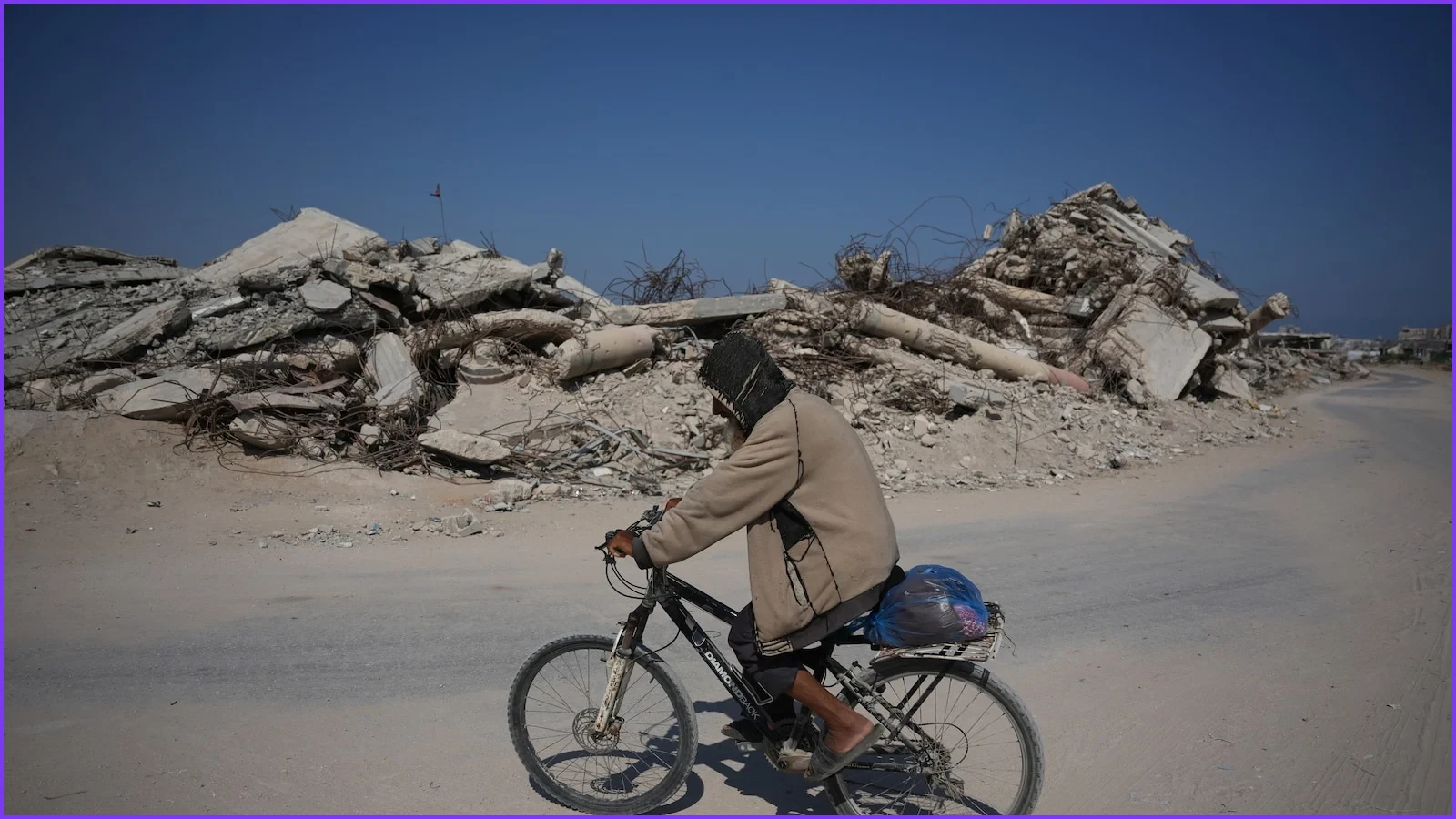
Elsewhere, the conflict in Gaza continues with intensity. Intense Israeli strikes on Friday night killed at least two people in central Gaza and injured dozens more, according to local health officials. These military actions followed evacuation orders issued by the Israeli military. An Israeli military official, speaking on condition of anonymity, stated the military was striking Hamas. This escalation occurs despite a prior agreement that called for Hamas to disarm and hand over power to an independent Palestinian administration, with Israel to withdraw and an International Stabilization Force to be deployed.
Additional regional developments include Houthi rebels forcing eight Saudi ships to reroute from the Bab el-Mandeb strait. Brig. Gen. Yahya Saree, the military spokesman for the Iranian-backed Houthis, announced a blockade on Saudi shipping, forcing vessels to change their route to the Cape of Good Hope around Africa. In southern Lebanon, Israeli forces set off explosions on Friday to destroy an underground tunnel network under the 12th-century Beaufort Castle, also known as Al-Shaqif. Israel claims the site, which was seized in May and recently added to the UNESCO World Heritage List over Israel’s objections, had been used by Hezbollah militants as a command center. Lebanon's President Joseph Aoun stated the operation sent “negative messages” ahead of upcoming talks in Rome, where Israeli and Lebanese negotiating teams are set to meet to continue hammering out a plan for Israeli withdrawal from southern Lebanon in exchange for Hezbollah’s disarmament.