President Donald Trump announced on Monday that he will scale back the Bears Ears and Grand Staircase-Escalante national monuments in Utah. This move revisits actions from his first term that were previously reversed, reigniting a contentious debate over the management of public lands.
The decision undoes proclamations from his predecessors who utilized the 1906 Antiquities Act to protect these sites, a law that grants presidents the authority to designate areas of cultural, historic, or scientific interest.
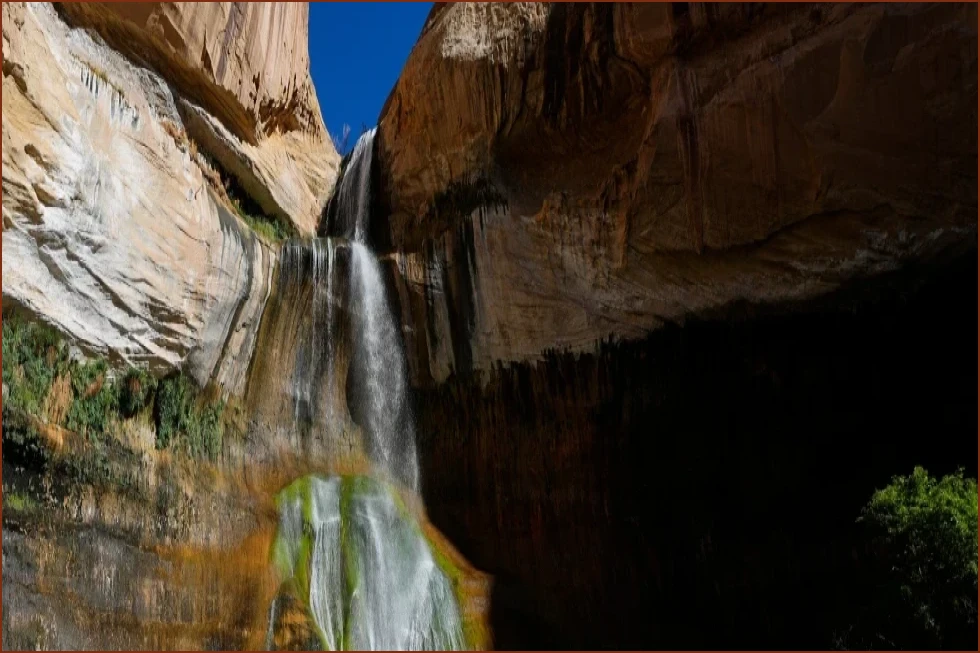
The back-and-forth nature of these designations highlights how national monuments have become a significant flashpoint in American politics. During his first term, Trump made only a handful of Antiquities Act proclamations, including the initial reductions of Bears Ears and Grand Staircase-Escalante. These sprawling Utah monuments contain stunning natural features and sites sacred to various Native American tribes.
Furthermore, Grand Staircase-Escalante holds significant coal reserves, while the Bears Ears area contains uranium deposits. During that same term, Trump also dedicated the Camp Nelson National Monument in Kentucky, which served as a Union Army hospital and a recruiting center for African American troops during the Civil War.
President Joe Biden, who succeeded Trump, had previously used the Antiquities Act to restore the full size of both Utah monuments, citing their spiritual, cultural, and prehistoric legacy. Biden also established 10 new monuments during his tenure, including a site commemorating a 1908 race riot in Springfield, Illinois, and a monument honoring Mamie Till-Mobley and her son, Emmett, a Black teenager who was tortured and killed in 1955.
Additionally, Biden created monuments in the mountains of California and on a sacred Native American site near the Grand Canyon.
Combined, the two Utah monuments previously spanned more than 3.2 million acres, an area nearly the size of Connecticut. Under the new order announced Monday, the total area is reduced to less than 303,000 acres, a more significant reduction than the one implemented during Trump's first term.
Trump framed the move as an effort to return land to the people. Proponents of the reduction have long argued that the previous protective boundaries were overly expansive and hindered the mining of essential minerals.
Utah officials, including Republican Governor Spencer Cox, applauded the order, arguing that the state should manage its own lands. Cox stated that the question has never been whether to protect these areas, but rather how to protect them best, and his office assured that the lands excluded from the modified boundaries would remain protected under existing federal and state laws.
However, the decision has faced sharp criticism from conservationists and citizens of local tribal nations.
Critics warn that the order disrespects tribal co-stewardship agreements—specifically the joint management agreement between tribal nations and federal agencies at Bears Ears—and opens the door to potential mining. Davina Smith-Idjesa, a citizen of the Navajo Nation and co-chair of the Bears Ears Inter-Tribal Coalition, stated that their connection to the place cannot be erased by the stroke of a pen.
While environmental groups argue that the Antiquities Act is a one-way road intended only for the creation of monuments, there is a long history of presidents diminishing them. According to a National Park Service database, presidents have issued more than a dozen proclamations since 1912 that reduced the size of monuments.
For instance, Woodrow Wilson reduced the acreage of what is now Olympic National Park in Washington state by roughly half, and Harry Truman did the same for the Santa Rosa Island National Monument.
Dwight Eisenhower was the most active in this regard, diminishing six monuments, including Arches in Utah, Great Sand Dunes in Colorado, and Glacier Bay in Alaska, all of which have since become national parks.
The distinction between national parks and national monuments is significant; while national parks are established by Congress, most of the more than 100 national monuments were created by presidential proclamation. These sites are governed by various agencies, including the National Park Service, the Bureau of Land Management, or the National Oceanic and Atmospheric Administration. A monument designation provides sweeping protections that ban drilling, mining, and new construction.
In contrast, the U.S. Forest Service, which manages 300,000 square miles of land, operates under a mandate to manage renewable resources like timber and water while allowing for the leasing of nonrenewable resources like oil, gas, and coal. National parks, meanwhile, are governed by the 1916 Organic Act, which mandates the conservation of scenery, nature, history, and wildlife.
The Antiquities Act was originally signed by President Theodore Roosevelt following a generation of lobbying by scientists and educators who sought to protect sites from commercial artifact looting. On September 24, 1906, Roosevelt used the act to designate Devils Tower in Wyoming as the first national monument. Since then, all but three presidents have utilized the act to protect unique landscapes and cultural resources across the United States.