The U.S. national security and intelligence apparatus is undergoing a profound transformation as President Donald Trump wages an ongoing campaign against what he terms the "deep state." Decades after the intelligence community radically reshaped itself to fight global terrorism following the September 11, 2001 attacks, the current administration is aggressively restructuring these agencies.
Trump has vowed to "clean out all of the corrupt actors" within the national security infrastructure, a move that critics argue is dismantling critical systems established to protect the nation.
This dramatic overhaul contrasts-sharply with the post-9/11 era, when the intelligence community rapidly adapted to counter non-state terrorist networks. John Sipher, who spent nearly three decades at the CIA focusing on Russian operations, recalled that tracking and hunting individual terrorists was a massive departure from their traditional training.
To meet the threat, the CIA and other agencies developed new technologies, massive data collection systems, computer processing power, drones, and advanced communications. These efforts yielded significant successes, including locating Osama bin Laden in 2011, dismantling al-Qaida, and later defeating the Islamic State.
The war on terror also led to a massive expansion of the federal bureaucracy. The Department of Homeland Security was created, eventually growing to employ a quarter-million people, making it the second-largest government agency behind the Pentagon. Military and intelligence budgets soared, and the nation has not experienced another domestic attack on the scale of 9/11, which killed nearly 3,000 people.
The human cost of this era was marked early on by the loss of CIA officer Johnny Michael Spann, 32, the first American killed in Afghanistan after the 2001 attacks, whose paramilitary forces grew substantially as the agency joined the conflict.
Now, 25 years after those attacks, the national security landscape is being reshaped by domestic political friction. Author Tim Weiner, who has covered the U.S. intelligence community for decades and recently published "The Mission: The CIA in the 21st Century," warns that the post-World War II security architecture is being systematically dismantled.
Weiner asserts that Trump has deliberately swung a "wrecking ball" through these systems, replacing experienced career officials with loyalists.
He specifically pointed to appointments like Pete Hegseth at the Pentagon, Kash Patel at the FBI, and John Ratcliffe at the CIA, describing them as sycophants who will tell the president what he wants to hear rather than what he needs to know.
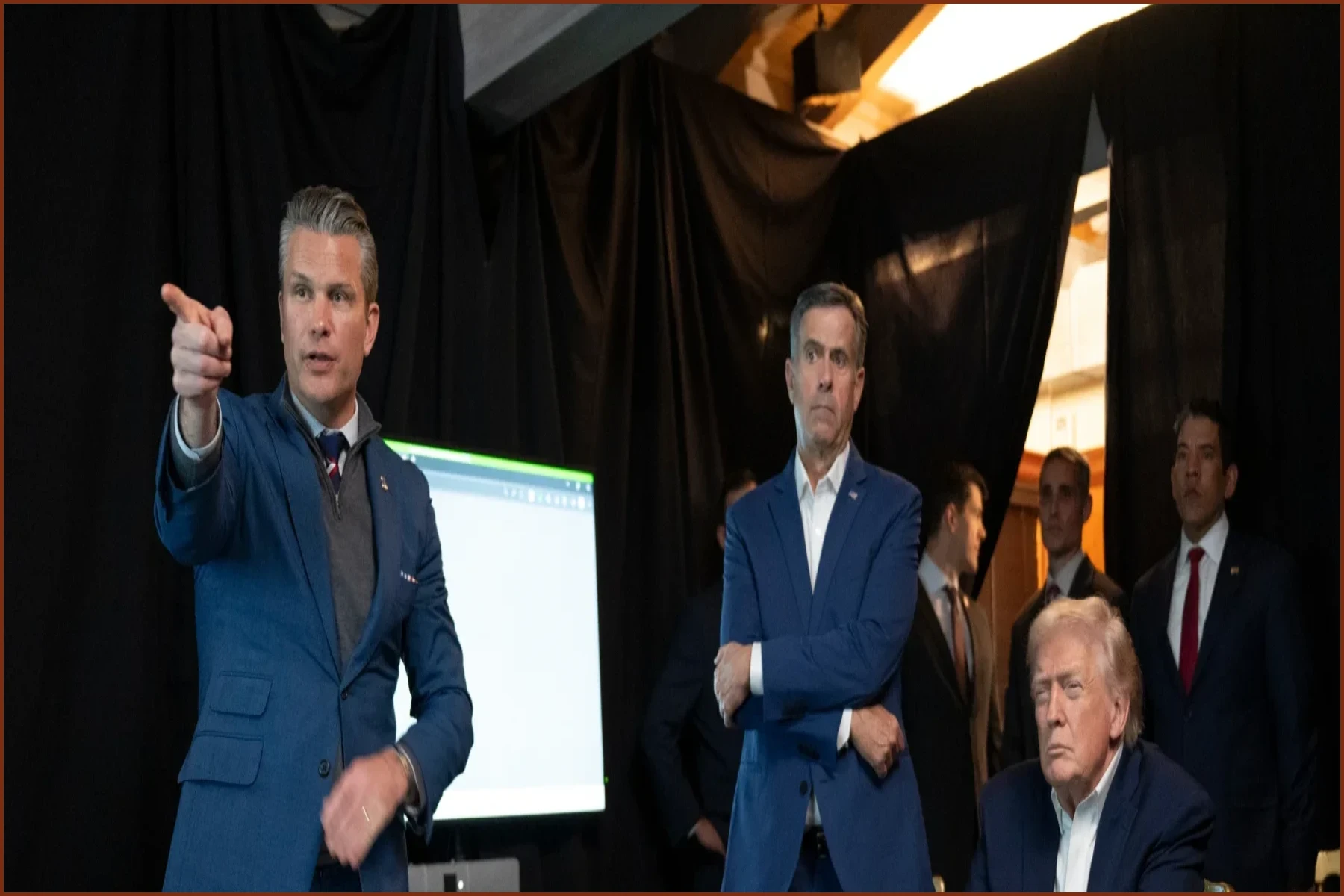
The practical effects of these leadership choices were visible on January 3, when Trump monitored U.S. military operations in Venezuela from Mar-a-Lago alongside Hegseth and Ratcliffe. The operation resulted in the capture of Venezuelan leader Nicolas Maduro, who was transported to New York to face criminal charges. Despite such high-profile operations, the internal purge of the intelligence community has driven out numerous career professionals.
While some officials have been dismissed, others have chosen to resign. Steven Cash, who served in multiple prominent national security roles across the CIA, the Senate Intelligence Committee, and the Department of Homeland Security, resigned at the start of Trump's second term. Cash stated that he could not in good conscience continue working for a president who intended to turn the collective work of career intelligence officers against American citizens.
Cash now leads "The Steady State," a private advocacy group consisting of more than 400 former national security officials who served under both Republican and Democratic administrations and now openly criticize Trump's policies.
Among the primary targets of the administration's restructuring is the Office of the Director of National Intelligence (DNI). Established after 9/11 to coordinate the activities of what are now 18 separate intelligence agencies, the DNI was originally envisioned as a lean coordination unit. Cash recalled early jokes that the director would only receive a deputy, an 18-chair conference table, and a high-end coffee machine.
Instead, the office quickly ballooned, drawing frequent criticism for failing to function as intended and prompting periodic calls for its elimination. Trump has significantly cut back the DNI and other national security agencies as part of broader government reductions, a move Cash describes as highly damaging, claiming the intelligence community "took a dive off the cliff in 2025."
The focus of U.S. intelligence has also shifted away from counterterrorism. Marc Polymeropoulos, a former CIA officer with extensive experience in the Middle East, noted that counterterrorism has been relegated to "second fiddle" behind geopolitical threats from China and Russia.
Furthermore, the Trump administration's emphasis on border security and narco-trafficking has redirected resources toward the Americas. Polymeropoulos expressed concern that counterterrorism will remain a lower priority until another mass casualty event occurs.
Beyond structural cuts, former officials express deep concern over the politicization of their work. Sipher warned that the administration's "deep state" narrative has fueled partisan anger, creating a dangerous perception that career intelligence services serve partisan political interests rather than the nation. Additionally, Weiner emphasized that Trump's antagonistic approach to foreign allies has severely damaged international intelligence sharing.
The CIA, which employs only about 20,000 people, cannot cover the globe alone and relies heavily on partnerships with countries like the United Kingdom, the Netherlands, and Saudi Arabia. Weiner warned that such critical assistance is far harder to secure today than it was in the years following the 9/11 attacks.