The Trump administration’s Department of Health and Human Services (HHS) has canceled nearly all federal grants for the Teen Pregnancy Prevention Program, amounting to $66 million, with immediate effect. The decision impacts dozens of organizations nationwide, many of whom had already spent months adapting their programs to meet new federal guidelines.
In late June, HHS terminated all but a dozen of these five-year grants, which still had two years remaining. The official reason provided for the cancellations was “Misalignment with agency priority, specifically normalizing sexual activity for minors,” according to a list of terminations obtained by NPR. The affected grantees span a wide range, from public health departments and universities to affiliates of Planned Parenthood and Bethany Christian Services.
Among those stunned by the sudden cut was Healthy Futures of Texas, an organization providing sexual health education in community centers, school districts, and juvenile justice and faith communities across San Antonio, Dallas, and the Rio Grande Valley. Its annual $2 million grant was canceled two weeks ago.
Ginger Mullaney, President and CEO of Healthy Futures of Texas, expressed her frustration. Last July, the Trump administration had issued a notice requiring program materials to reflect “the immutable biological reality of sex, not radical gender ideology,” and to avoid promoting “anti-American ideologies such as discriminatory equity ideology.” Mullaney’s organization spent months revising 11 different programs to comply with these executive orders. “After all of that work, we were re-awarded and all of our programs have been deemed in compliance,” Mullaney stated, adding that they had submitted progress reports and even had a program adaptation approved in November.
The funding cut means 13 employees at Healthy Futures of Texas are losing their jobs, and the organization may be forced to reduce its services. Mullaney lamented the impact, stating, “I’m frustrated that these are lives that were being changed — there’s generational impact and social and economic mobility for our communities using programs that are proven and demonstrated to be effective.”
The Teen Pregnancy Prevention funding stream was established by Congress in 2010 to implement programs proven effective in reducing teen pregnancy and promoting healthy sexual behaviors. Nicholas Mark, a sociologist at the University of Wisconsin Madison, noted that these programs were “evaluated using randomized controlled trials, which are really the gold standard for understanding the effectiveness of public policy.”
Despite a dramatic decline in the U.S. teen pregnancy rate since the 1990s, rates remain higher than in peer countries. Teen parents face significant challenges, including lower likelihood of earning a high school diploma and reduced lifetime earnings. One study estimated the cost to taxpayers at $9 billion per year.
The grants have been a consistent target of the Trump administration and conservative groups like the Heritage Foundation. All grants were previously canceled during President Trump’s first term, though funding was restored after grantees filed lawsuits. Earlier this year, President Trump’s budget request called for eliminating the program, arguing, “There is no evidence that these specific programs have contributed to this historic decline in teen pregnancy, which is now at an all-time low. Moreover, TPP issues grants to problematic organizations like abortion clinics that waste American taxpayer dollars on abortion services and promote radical leftist ideology.” This stance came even as President Trump signed $101 million in funding for the program into law earlier the same year.
Last week, Senate and House Democrats sent letters to Health Secretary Robert F. Kennedy Jr., demanding the reinstatement of the funding. The Department of Health and Human Services did not respond to NPR’s multiple requests for comment regarding the cancellations.
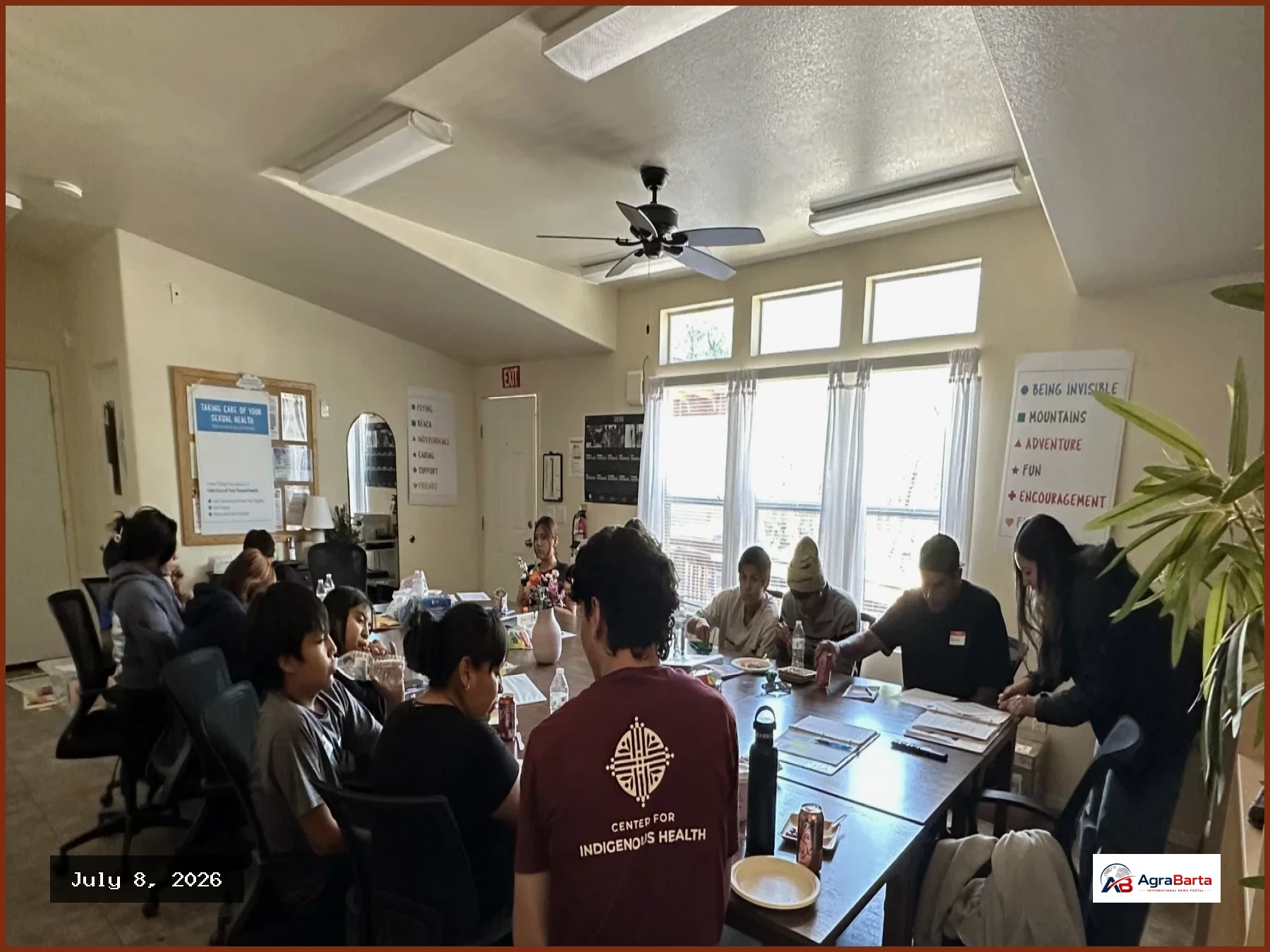
The impact of these cuts is already being felt. Paige Preston, an 18-year-old from Tuba City, Arizona, part of the Navajo Nation, attended a LiFT workshop earlier this year. This evidence-based program, supported by federal grants and run by Hózhǫ́ Horizons from the Johns Hopkins Center for Indigenous Health, helps teens and a trusted adult learn about relationships, safe sex, and pregnancy prevention. Preston, who attended with her sister, learned about creating safe spaces, expressing affection, and various birth control options beyond condoms. She emphasized the importance of this information, noting that several peers in her high school became pregnant and that American Indian and Alaska Natives have the highest teen pregnancy rate among racial and ethnic groups nationally. Preston, now chair of the Hózhǫ́ Horizons Youth Council, was set to volunteer for another LiFT workshop this summer, but it has been canceled due to the funding cuts.
Sociologist Nicholas Mark criticized HHS’s stated reason for the cancellations, calling the framework of “normalizing sexual activity for minors” “bizarre.” He argued, “In a world where teens have smartphones, teens are surrounded by sex and such easy access to sex and sexual imagery, sexual iconography… It seems silly to think that having a source of verifiable, trusted information on safe sex would be worse than the information environment that people are already steeped in.”