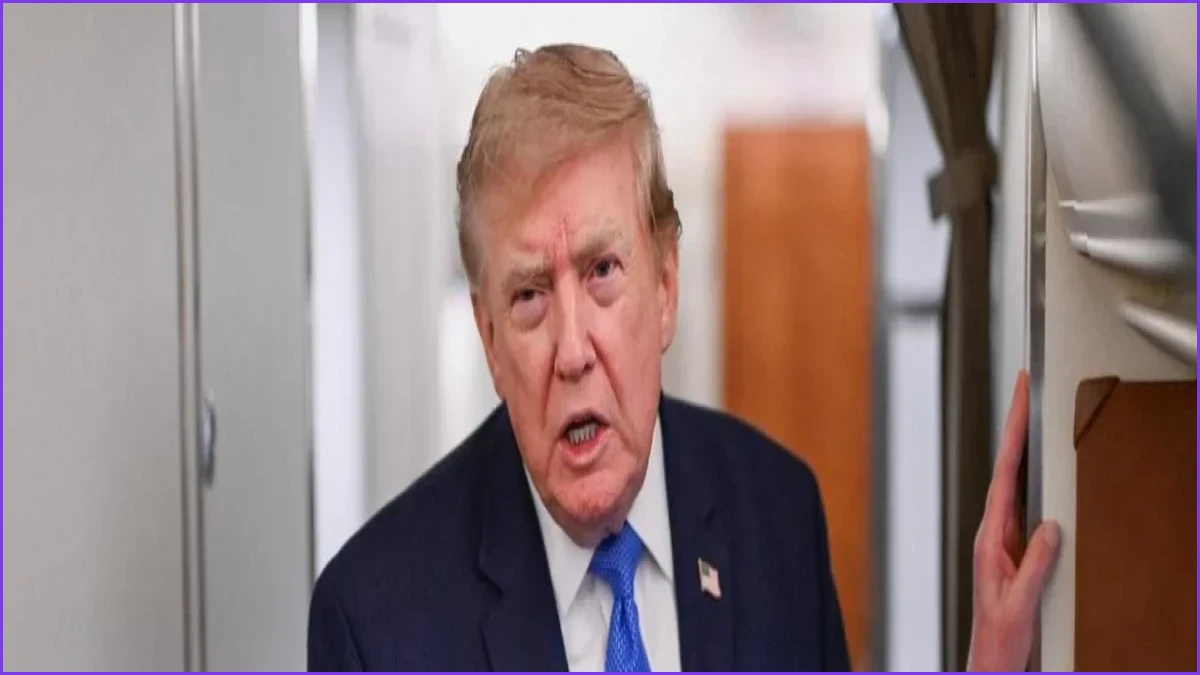
US President Donald Trump announced on Sunday that new negotiations with Iran will commence on Monday afternoon. Speaking to reporters aboard Air Force One, the president revealed that he had recently called off what he characterized as a "massive" military strike on the country. Trump stated that the Iranian leadership was aware of the impending attack, noting, "They knew the extent of the attack because they saw it forming." He added, "We're talking to them in the form of a negotiation. It begins tomorrow afternoon."
While Trump emphasized that these upcoming talks represent a path toward a negotiated resolution, the situation remains fluid. The president has previously declared that a diplomatic end to the conflict was near, only for hostilities to resume shortly thereafter. Regarding the upcoming discussions, the White House has not yet disclosed the specific venue or the participants involved.
The president revealed that his decision to abort the military action was influenced by direct appeals from international partners. He noted that Saudi Arabia’s Crown Prince Mohammed Bin Salman, along with officials from the United Arab Emirates and Qatar, had urged him against conducting strikes over the weekend. Trump described the planned military operation as potentially the "biggest attack since World War II," suggesting it could have derailed the prospects for a long-term peace agreement.
In contrast to the president's claims, Iran’s semi-official Mehr news agency dismissed the assertion that Tehran had requested a delay in military action, labeling the president's statements as "nothing but a new lie." Iran’s acting Defence Minister, Majid Ibn al-Reza, previously stated that the nation views all threats from adversaries as "real and credible," adding that Tehran would remain vigilant and would not be caught off guard.
The announcement had an immediate impact on global energy markets. Brent Crude oil prices dropped 4.5% to $83.98, while US-traded oil fell 4.6% to $80.74 during Monday morning trading in Asia. Energy prices have remained volatile since the conflict intensified on 28 February, largely due to concerns over shipping disruptions in the Strait of Hormuz, a critical waterway through which roughly 20% of the world's crude oil and liquefied natural gas typically passes.
Trump previously warned on Saturday that the US was "locked and loaded" for a major confrontation. However, he maintained that canceling the strike was for the "future benefit of the world." This follows a series of past warnings, including an April 7th statement in which he threatened that a "whole civilisation will die" if Iran refused to engage in peace talks. Amid these tensions, the administration faces internal pressure, as the Trump administration has also been largely dismissive of data showing the war – and its economic impact – are broadly unpopular with Americans, including with many Republicans, causing concern among conservative strategists ahead of the upcoming November midterms.
Around 20% of the world's crude oil and liquefied natural gas (LNG) usually flows through the strait.
Polls showing widespread dissatisfaction with the handling of the war have prompted alarm among some conservative strategists ahead of the coming November midterms.