In his first month as Defense Secretary, Pete Hegseth pledged that the current presidency would lead "the most transparent administration ever," drawing a sharp contrast with past conflicts in Iraq and Afghanistan that critics argued were defined by secrecy and misleading statements. However, as the American-led war against Iran enters its sixth month, the administration is releasing increasingly fewer details about the direction and progress of the conflict, even as financial and human costs continue to grow.
Currently, more than 50,000 American troops remain deployed across the Middle East. The conflict has claimed the lives of 18 U.S. service members, while hundreds of others have been injured or wounded. Meanwhile, Congress has been asked to approve an additional $67 billion to fund the military campaign, and President Donald Trump continues to launch diplomatic efforts, including a fresh push over the weekend of August 2, 2026. Despite these developments, official information channels have largely dried up. The Pentagon has not held a press briefing for reporters and the public since early May, leaving lawmakers from both political parties struggling to secure detailed updates. Instead, the administration has increasingly relied on social media posts and sweeping public statements from President Trump to communicate about the war.
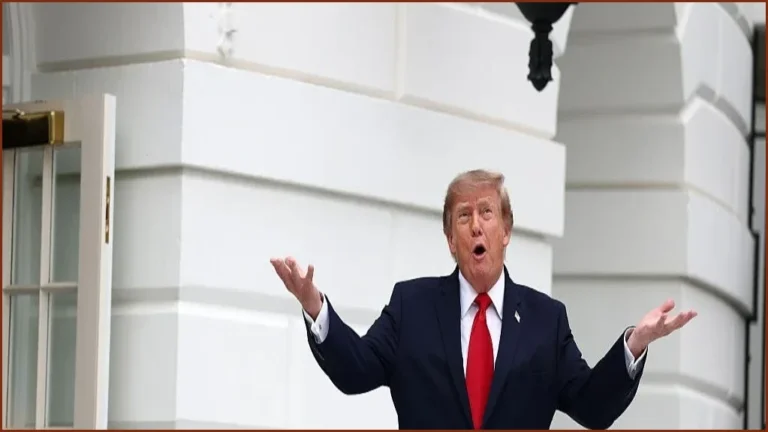
President Trump speaks on the conflict almost daily, typically using broad and highly optimistic terms while omitting granular details regarding battle damage, troop movements, and casualties. Speaking at Camp David in Maryland on Friday, Trump asserted that the Iranian Navy and Air Force have been "obliterated" and that Iran's remaining missile stockpile is "far fewer than they had four or five months ago." This matches a rhetorical pattern he has maintained since March, even as the situation on the ground has repeatedly shifted. The war began with heavy U.S. bombardments and demands from Trump for Iran's unconditional surrender, accompanied by his prediction that the fighting would last only four to five weeks.
By early April, shortly after warning that a "whole civilization will die," Trump reached a temporary ceasefire. Hostilities were paused again in mid-June for a planned 60-day period to negotiate over Iran's nuclear program, during which Trump praised Iran's leaders as "very rational." However, the truce collapsed less than a month later after Iranian forces attacked commercial vessels, prompting Trump to declare the ceasefire "over" and order nearly two weeks of nightly airstrikes.
Obtaining an independent view of the war is further complicated by a total media blackout within Iran, which has prevented footage from leaving the country. Because there are no U.S. ground troops for journalists to embed with, the public has few alternative avenues to assess the war's progress. When asked about the lack of regular Pentagon briefings, chief spokesperson Sean Parnell defended the administration's approach. Parnell stated that the Department of War and U.S. Central Command have consistently provided comprehensive updates on American operations, adding that President Trump and Secretary Hegseth "have been constantly providing updates directly to the media and the American people online, delivering clear, unfiltered insight into our objectives and decisive actions."
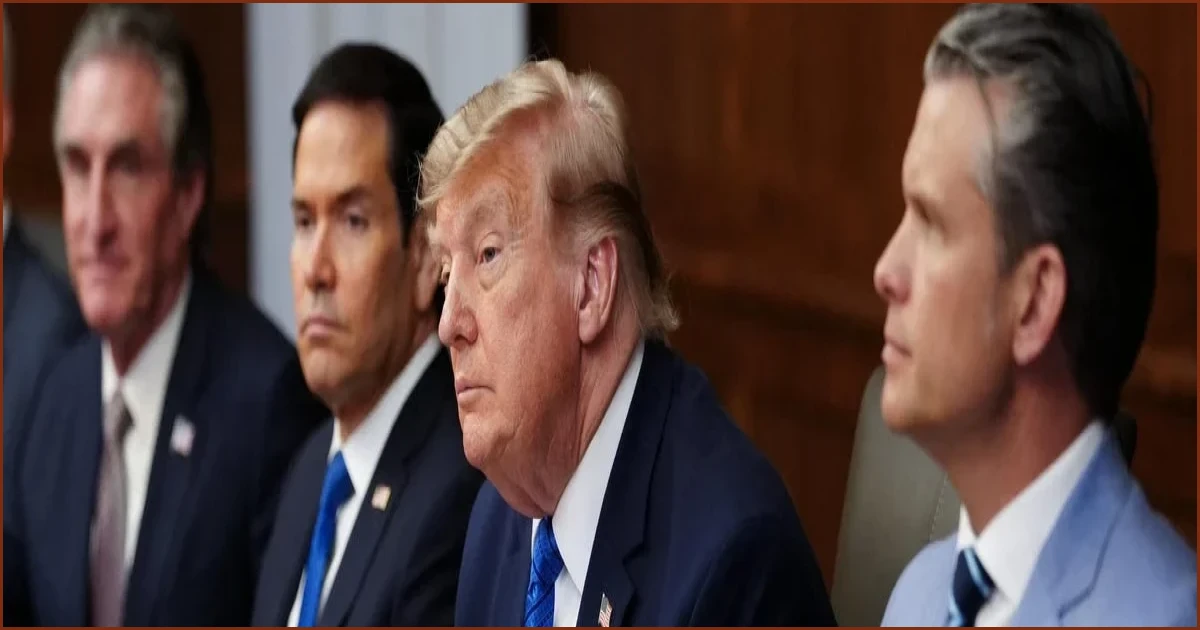
This online-first strategy has not satisfied lawmakers on Capitol Hill. Republican Representative Mike Turner of Ohio stated during an August 2 television interview that "the administration could be sharing more with Congress." Turner added, "I don't think anybody's satisfied with the level of information that we're receiving, although it is a dynamic conflict." This dissatisfaction was also evident in late July when Secretary Hegseth—who prefers the title Secretary of War—and Chairman of the Joint Chiefs of Staff General Dan Caine appeared before the Senate Appropriations Committee to justify the $67 billion funding request. During the hearing, the two officials did not outline the president's long-term strategy.
When Republican Senator John Kennedy of Louisiana asked what would happen if the U.S. decided to cut its losses and end the war, Caine demurred. Kennedy sharply rebuked both officials, stating he needed more "straight talk" and "straight answers." This rare public challenge from a Republican lawmaker eventually led to a private breakfast meeting between Kennedy and Caine, which a U.S. official confirmed took place. Joseph Holstead, a spokesperson for Caine, stated that the Chairman regularly meets with lawmakers from both parties to maintain trusting relationships with national security partners who represent the American people.
While a Pentagon official insisted that the department regularly briefs Congress, internal policies have restricted how information flows to Capitol Hill. Last October, Hegseth issued a memo ordering Pentagon officials to obtain prior approval from the legislative affairs office before communicating with lawmakers. The memo warned that "unauthorized engagements with Congress, no matter how well-intentioned, may undermine Department-wide priorities." This marked a significant shift from previous norms, where military service chiefs and commanders routinely communicated directly with members of Congress without seeking prior permission.
Commenting on the president's communication style, Senator Kennedy remarked, "He grows anxious when he has an unexpressed thought. He's not always disciplined in his messaging." Kennedy urged Caine, Hegseth, Secretary of State Marco Rubio, or CIA Director John Ratcliffe to deliver a major speech or hold a comprehensive press conference to explain the war's origins and why American forces remain committed to the fight.
The lack of information-sharing is not confined to the military. The State Department ended its daily foreign policy press briefings last year, removing a traditional mechanism for international observers to understand U.S. diplomatic directions. Furthermore, Secretary of State Marco Rubio, who also serves as national security adviser, has completely avoided Sunday public affairs interviews since the war began, despite previously being the administration's primary voice on foreign policy. Lawmakers noted that while they have Rubio's personal cellphone number, they use it sparingly and prefer formal briefings on Capitol Hill.
Some administration officials do offer private, unofficial guidance to lawmakers, but they insist that these conversations not be characterized as official briefings. To fill the public relations gap, the White House has frequently deployed U.S. Ambassador to the United Nations Mike Waltz to television networks to explain the administration's shifting diplomatic and military positions, even though the United Nations remains largely uninvolved in Trump's policy plans.
In some cases, lawmakers have had to resort to direct confrontation to get answers. In late June, Republican Senator Bill Cassidy of Louisiana engaged in a yelling match with President Trump during a closed-door Republican luncheon. Cassidy and four other Republican senators had recently voted in favor of a resolution that would allow Congress to halt the war with Iran. When Trump lambasted them for the vote, Cassidy shouted back that he had not been briefed on the administration's diplomatic efforts, including the June truce. "You deny me that information, and I'm going to be frustrated, because my job is to serve with the information I have before me," Cassidy later recounted.
His confrontation resulted in a direct phone call from special envoy Steve Witkoff and a private briefing in the White House Situation Room. Witkoff and Trump's son-in-law, Jared Kushner, serve as the administration's lead diplomats on Iran, though neither Kushner—who is not a government employee—nor Witkoff regularly speak to the press. Instead, it was Hegseth who publicly detailed the administration's short-lived diplomatic memorandum of understanding during a June 14 television appearance.
Under Hegseth's leadership, the Pentagon has also tightened rules for the press corps. The number of traditional news outlets operating out of the Pentagon fell sharply in 2025 after media organizations declined to agree to highly restrictive new press policies. Additionally, the administration is reportedly considering measures to restrict the public's access to information through the Freedom of Information Act. This restrictive approach has extended to how the military reports casualties. Following several Iranian attacks last month that killed three soldiers, the Pentagon directed reporter inquiries to a database website that had not been updated in days and omitted the recent deaths.
When four recent deaths temporarily vanished from the site altogether, the Pentagon blamed a "data disruption." Those deaths were subsequently categorized under "Overseas Operations Casualties," separating them from the 14 service members killed during the initial phase of the war, which the Pentagon dubbed "Operation Epic Fury." When combining the casualties from both categories, nearly 700 service members have been wounded in the conflict, though only 268 are currently listed under the Overseas Casualty Operations category. During an April briefing, Hegseth had declared Operation Epic Fury "a historic and overwhelming victory on the battlefield, a capital V military victory."
Public sentiment regarding the conflict is increasingly weary. A national poll conducted in late July revealed that 67% of Americans want the war to end immediately, a shift from June when 78% favored ending the war during the temporary truce. While the poll showed strong public support for the administration's stated goals—with 86% wanting to keep the Strait of Hormuz open and 76% wanting to halt Iran's nuclear program—most Americans expressed frustration and uncertainty.
Fully 76% of respondents stated that the war has proven more difficult than the Trump administration anticipated. Historically, American administrations have often sought to project an overly optimistic view of ongoing conflicts; for example, reporting on the 18-year war in Afghanistan revealed that officials consistently offered positive assessments despite a lack of real progress.
Now, five months into the conflict with Iran, the U.S. is redoubling its efforts to resolve a war that the administration previously claimed had already been won. Even President Trump acknowledged Iran's resilience during his Camp David remarks, noting, "Most people would have given up, they haven't. So I give them credit for that. I mean, they're known as being tough, they're tough."