Taiwan has long prioritized deterrence to manage escalating pressure from China, which views reunification as a central pillar of its national rejuvenation goals, with a target date of 2049. The island’s current strategy leans heavily on U.S. security assistance, military technology cooperation, and the procurement of advanced arms. Conventional deterrents, including F-16V fighters, Indigenous Defense Fighters, and Patriot missile systems, are designed to deny adversarial air superiority. Additionally, sea mines, Hsiung Feng anti-ship missiles, and Harpoon Coastal Defense Systems are intended to thwart amphibious invasions, while HIMARS batteries and ground forces are tasked with blunting initial attacks to make any military aggression prohibitively expensive for Beijing.
Despite these military investments, analysts suggest that conventional deterrence overlooks the most likely vector of a cross-strait crisis: civil defense. Beijing employs a variety of unconventional tactics, such as economic coercion, the targeting of vulnerable submarine cable networks, and a sophisticated cognitive warfare apparatus aimed at manipulating public opinion. These threats cannot be mitigated through military force alone; they necessitate a comprehensive civil defense strategy to maintain the continuity of life and prepare society for potential disruptions.
Government efforts to address these gaps include the creation of the All-Out Defense Mobilization Agency and the adoption of “whole-of-society resilience” in official policy. However, these initiatives remain hampered by fragmented preparedness, uneven coordination between civilian and military sectors, and domestic political stagnation. By examining the experiences of Ukraine and South Korea, Taiwan has the opportunity to adapt its approach to its specific geography and threat profile. Building resilient civil defense capabilities is essential to raising the cost of war for any aggressor, mirroring the lessons from the Russia-Ukraine War where civilian resilience successfully complicated an adversary’s expectations of a quick and decisive victory.
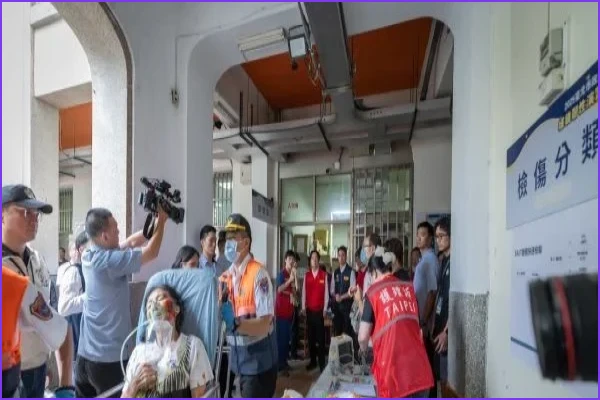
A scene from Taipei’s 2025 Urban Resilience Exercise, the civil defense portion of the Han Kuang exercise, July 17, 2025.
You have reached the limit of 2 free articles this month.