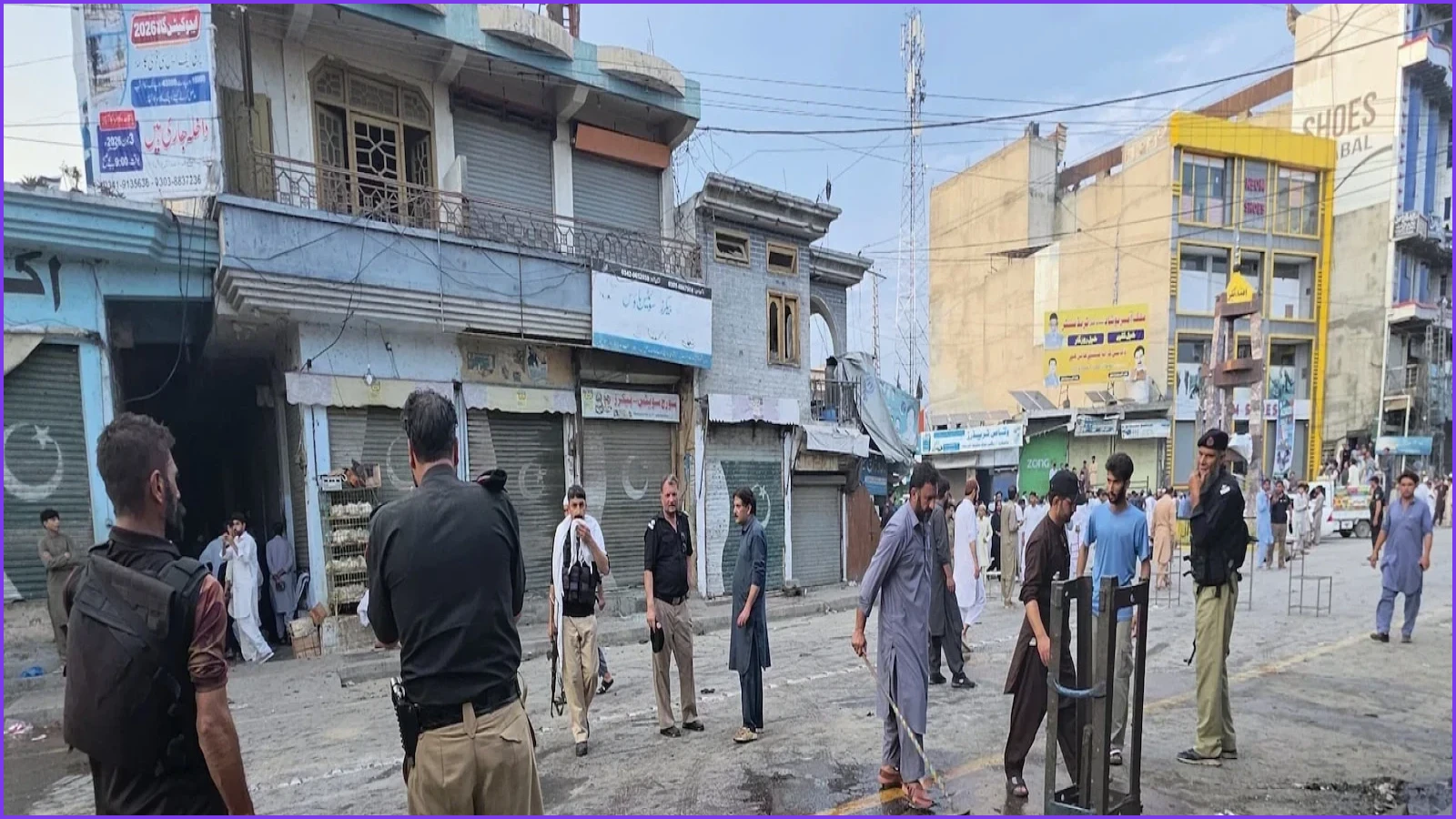
A suicide bomber detonated an explosive device during an antimilitant rally in northwestern Pakistan on Sunday, killing at least 14 people and injuring more than two dozen others. The attack occurred in Kabal, a town located in the Swat Valley of Khyber Pakhtunkhwa province, where protesters had gathered near a local police station to voice their opposition to rising militancy and demand peace.
District police chief Omar Khan confirmed that the casualties included nine civilians and five police officers. Bilal Faizi, a spokesman for the provincial emergency service, noted that the attacker targeted the crowd as speakers were addressing the assembly. Prior to the blast, speakers at the rally had criticized authorities for failing to act decisively against militants, emphasizing that residents were exhausted by years of violence and demanded a life free from fear. They further asserted that the state holds the primary responsibility for ensuring security and eradicating militant groups.
President Asif Ali Zardari and Prime Minister Shehbaz Sharif issued separate statements condemning the bombing. Both leaders expressed deep sorrow over the loss of life, offered condolences to the families of the victims, and directed officials to provide the best possible medical care to those wounded. They reaffirmed that Pakistan’s fight against terrorism will continue until the threat is eradicated. Interior Minister Mohsin Naqvi also condemned the attack and extended his prayers for the recovery of the injured.
While no organization has immediately claimed responsibility for the bombing, suspicion is focused on the Pakistani Taliban, also known as Tehrik-e-Taliban Pakistan (TTP). The Swat Valley, which was once a stronghold for militants who enforced a strict interpretation of Sharia law, was reclaimed by the Pakistani military in 2007. However, recent months have seen a resurgence of militant activity, sparking local fears that the Taliban may be attempting to re-establish a foothold in the region. Residents have organized several rallies to protest this perceived return of the militants.
The TTP remains an ally of Afghanistan’s Taliban rulers, though it operates as a separate entity. Many of its leaders have sought sanctuary in Afghanistan since the Taliban returned to power there in 2021. Pakistan has repeatedly accused the Afghan government of harboring TTP militants, an allegation that Kabul denies.
This incident follows a broader trend of increased violence targeting security forces across Pakistan. On Friday, military spokesman Ahmad Sharif Chaudhry reported that the country has recorded 3,145 "terrorism incidents" since January. According to his data, 2,084 militants have been killed this year, while 819 Pakistanis—including civilians, soldiers, and police—have lost their lives. Chaudhry further alleged that 28 suicide attacks have been carried out by Afghanistan-based militants since January, claiming many were executed by Afghan nationals or those affiliated with Afghanistan’s security forces.