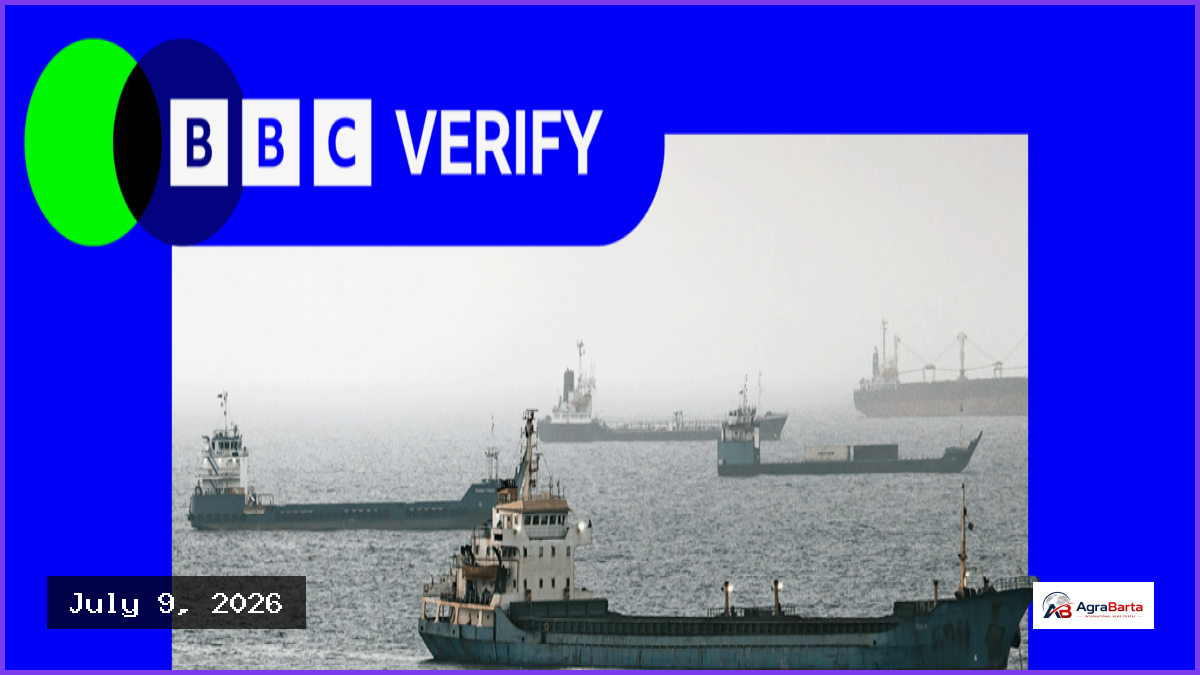
Maritime traffic through the Strait of Hormuz has experienced a sharp decline following a series of retaliatory strikes between the United States and Iran. According to data from the maritime intelligence firm Kpler, only 23 tankers and cargo ships traversed the vital Gulf waterway on Wednesday, marking a significant decrease from the 47 vessels recorded just one week prior. The number of ships using this Omani route grew to a peak of 28 vessels on 25 June, Kpler’s data shows, overtaking the number of transits via the Iranian route.
The current disruption follows attacks on three specific vessels earlier this week: a Qatar-owned liquefied natural gas tanker, a Saudi-owned crude oil tanker, and a Liberia-flagged crude tanker. All three ships were navigating near a US-recommended route through Omani waters when they were struck. Then on 25 and 27 June two ships in Omani waters were struck with Iran warning all vessels to only use its approved routes. Following these incidents, Kpler reports that vessel usage of this specific Omani route has ground to a halt.
For decades, the strait has served as a critical global artery, with over one-fifth of the world’s oil and gas supplies, along with fertilizer and other essential goods, passing through it. Before the current conflict, the Joint Maritime Information Center (JMIC) noted that an average of 138 ships crossed the strait daily. Traffic previously collapsed to a handful of daily transits after US and Israeli strikes on February 28, which led to an Iranian blockade and the laying of sea mines. While traffic had recovered to a peak of 72 ships on June 24 following a memorandum of understanding (MOU) signed on June 17, which committed Tehran to use “its best efforts for the safe passage of commercial vessels with no charge for 60 days,” the recent escalation has reversed those gains.
Tensions remain high as Iran continues to insist that it holds the right to control passage and impose fees. The Khatam al-Anbiya Central Headquarters, Iran’s top military command, reiterated this week that the only safe route for commercial vessels is the one determined by the Islamic Republic. Conversely, the US, along with allies in Europe and Asia, maintains that the strait must remain free and open. President Donald Trump has declared the June 17 MOU “over,” though he indicated that diplomatic negotiations could proceed.
The situation is further complicated by accusations from Tehran that Washington violated the agreement by revoking a US Treasury license that had temporarily eased sanctions on Iranian oil exports. Meanwhile, Iran’s Revolutionary Guard Corps warned that foreign powers have no claim to the region and cautioned that interference in shipping routes would meet a “crushing response.”
Security experts remain cautious about the near-term outlook. Martin Kelly of the EOS Risk Group suggested that the current volatility is part of a recurring cycle of back-and-forth hostilities. Jennifer Parker, a maritime security expert, noted that the defunct MOU was vague and did not grant Iran the authority to target civilian shipping in Omani waters. As global powers struggle to find a balance between diplomatic pressure and military deterrence, the future of safe passage through the Strait of Hormuz remains uncertain.
Concerns about sea mines laid by Iran in the internationally recognised shipping lanes used before the conflict have also played a part in holding traffic back from its pre-war levels.
"Neither the promise of economic relief nor the threat of military punishment has, so far, changed Iran's behaviour.