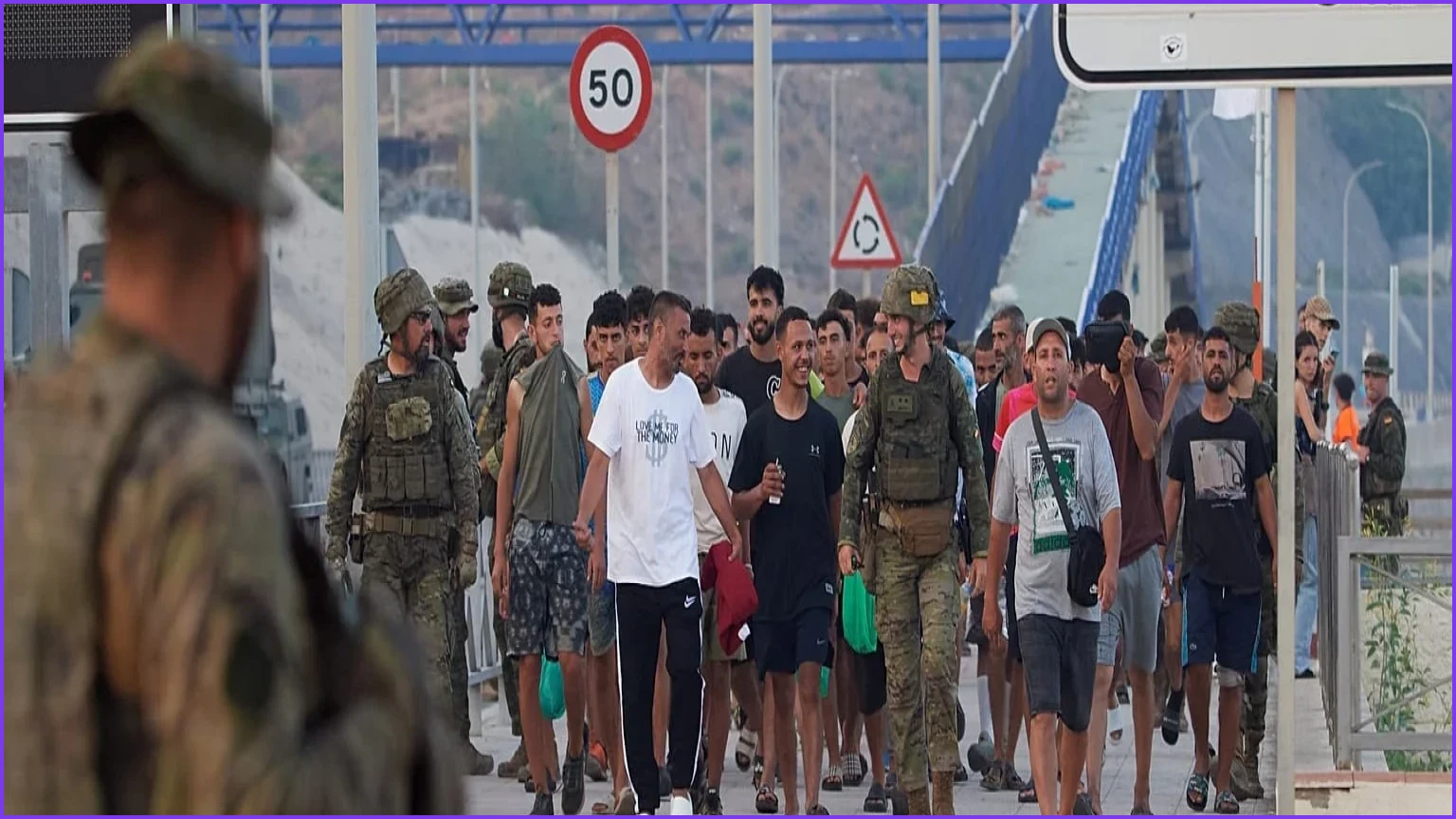
New information gathered from several civilian and military intelligence sources indicates that the Spanish government was warned about the risk of a mass migrant surge in the North African exclave of Ceuta days before the crisis occurred. Intelligence alerts were reportedly issued over a period of several days, including warnings provided in the hours immediately preceding the arrival of tens of thousands of people at the border.
Intelligence officials had warned that King Mohammed VI might perform a "gesture of magnanimity" at the border in connection with Morocco's Throne Day celebrations. These warnings were bolstered by reports of migrants swimming from Fnideq, also known as Castillejos, and the observation of buses transporting people from various parts of Morocco toward the border. Intelligence services reportedly assessed the situation—which saw nearly 1,000 people swim into Ceuta over ten days—as a test by Moroccan authorities, an assessment passed on to the government.
Ultimately, between 60,000 and 75,000 migrants entered Ceuta, creating the largest migration crisis in the city's history. According to the Spanish Interior Ministry, approximately 53,000 of those individuals returned to Morocco in the days following the surge. Officers from the Civil Guard and National Police at the Tarajal border crossing were unable to stop the influx and shifted their focus to assisting the injured. Sources speaking to The Objective criticized the Madrid government for failing to deploy the army immediately, noting that military units in Ceuta and Melilla were already on standby and could have been mobilized via a simple political order.
Personnel on the ground reported that the Moroccan gendarmerie stood by with their "arms folded" as migrants crossed the breakwater and climbed over fences and roofs. Civil Guard sources noted that this situation differed from the events of May 2021, as the number of people swimming to Ceuta had been rising for weeks, fueled in part by a Supreme Court ruling that prohibited the immediate return of migrants reaching Spanish territory by sea.
Prime Minister Pedro Sánchez characterized the event as a "violation of Spain's territorial integrity" and attributed the surge to human-smuggling networks exploiting the court ruling. While Sánchez maintained that Moroccan authorities cooperated "swiftly and consistently," he acknowledged the security challenge. The Interior Ministry insisted that cooperation with Morocco remained "exemplary, loyal and permanent." Despite the advance intelligence, the Ministry did not order army reinforcements until late Thursday, when additional personnel from the Civil Guard and National Police were also deployed.