Spain has sharply criticized the reactions of some European Union countries to the recent surge of approximately 60,000 migrants from Morocco into the Spanish enclave of Ceuta, describing the responses as "selfish, polarising and unlawful." Spanish Prime Minister Pedro Sánchez conveyed his "serious concern" in a letter to European Commission President Ursula von der Leyen regarding the attitudes of certain EU governments, which he stated were motivated by prejudice, fake news, ignorance, or political interests.
Sánchez asserted that Spain had fully restored border control and prevented any unauthorized movement towards continental Europe within 48 hours. He highlighted that Ceuta is not part of the Schengen area, a system of open borders among 29 European countries. "The European Union cannot afford this kind of selfish, polarising and unlawful reaction," Sánchez stated.
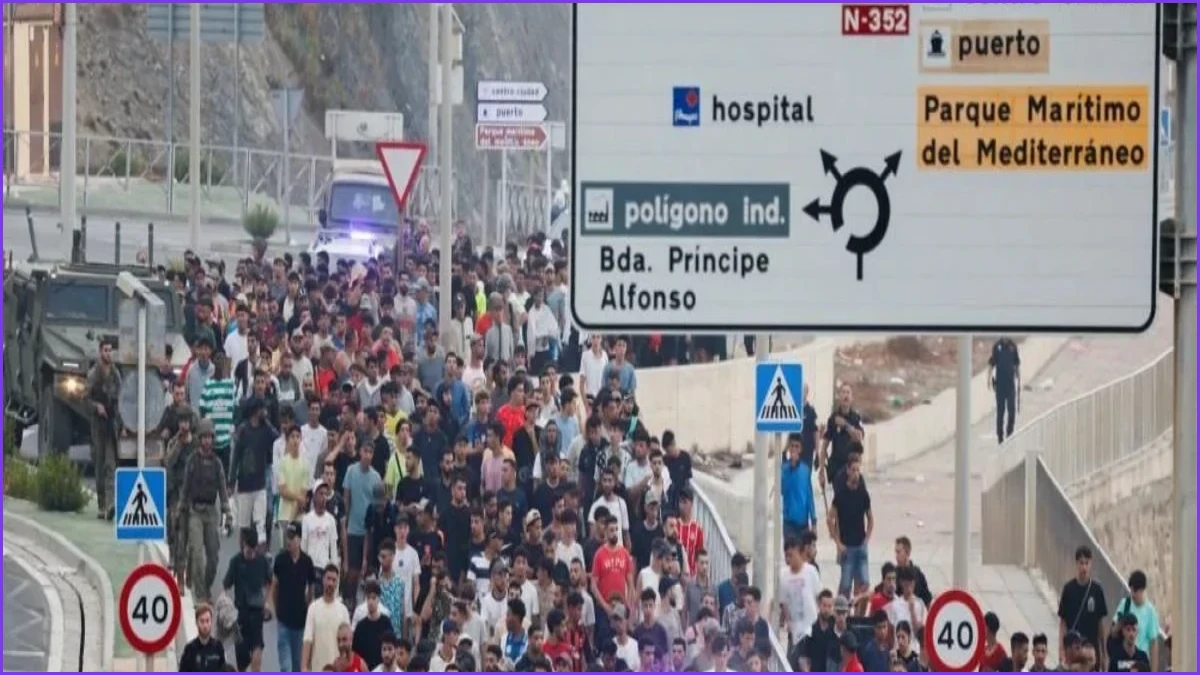
The influx of migrants occurred amidst chaotic scenes on Thursday when border controls in the North African enclave reportedly broke down. Spanish MEP Juan Fernando López Aguilar reported on Saturday morning that the situation was "beginning to get under control" with migrants "returning peacefully." Officials indicated that almost all of the nearly 60,000 who reached Ceuta on July 30 have since returned, and the death toll had risen to 67.
The political fallout has been significant. Italy's Prime Minister Giorgia Meloni announced a temporary suspension of the EU's Schengen arrangement with Spain for one month, calling the scenes "shocking" and stating that "uncontrolled immigration" posed a threat to national security. In response, Spain summoned the Italian ambassador to Madrid, with its foreign minister expecting "European solidarity and not partisan demagoguery."
Other European nations have also taken steps or expressed concerns. Finland's Interior Minister Mari Rantanen announced preparations for restoring internal border checks if necessary and urged other European countries to support Italy's move. Danish Prime Minister Mette Frederiksen suggested the EU should "consider all options, including a suspension of Schengen co-operation." France tightened checks on its border with Spain and increased its police presence, while Portuguese Prime Minister Luis Montenegro indicated he was considering reinforcing border checks.
European Commission President Ursula von der Leyen described the images from Ceuta as "unacceptable," emphasizing that "We cannot allow anyone to come to our Union without abiding by our rules." German Chancellor Friedrich Merz supported Spain's stance on preventing illegal migrants from entering the continent and demanded Morocco "take back illegal migrants immediately." In the US, the State Department attributed the incident to Spain's migration policies, and former President Donald Trump labeled the situation a "catastrophe" and an "invasion."
Spain has defended its handling of the migrant surge, deploying troops, additional police, drones, divers, and boats to Ceuta. Its armed forces were also deployed to bolster security in Melilla, another Spanish enclave where hundreds of crossings were reported. Prime Minister Sánchez, who visited Ceuta after the influx, stated he would consider reinforcing the border with Morocco, noting that Moroccan authorities were cooperating.
Sánchez blamed trafficking gangs for the surge, calling the incident a "violation of Spain's territorial integrity." He explained that "Trafficking mafias took a self-serving interpretation of a Supreme Court ruling" which then "spread like wildfire." EU Commissioner Magnus Brunner confirmed after a call with Spanish Foreign Minister José Manuel Albares that "not a single person has crossed to mainland EU."
The incident follows a June ruling by Spain's Supreme Court that migrants intercepted at sea attempting to reach Ceuta or Melilla could not be returned to Morocco without due process. While this year's surge was extraordinary, Ceuta has historically been a focal point for migrants seeking to reach Europe, with large organized crossings often occurring during summer months, sometimes amplified by social media. In 2021, approximately 8,000 people entered Ceuta over a few days, intensifying diplomatic tensions with Morocco.
Spain, which has a comparatively welcoming approach to immigration, approved plans in April to grant legal status to 500,000 undocumented migrants. At that time, Italy's Prime Minister Giorgia Meloni had already criticized Sánchez's policy, suggesting it would "affect its neighbours."