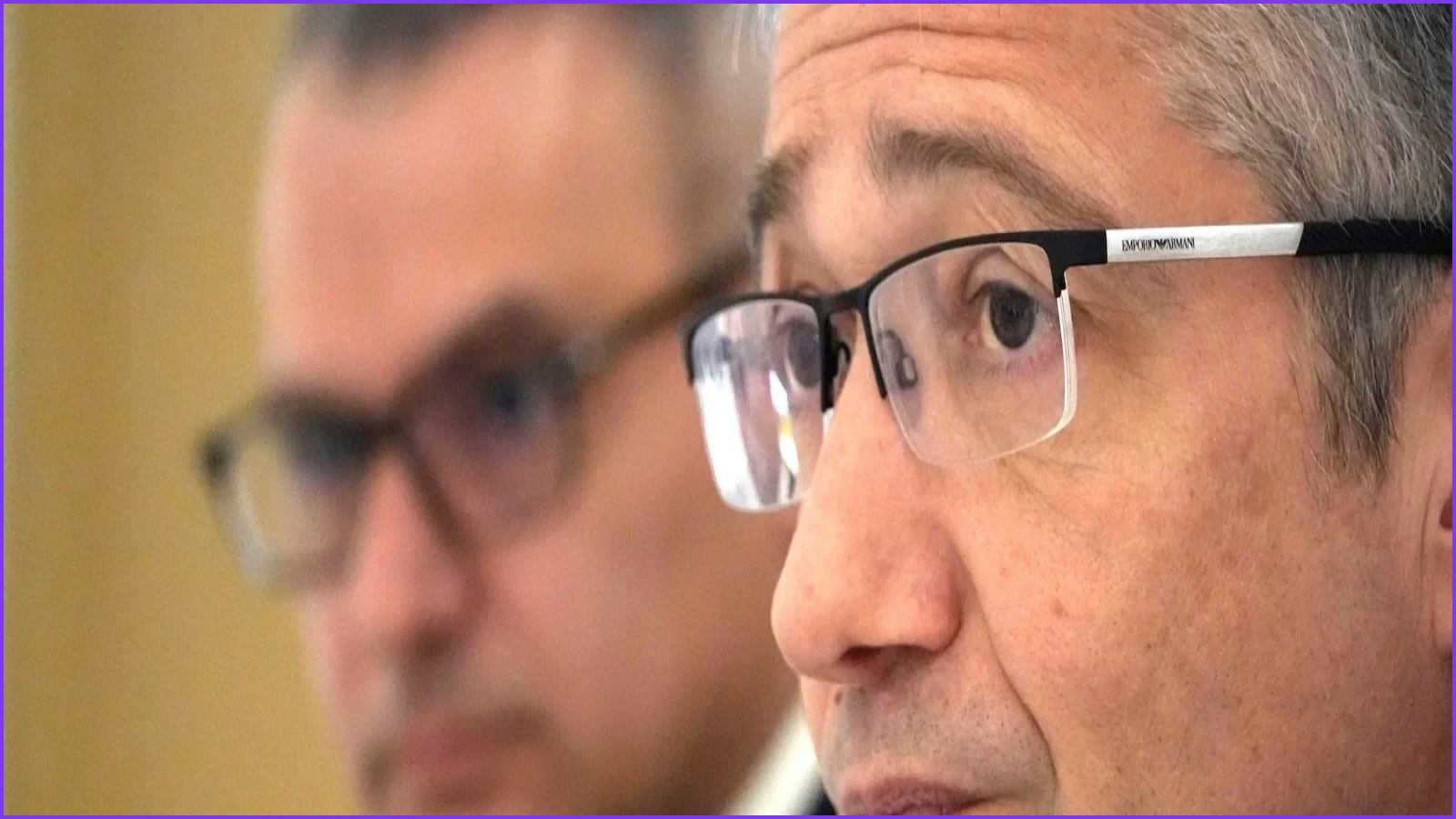
Eurozone leaders gathered in Brussels have chosen Pablo Hernández de Cos, the former head of Spain’s central bank, to serve as the next president of the European Central Bank. De Cos will succeed Christine Lagarde at a critical juncture for the financial institution, which is currently confronting inflation driven by war in Iran alongside persistent anxieties over heavy sovereign debt loads and rising borrowing costs across Europe.
The consensus to fill three key leadership positions was reached during a summit in Brussels, according to an EU diplomat tasked with communicating for the Irish Presidency who spoke on condition of anonymity. French President Emmanuel Macron subsequently confirmed the appointment in a post on X. Although the nomination of De Cos must still undergo formal review by the European Parliament and the ECB’s governing council, both procedural steps are considered administrative formalities.
At 55 years old, De Cos currently serves as general manager of the Bank for International Settlements, an international organization of central banks located in Basel, Switzerland. He previously sat on the ECB’s rate-setting council from 2018 to 2024 through his role as governor of the Bank of Spain. An evaluation of his past speeches by Commerzbank analysts indicates that De Cos is aligned with monetary policy "doves" who tend to favor lower interest rates to encourage economic growth. In the selection process, De Cos prevailed over another primary candidate, former Dutch central bank chief Klaas Knot, who was viewed as a monetary hawk advocating for higher interest rates to curb inflation.
The appointment places a veteran central banker with a track record of supporting monetary stimulus at the head of the Frankfurt-headquartered institution as several European governments struggle with borrowing costs. Commerzbank analyst Marco Wagner noted that "especially against the backdrop of rising government debt in numerous countries … many governments are likely to prefer a dovish ECB president." France in particular continues to face challenges surrounding high public debt and burdensome interest payments. While the ECB retains mechanisms to intervene and lower borrowing costs for member states hit by market instability it views as unjustified, analysts note the central bank is unlikely to step in to bail out French politicians who are unable to reach agreement on deficit reduction.
During his tenure on the governing council, De Cos joined the majority under Lagarde in 2020 to back a massive 1.85 trillion euro ($2 trillion) pandemic stimulus package aimed at maintaining low borrowing costs during economic shutdowns and travel restrictions. In a speech delivered that year, De Cos praised the intervention, stating it "has been clearly successful in curbing financial market deterioration in all euro area countries" while lowering borrowing costs for eurozone governments and corporations. However, with current inflation standing at 4%—above the bank's official 2% target—the central bank could still consider raising interest rates at its upcoming Dec. 17 meeting presided over by Lagarde.
Alongside the presidency, eurozone leaders filled two upcoming vacancies on the bank's six-member executive board, which oversees day-to-day operations. German economist Markus Brunnermeier, a professor at Princeton University, was chosen to replace Philip Lane when his term ends in May. Lane has served in the influential post of chief economist, proposing rate adjustments for the full governing council to consider. Leaders also selected Laurence Boone, head of corporate and investment banking in France for Spanish lender Santander, to fill the board seat being vacated by Germany’s Isabel Schnabel, who is resigning in January.
The European Central Bank sets benchmark interest rates for the 21 member nations using the euro, influencing credit costs across the economy for 359 million residents—ranging from overnight interbank loans to consumer credit cards, home mortgages, and government bonds. Lower interest rates are designed to stimulate a slowing economy, whereas higher rates restrain inflation when it exceeds the bank's 2% annual goal. The ECB's ability to act swiftly—in contrast to drawn-out negotiations among the 27 broader European Union national governments—has positioned it as the lead responder during regional financial crises, including the peak of the eurozone debt crisis in 2010–2012 and the COVID-19 pandemic. Lagarde steered a pragmatic middle course by building consensus among national bank chiefs on the council, avoiding monetary labels by famously describing herself as an "owl," referencing the bird associated with wisdom in Greek and Roman mythology.