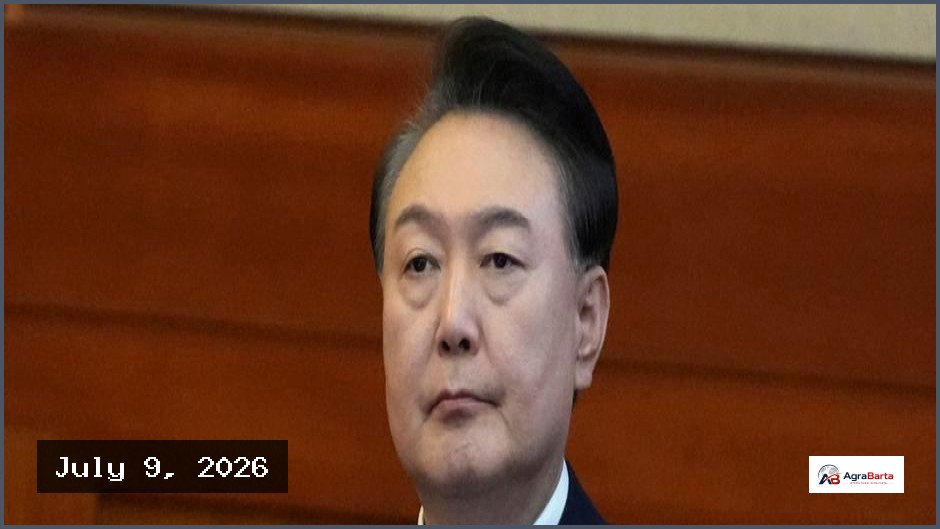
South Korea’s Supreme Court has officially upheld the seven-year prison sentence handed down to former President Yoon Suk Yeol. The ruling concerns crimes linked to his controversial 2024 martial law declaration and the subsequent political instability that gripped the nation.
During the televised proceeding, a top court judge confirmed the dismissal of all appeals, stating that there was no misunderstanding of any legal interpretations in the previous court’s ruling. Yoon’s legal team responded by expressing deep regret, arguing that the Supreme Court reached its decision without sufficient deliberation. A lawyer for the former president announced plans to challenge the constitutionality of the ruling through formal procedures, including a constitutional complaint.
The legal history of the case began in January, when a lower court initially sentenced Yoon to five years in prison for charges including abuse of power and the use of presidential security agents to obstruct his own arrest. An appeals court later increased that term to seven years. The impeached former president remains in detention as he separately appeals a life sentence related to charges of leading an insurrection during his attempt to impose martial law.
Yoon has insisted that it was motivated by public interest. However, the court had noted that it was an intentional plot which resulted in “enormous social costs.” In a separate legal matter, the former president was also sentenced to 30 years in prison for sending drones into North Korea. Prosecutors alleged that this action was a deliberate effort to escalate tensions with Pyongyang, thereby creating a pretext for his failed attempt to declare martial law in December 2024.
The declaration of martial law in December 2024 saw Yoon accuse the opposition of undermining the government, though lawmakers quickly moved to overturn the order. The sight of armed soldiers surrounding the parliament and standing on the steps of the assembly shocked the public and evoked memories of the military dictatorships that governed South Korea from the mid-1960s to the late 1980s. The event triggered the country’s most significant political crisis in decades, resulting in mass protests, a standoff with police, the impeachment of the president, and months of widespread turmoil.
Don't let the algorithm hide the news. If you rely on our team for trusted reporting, please take a moment to select us as your Preferred Source on Google by clicking here and hitting the "star" or "preferred" button, so you'll always see our verified news first.