SEOUL, South Korea — In a sharp escalation of diplomatic tensions, South Korea announced on Thursday that it will recall its ambassador to Ukraine. The move serves as a formal protest against Ukrainian President Volodymyr Zelenskyy's recent public disclosure of a secret transfer involving two North Korean prisoners of war to South Korea.
The decision by the South Korean Foreign Ministry follows warnings from South Korean President Lee Jae Myung, who recently threatened to implement unspecified punitive measures if Ukraine does not issue an apology for revealing the transfer. While the ministry did not specify exactly when Ambassador Park Hee-chang will be brought back to Seoul, its statement noted that South Korea will maintain consultations with Ukraine in hopes of resolving the dispute smoothly.
The two North Korean soldiers at the center of the controversy were part of a deployment of thousands of North Korean troops sent to support Russia's military campaign in Ukraine. Captured by Ukrainian forces in early 2025, both soldiers expressed a desire to resettle in South Korea to avoid severe persecution if they were repatriated to their homeland. Under its legal framework, South Korea views the North as part of its sovereign territory and maintains a long-standing policy of accepting and financially supporting North Korean defectors.
According to South Korean officials, a non-disclosure agreement regarding the transfer was established out of concern for the safety of the soldiers and their families still living in North Korea. However, political analysts suggest that South Korea's liberal administration also feared that making the arrival public would undermine its ongoing efforts to rebuild diplomatic relations with Pyongyang.
Although North Korean state media has not yet issued a statement on the transfer, Pyongyang has historically reacted with anger to high-profile defections, often accusing Seoul of kidnapping its citizens. North Korea has refused to engage in talks with both South Korea and the United States since 2019, choosing instead to focus on expanding its nuclear weapons program.
The extent of further actions South Korea might take remains uncertain. Analysts emphasize that preserving strong ties with Kyiv is highly beneficial for Seoul, as Ukraine can offer vital intelligence regarding North Korea's growing cooperation with Russia and valuable battlefield insights. Additionally, maintaining a cooperative relationship with Ukraine is viewed as essential for South Korea's broader partnerships with Western nations aligned with Kyiv.
Observers believe President Zelenskyy decided to reveal the transfer of the North Korean prisoners to highlight the threat posed by Pyongyang's military assistance to Russia, aiming to garner more international support for Ukraine's war effort. Since 2022, South Korea has provided $445 million in humanitarian aid to Ukraine, with President Lee pledging an additional $100 million during a meeting with Zelenskyy in July.
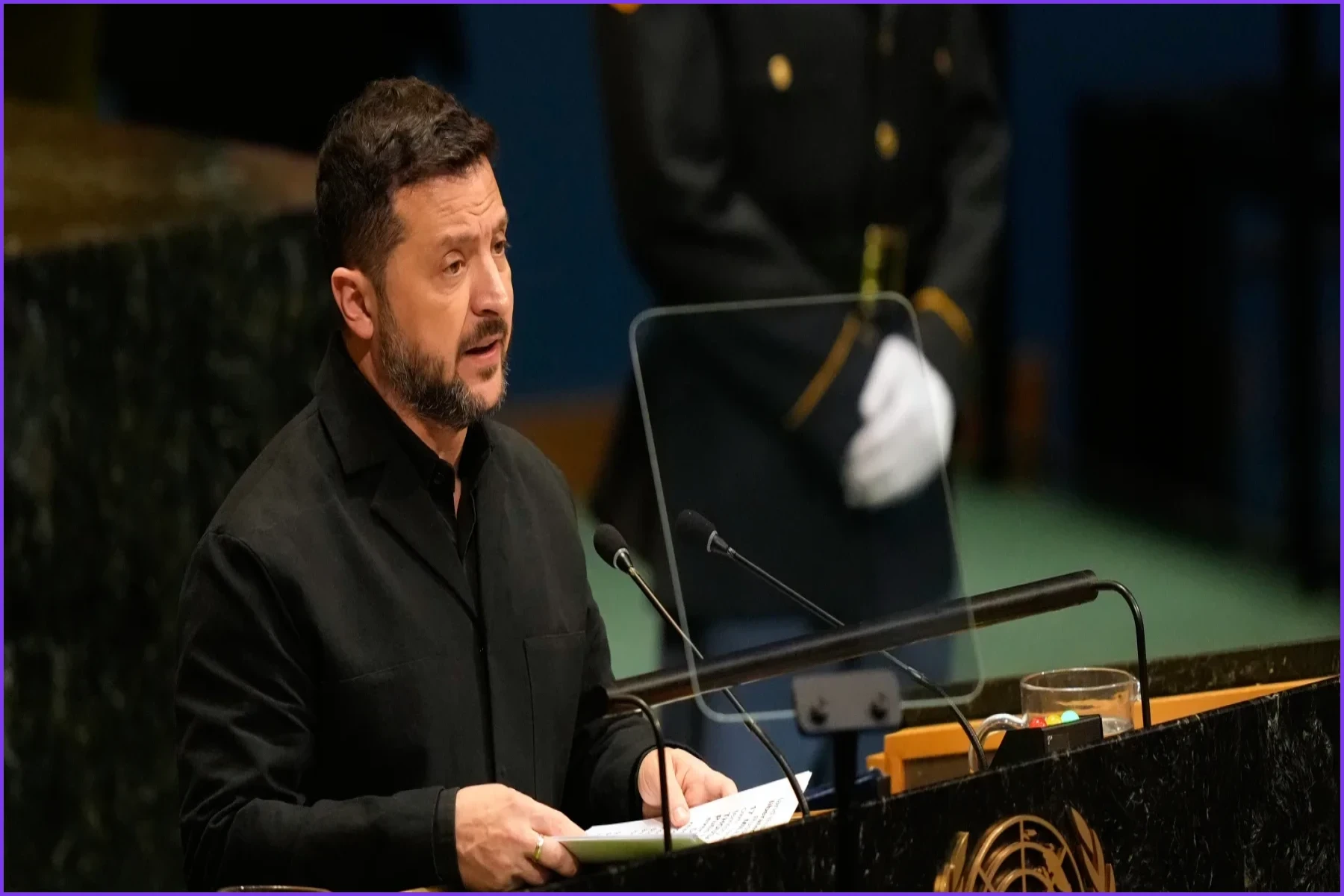
FILE – Ukraine's President Volodymyr Zelenskyy speaks during the 81st session of the United Nations General Assembly at United Nations headquarters, on Sept. 23, 2026. Seth Wenig/AP hide caption