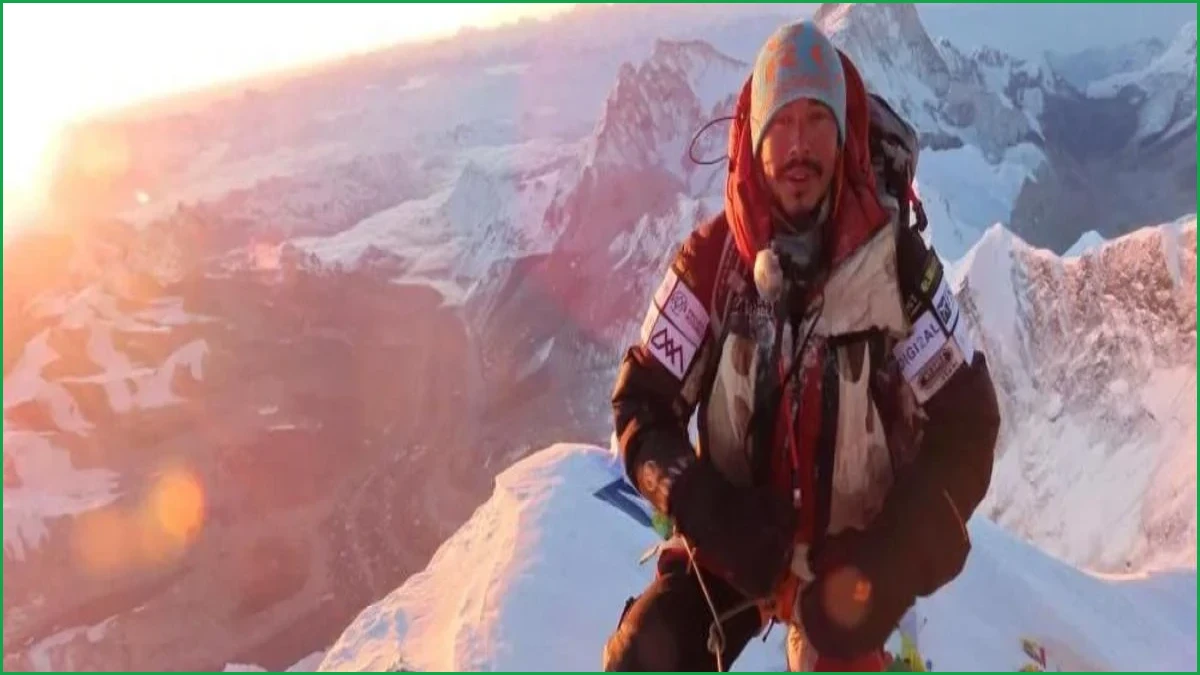
A devastating avalanche on Pakistan's Broad Peak has resulted in the deaths of six elite Nepali mountain guides, marking a significant and tragic loss for the global mountaineering community. The group was led by the decorated British-Nepali climber Nirmal Purja, a 43-year-old mountaineer widely celebrated for his historic feat of summiting the world's 14 highest peaks—those rising above 8,000m (26,246 ft)—in just over six months. Purja, known to many as Nims, served as the leading figure of the 10-member international expedition on Broad Peak, which stands as the world's 12th highest mountain.
The incident has sparked reflection on the evolving role of Nepali mountain guides, or Sherpas, who have transitioned from being viewed as mere aides to becoming world-renowned mountaineering icons. Ben Ayers, a longtime Everest reporter for Outside Magazine, described Purja as an iconic figure and undisputedly one of the best climbers of his generation. The other victims included Kili Pemba Sherpa, 46, and Pur Bahadur Gurung, 37, both of whom were highly experienced professionals with solid resumes. Kili Pemba had recently earned the coveted mountaineering Grand Slam after completing his last of the 14 highest peaks, also known as eight-thousanders, in early July. Before this crowning achievement, he was already among the best in the industry, having been part of the Nepali team, led by Purja, that completed the first winter ascent of K2 in January 2021. At 8,611m, K2 is known to be steeper, more unpredictable, and deadlier than Everest. Kili Pemba was widely described as humble and deeply committed to his clients, having summited Everest 15 times, including twice while guiding double-leg amputees—a task that government official Gyanendra Shrestha, who was at Base Camp during one of these climbs, described as being performed with immense care.
Pur Bahadur Gurung, 37, was another casualty of the avalanche. He had scaled 12 of the 14 highest peaks and was one of only 100 Nepali guides certified by the International Federation of Mountain Guides Association (IFMGA). Himal Gautam, a spokesman for Nepal's tourism department, noted that achieving IFMGA certification requires significant money, passion, and dedication, underscoring the unprecedented loss suffered on Broad Peak. Earlier in 2024, Gurung was part of the team that discovered a century-old boot on Everest, believed to be that of British climber Andrew Irvine, who vanished on the mountain in 1924. The other three Nepali guides who perished include Gyaljen Sherpa, best known for scaling the third-highest mountain, Kanchenjunga, three times in one season; Nima Sherpa, 36, who scaled four eight-thousanders in 2026 alone; and Nawang Thindu Sherpa, who in his 20s was among Nepal's rising generation of mountain guides.
The tragedy highlights the increasing trend of Nepali guides traveling to Pakistan's far north during the monsoon season, from June to September, to lead expeditions in the Karakoram range. While over a million adventure travelers visit the Himalayas each year, the Karakoram mountains attract only about 15,000 hikers annually. Some credit Purja for bringing Pakistan onto the radar of mountaineers through his documented feat of scaling the 14 peaks. Iswari Paudel, acting president of the Nepal Mountaineering Association, notes that Purja's success gave many guides and foreigners the courage to believe that the mountaineering crown was possible, making Pakistan a major overseas base for Nepali Sherpas. However, Ben Ayers notes that while Purja helped publicize a new era of mountaineering and democratize the sport, he also fueled commercialization and risk.
Because of the remote nature of Pakistan's mountains, expeditions are far more challenging to organize than in Nepal. Nima Rinji Sherpa, the 20-year-old who set a record in 2024 as the youngest mountaineer to summit all 14 highest peaks, explains that guides in Pakistan must fix their own ropes, cut steps into the ice, and set up camps as they go. Furthermore, emergency evacuations are more difficult in the Karakoram range due to fewer accessible landing zones and the logistical effort required to get helicopters to base camp, unlike the integrated network of rescue helicopters and aid outposts found in the Himalayas. Because the region is hard to access, climbers often attempt two to three mountains per trip, resulting in very tight itineraries.
While the Broad Peak disaster may spur calls to tighten safety standards, many believe it will do little to change high-altitude tourism. Ayers suggests that while tragedies cause a moment of concern, things often return to normal, noting that it is difficult to say any accident in the mountains is preventable given the inherent danger. Researcher Medhavi Gulati adds that the mountaineering community is often drawn to high-risk pursuits, and the appeal of global fame and world records will likely persist. Expert mountaineer and writer Alan Arnette points to historical disasters, such as the 2014 Everest ice avalanche that killed 16 Sherpas and the 2008 K2 disaster, as evidence that such incidents rarely lead to significant, lasting changes in the industry.