Long-distance running in Europe is not strictly confined to strenuous athletic effort, sweat, and chasing finish-line timers. Across the continent, several unique sporting events present an alternative approach to traditional road racing, incorporating fancy dress, live music, local gastronomy, and regional wines along their courses.
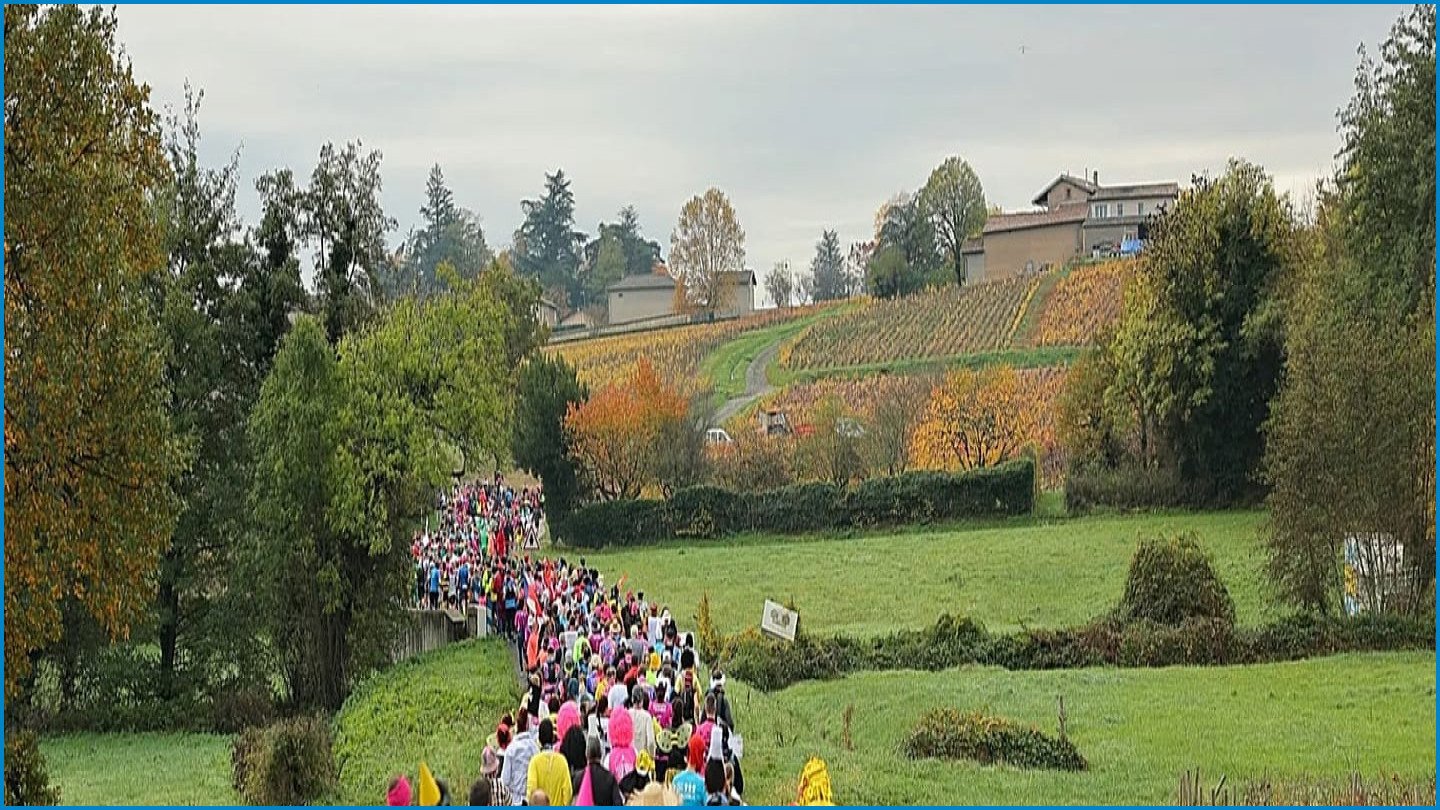
Among the most festive fixtures on the European running calendar is the Marathon International du Beaujolais, set in the famous wine-producing region north of Lyon in France. During the event on Saturday, 21 November, participants tackled various distances, including a 13-kilometre route. The atmosphere is immediately dominated by colorful costumes, ranging from highly creative outfits to completely improbable attire. Residents of local villages along the route line the streets to applaud, cheer, and offer smiles, while traditional race refreshment stops are converted into wine-tasting hubs where runners can sample regional Beaujolais vintages. Live brass bands, DJs, and mobile entertainment groups transform the course into a travelling party, prompting runners to dance and socialize with strangers while ignoring their stopwatches entirely, often taking upwards of three hours to cover 13 kilometres.
The concept behind this blend of athletics and conviviality originated in 1995 on a flight home from the New York Marathon, when three friends from Beaujolais decided to replicate the festive spirit of NYC in their local region while highlighting Beaujolais wine. Following an experimental dress rehearsal in 1996 that gathered roughly 50 runners, the event was officially inaugurated in 1997. Over the decades, the race has expanded into a major international gathering. By 2026, the Marathon International du Beaujolais marked its 22nd edition, drawing 35,000 participants representing 92 different countries.
A similar celebration of local culture takes place in Liège, Belgium, where beer takes center stage. The Beer Lovers' Marathon, next scheduled for 16 May 2027, challenges runners to complete a full 42.195-kilometre distance with a distinct local twist. Across the course, 16 separate refreshment stations each offer a different Belgian beer, supported by food, water, and musical setups featuring DJs or live bands. Participants can also taste traditional culinary specialities such as classic chips and speculoos, the region's traditional spiced biscuits. Entrants are encouraged to run in costume based on an annual theme, which for the 2027 race is designated as "Run wild – fauna e flora." The Liège event extends across the entire weekend, featuring an after-party following the finish line as well as a guided city tour the next day, complete with breakfast and a farewell beer.
In Italy, the city of Treviso offers a sweet culinary incentive through the Tiramisù Run. Organized alongside Treviso's half-marathon, the 10-kilometre course rewards runners with a serving of tiramisù in the Veneto capital where the dessert was originally created. Prioritizing fun over high competition, the non-competitive event is open to anyone aged 16 and older. Participants can run or walk the full route at their own pace without needing a competitive medical certificate.
England also hosts several unconventional endurance competitions. In the small village of Oxenhope in Yorkshire, the annual Oxenhope Straw Race tests participants through a mix of beer, costumes, and agricultural heavy lifting. Scheduled for 4 July 2027, the approximately four-kilometre course links six local pubs across the village. Competitors participate in teams of at least two people, wearing fancy dress while carrying a straw bale weighing between 15 and 20 kilograms. Teams stop at each pub for a pint of beer, though drinking is optional. The competition began in the 1970s following a pub bet between two local farmers, eventually expanding into a major tradition that has raised over £500,000 (€597,875) for local charitable organizations and community causes.
Elsewhere in North Yorkshire, Knaresborough hosts the Great Knaresborough Bed Race, which is set to return next year on 12 June. Recognized as one of the most unusual events on the British sporting calendar, each team consists of six runners and one passenger who rides on a wheeled bed. Before the race begins, teams parade through the town streets showing off decorated beds and coordinated costumes alongside marching bands and dance groups. Despite the carnival setting, the four-kilometre course is physically demanding, featuring steep ascents, cobbled streets, and a final 20-metre crossing through the River Nidd while propelling the bed and passenger. The tradition dates back to 1966, when the Knaresborough Round Table created the event to raise charity funds, subsequently growing from a local initiative into an international feature attracting up to 90 teams and hundreds of volunteers.
For runners seeking an unusual start time, Switzerland offers the Neujahrsmarathon Zürich, held in Schlieren near Zürich. The race starts precisely at midnight on 1 January, launching immediately after the arrival of the New Year. Competitors run a 10.55-kilometre loop alongside the River Limmat, repeating the circuit depending on their chosen category. Options include a 10.55-kilometre run, a 21.1-kilometre half-marathon, the full 42.195-kilometre marathon, and a team relay. First held on 1 January 2005, the midnight event requires head torches as runners celebrate the start of the year on foot.
By contrast, lighting is unnecessary at the Midnight Sun Marathon in Tromsø, located in northern Norway above the Arctic Circle. Held during the period of continuous summer daylight, the natural phenomenon ensures the sun stays above the horizon throughout the night. Competitors run through Tromsø accompanied by views of the Arctic landscape, including the surrounding sea, mountains, the bridge connecting Tromsøya island to the mainland, and the Arctic Cathedral.
Organizers note that for all events involving alcoholic tastings, drink consumption is strictly restricted to adults and must remain moderate, as alcohol abuse presents serious risks to health.