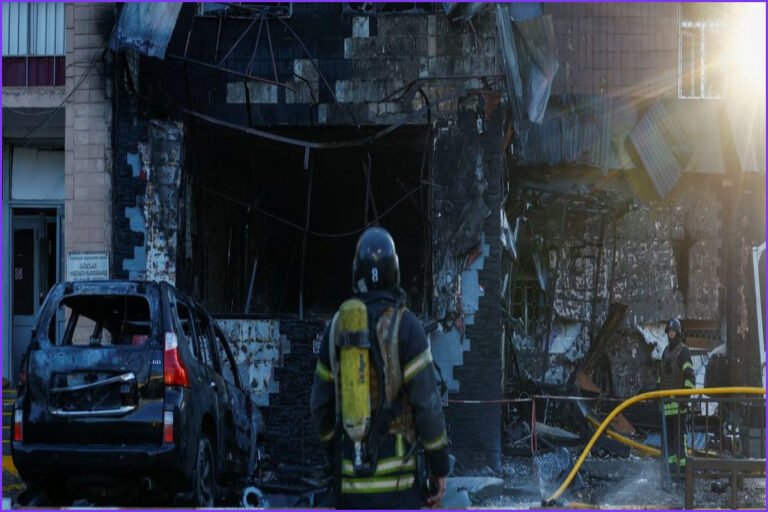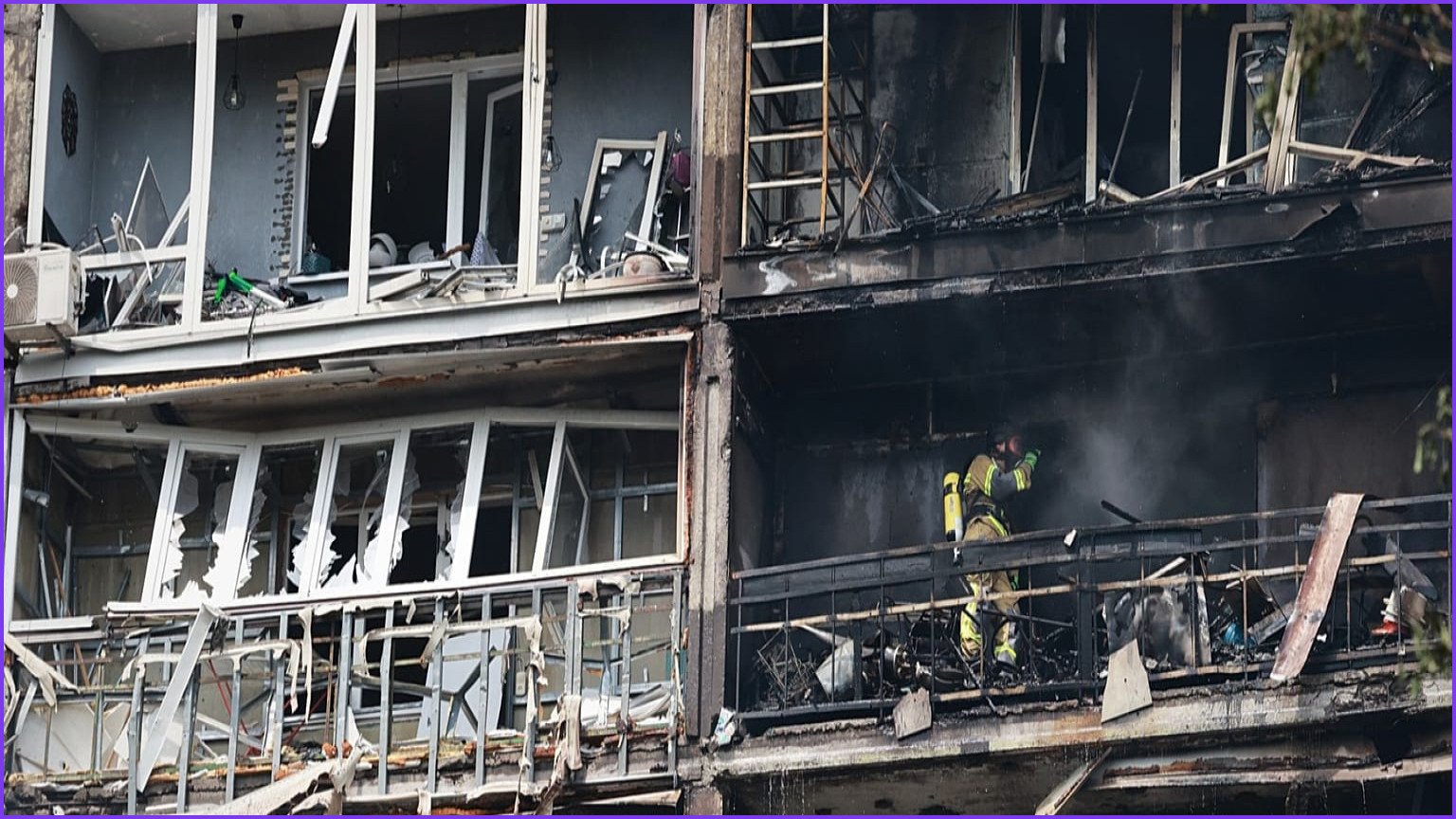
A series of Russian glide bomb strikes targeted residential districts in the southern Ukrainian city of Zaporizhzhia on Monday, resulting in one fatality and dozens of injuries. Regional chief Ivan Fedorov reported that Russian aircraft deployed eight of the powerful weapons over a 90-minute period, causing significant damage to 22 apartment buildings across four separate districts. The Sunday evening onslaught killed a 71-year-old woman and left 31 people wounded, including a 16-year-old girl. While Moscow’s forces have captured the Zaporizhzhia Nuclear Power Plant and hold other parts of the region, the capital city remains in Ukrainian hands. It is one of four regions, including Donetsk, Kherson, and Luhansk, that Russia illegally annexed in September 2022 despite not having complete control over them.
These Soviet-era bombs, retrofitted with guidance systems, can carry up to 3,000 kilograms of explosives and leave behind massive craters. Ukraine currently has no effective countermeasures against them. Russia has used these weapons to smash Ukrainian towns and cities since the full-scale invasion began more than four years ago. Neither side’s claims regarding these or other recent attacks could be independently verified.
The intensity of the conflict remains high across multiple fronts. Overnight from Sunday to Monday, the Ukrainian air force reported that Russia launched 181 long-range strike drones. While air defenses jammed and intercepted 163 of the drones, 14 caused damage at 13 locations. Separately, the Russian Defence Ministry claimed its forces struck four bulk carriers carrying cargo for the Ukrainian armed forces, including three in the Black Sea and one in the port of Mykolaiv, though no further information was provided.
Casualties were also reported on the Russian side. Regional governor Veniamin Kondratyev stated that six people were killed and 40 others wounded in Arkhipo-Osipovka, a town on Russia’s Black Sea coast in the Krasnodar region, due to falling Ukrainian drone debris. Additionally, Sergei Aksyonov, the Russian-installed head of the illegally annexed Crimea, reported that three people were killed and two were wounded in an overnight Ukrainian attack on the peninsula, though he provided no further details.
In response to the ongoing bombardment, President Volodymyr Zelenskyy made an urgent plea for countries to send more US-made Patriot air defence systems. He noted that only Patriot interceptors can reliably stop ballistic missiles, but they are in short supply due to the Iran war. “The world has Patriot missiles. What matters now is for our partners to make the political decision to provide the necessary packages,” Zelenskyy said on social media, adding that anti-ballistic missiles must protect people rather than sit in stockpiles. Last week, US President Donald Trump appeared to back off from his earlier commitment to give Ukraine a license to make Patriots itself, stating on Friday that the matter is still under discussion. Zelenskyy has also suggested an alternative to Trump involving Elon Musk and the use of Starlink satellites to target ballistic missile launch sites inside Russia, though officials have not publicly confirmed if this is being considered.
Beyond the military strikes, the cultural impact of the conflict has intensified. The publishing house Ranok reported that a Russian strike on a warehouse in northeastern Kharkiv over the weekend destroyed 8 million books, which the publisher slammed as an attack on Ukrainian culture. Director Viktor Kruglov called it the largest loss to the nation's book infrastructure since the beginning of the full-scale war in 2022. The blaze was still raging on Monday as the publisher stated the enemy was trying to burn out Ukrainian education and culture. This follows a strike on a warehouse near Kyiv last month that destroyed 800,000 books, including works by George Orwell and Barack Obama. Throughout the invasion, Russia has frequently hit museums, galleries, film studios, churches, and other sites of cultural importance.