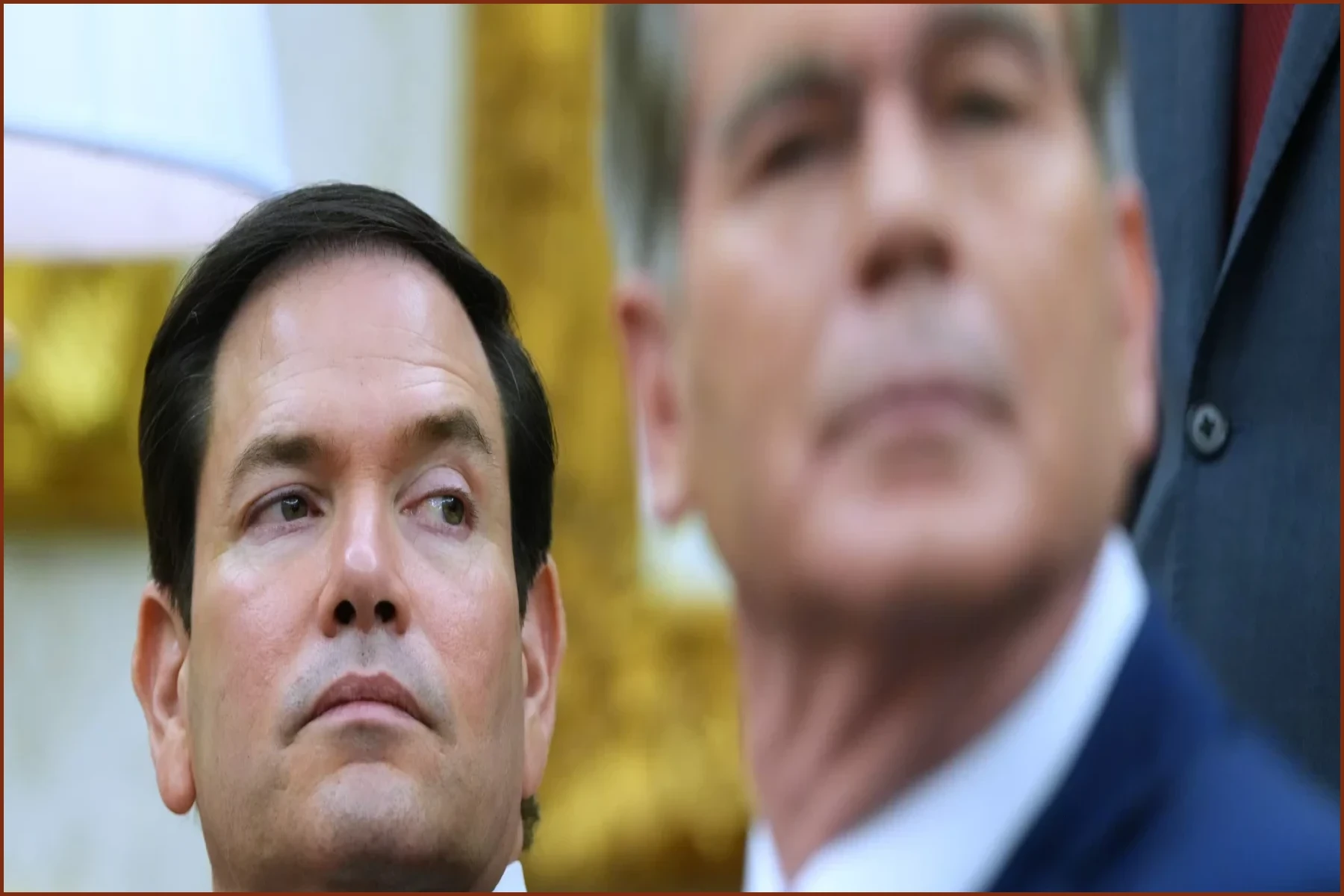
Marco Rubio has convened officials from various European and Latin American countries to address what he described as an alarming rise in left-wing political violence. During the conference, Rubio argued that such acts have historically been treated as a blind spot in global counterterrorism efforts. He criticized those in power for allegedly dismissing violence or terrorism when it aligns with left-wing causes, contrasting this with the condemnation typically reserved for neo-Nazi groups. Rubio stated that while a bomb planted by a neo-Nazi group is viewed as a murderous act of evil, similar actions by Marxist revolutionaries are often framed as mere tragic excesses of idealism.
The push to address this issue comes amid a broader political focus from the Trump administration ahead of the November congressional elections. President Donald Trump has frequently characterized the Democratic Party's left wing as communists, claiming they intend to destroy the traditional American way of life and even engage in assassinations. Vice President JD Vance has similarly described communism as a political shift unseen in the U.S. before, while House Speaker Mike Johnson has decried radical candidates who identify as Marxists. Rubio, whose perspective is deeply influenced by his background as the son of Cuban immigrants who arrived in Miami in May 1956, suggested that the intelligence and ideological networks of the Cuban government helped build the far left in the U.S. and the hemisphere.
Data regarding the prevalence of these incidents remains a subject of debate. A report from the Center for Strategic and International Studies noted that as of July 4, 2025, left-wing terrorist attacks surpassed those attributed to the far right for the first time in over 30 years. However, the report’s authors clarified that this shift is primarily due to a very low starting baseline for the left and a significant decline in far-right incidents. Between 1994 and 2000, there was an average of 0.6 left-wing incidents annually compared to 20.6 on the right. From 2016 to 2024, the figures shifted to an average of four per year for the left and 22.7 for the right. As of early July 2025, there was only one right-wing incident recorded, compared to five from the left. The report's authors noted that right-wing terrorism could easily return to elevated levels and that it is important to fight terrorism on both sides of the political spectrum.
Stephen Miller, the administration's deputy chief of staff and a primary architect of its immigration policy, emphasized the urgency of the situation, urging attendees to defend their civilizations with the same intensity one would use to protect their own home from an intruder. This ideological focus has repeatedly conflated democratic socialism—which often centers on universal healthcare, higher taxes on the wealthy, and stricter corporate regulation—with communism, where private ownership is largely eliminated. This tension has intensified following the election of democratic socialist Zohran Mamdani as New York City mayor and the success of his proteges in recent New York City congressional primaries.
To combat these perceived threats, the administration is leveraging financial and legal tools. Treasury Secretary Scott Bessent announced that the U.S. is targeting the financial networks of entities deemed dangerous, noting that in November, the State Department designated four European anti-fascist groups as foreign terrorist organizations. Furthermore, Rubio announced a new policy granting the government authority to restrict visas for individuals associated with these groups who have provided financial, recruitment, or logistical support. Bessent noted that the administration is mobilizing sophisticated financial counterterrorism tools, originally developed for use abroad, to address these emerging threats within the United States.