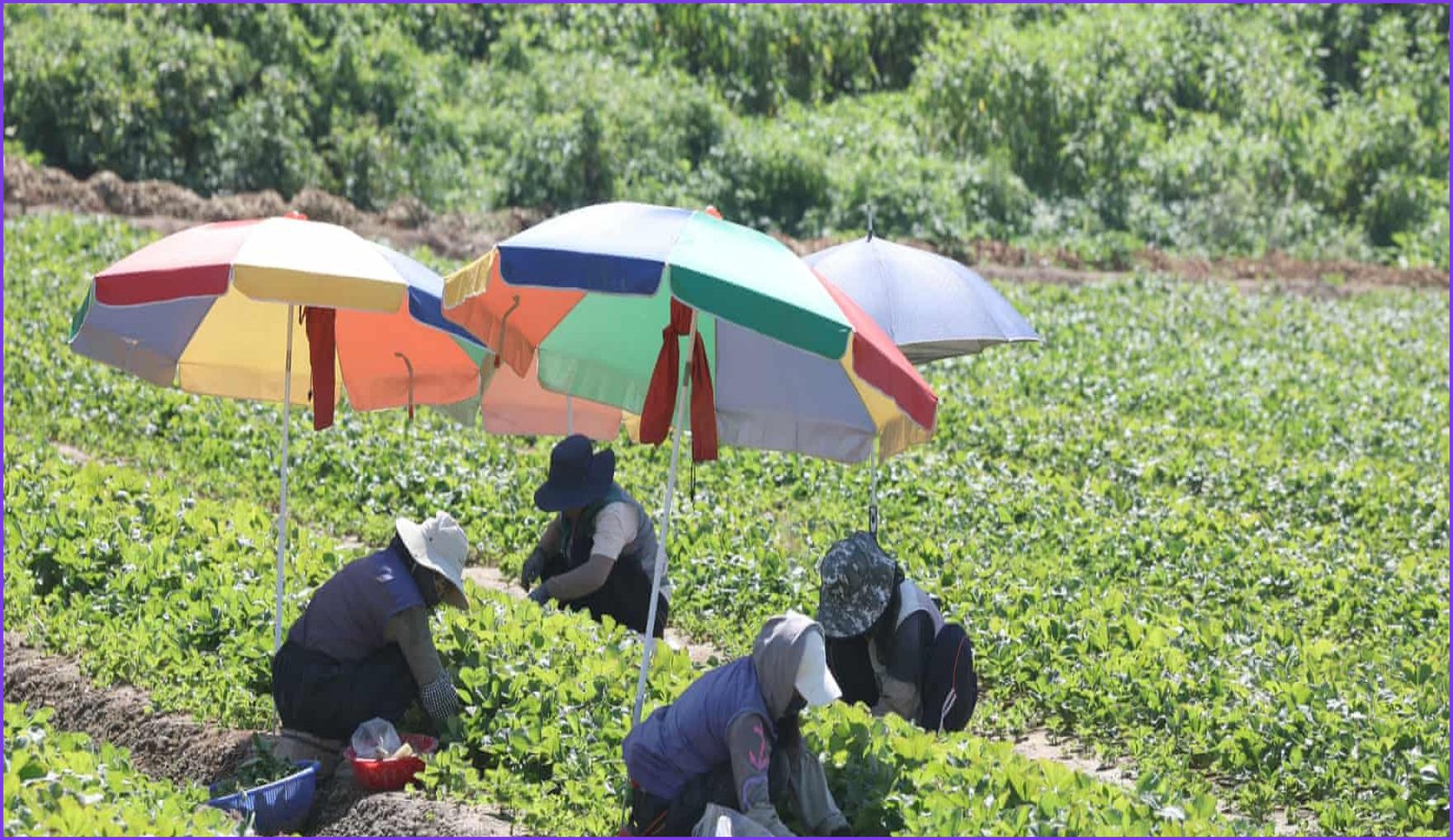
Farmers across East Asia are facing a catastrophic summer as extreme heatwaves destroy harvests and push temperatures to unprecedented levels. In Yanggu county, South Korea, located 80 miles north-east of Seoul, farmer Lee Sang-hyuk discovered his potato crop had essentially cooked in the ground. The soil, acting like an oven, left the produce soft and collapsing, a sight the farmer described as "like boiled potatoes." Lee, who has been farming for 50 years, noted that the crop appeared healthy just a week prior before changing overnight. "The inside was good, the sweetness was good, everything was fine", he told KBS from his farm. "But after three days it changed overnight like this. In my 50 years of farming, this is the first time."
The agricultural devastation extends to Damyang county, where strawberry farmer Yoon Woo-ha lost three months of cultivated seedlings. Because South Korea’s crop insurance scheme is limited to specific crops and regions, many farmers are left unprotected, facing significant debt. Lee Jun-kyung of the Korean Peasants League warned that these uncovered losses directly threaten the financial stability of farm households.
South Korea has faced its highest temperature since modern records began in 1904, with the city of Yangsan hitting 42.5C on August 2. According to the national disease control agency, the heat has been linked to at least 31 deaths, while over 900,000 livestock and 1.4 million farmed fish have perished. President Lee Jae Myung has called for a fundamental overhaul of the nation's crisis system, labeling the extreme weather as a "new normal."
In Japan, the meteorological agency introduced a new category for temperatures exceeding 40C, dubbed "kokushobi" or "cruelly hot day." Research from the Japan Weather Attribution Centre suggests that such intense July heat would have been virtually impossible without human-induced global warming, occurring only once every 10,000 years under natural conditions. The impact was visible in Tokyo, where three lions died of suspected heatstroke at a city zoo.
Hong Kong also hit a record high of 36.9C—the hottest since records began in 1884—as Typhoon Dolphin pushed hot air into the city. The event sparked criticism regarding the city's heat stress warning system. Former Hong Kong Observatory head Lam Chiu Ying labeled the system a "display piece" after it failed to trigger a red warning despite the record-breaking heat. The Labour Department is currently reviewing the system.
Elsewhere in the region, China’s Xinjiang region recorded 50C in July, and North Korea reported tropical nights in Pyongyang. Climate scientist June-Yi Lee of Pusan National University attributed these events to a combination of atmospheric circulation patterns. A strengthening ridge of high pressure over the Tibetan Plateau and western Pacific, layered on top of this year’s El Niño, may have helped create conditions for the heat, she said. Prof Lee warned that heatwaves were expected to become more frequent and intense as the climate heated up, while compound extremes, such as consecutive heatwaves and heavy rainfall, were becoming more common.
“It’s not just one or two fields like this. How can I even put it into words? It’s so upsetting,” he told local broadcaster SBS.