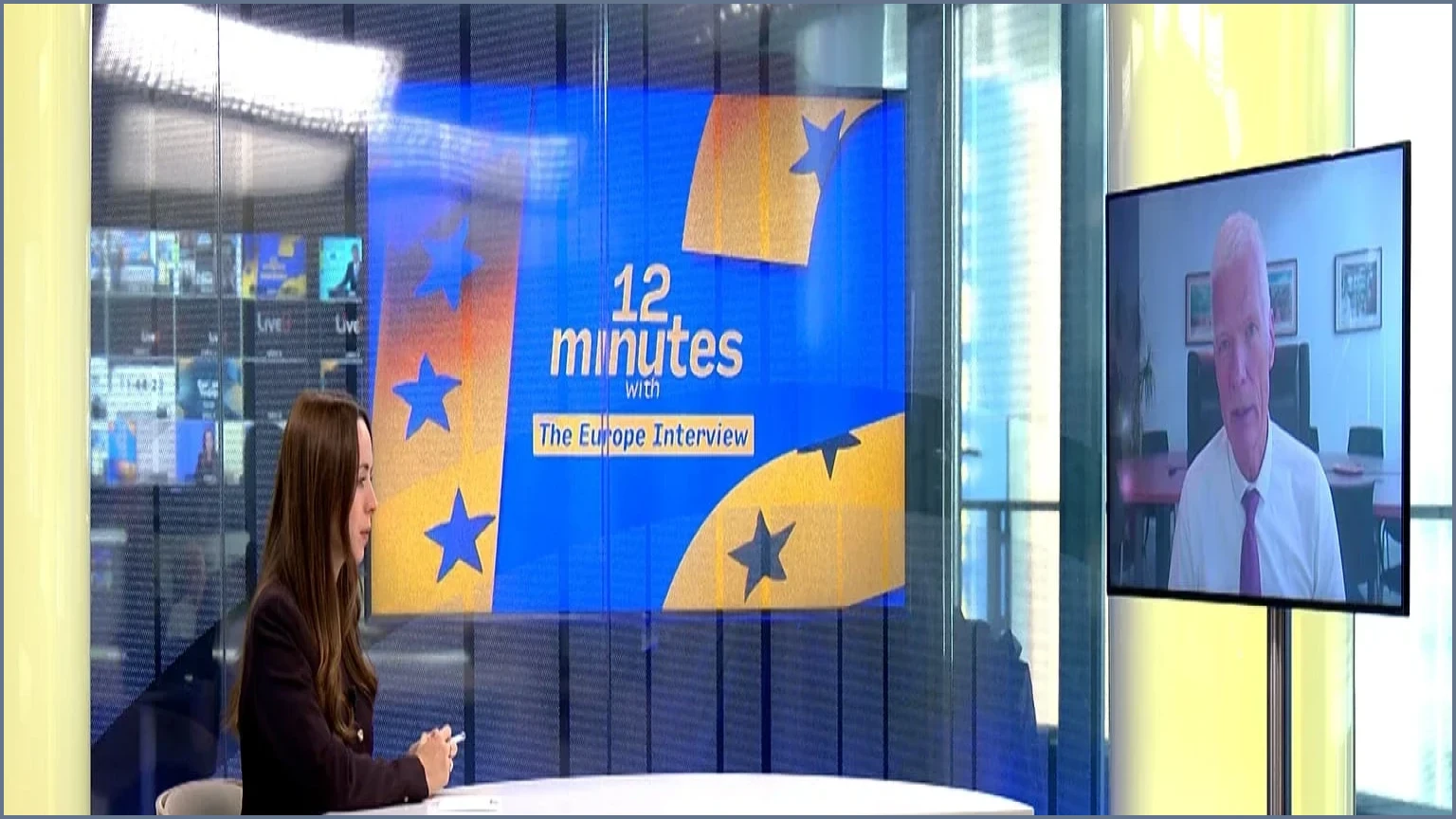
Andreas Schleicher, the founder of the OECD’s renowned PISA tests, has issued a stark warning regarding the performance of students across Europe, describing the current landscape as "really concerning." According to Schleicher, young people are increasingly losing essential skills that are vital for navigating the modern world. These findings follow the release of the 2025 standardised test results, which evaluated 15-year-olds across 91 countries and revealed that performance in both reading and mathematics has reached record lows throughout OECD nations.
The PISA assessment is designed to measure how effectively students can apply reading, science, and mathematics skills to real-world challenges. Schleicher noted that beyond lower literacy levels, there is a clear decline in the capacity of students to "triangulate and to critically reflect on information" or engage with complex texts. He argued that these abilities are indispensable in an era dominated by artificial intelligence. Because AI technology is not inherently accurate, Schleicher emphasized that the "intuition to check and verify" must remain a core student competency.
Schleicher described a concerning "vicious cycle" where students rely on AI tools that are not designed to encourage deeper thinking, effectively "hollowing out exactly the capabilities that we need." The assessment data supports this observation, as students who avoid using AI tools consistently demonstrate higher performance levels. "The bottom line is quite simple: You don't get fit by watching sports. You get fit by doing sports," Schleicher stated. He explained that true learning occurs through the process of engaging with, comparing, and contrasting ideas, rather than through the passive consumption of content.
While the rapid advancement of AI often outpaces the ability of education systems to adapt, Schleicher pointed out that human innovation has historically struggled to keep pace with the wise application of new tools. However, the assessment also highlighted that "cognitive friction"—such as forcing students to challenge the output generated by AI—can lead to improved learning outcomes. He urged education systems to transition away from the "consumptive use of AI" toward a more creative approach that utilizes the technology to prompt deeper inquiry.
Since creating the PISA test in the 1990s, Schleicher has become a leading voice in global education. He recalled that the program was initiated because traditional metrics, such as educational spending and years spent in classrooms, failed to accurately reflect the actual skills produced by schools. Current data shows the most significant declines occurring in major European nations, including France, Germany, and Spain. Conversely, smaller, dynamic economies have provided more successful models, with Estonia ranking first in Europe and within the global top ten across all three tested domains. Schleicher praised Estonia for engaging with the digital world in a "cautious but very thoughtful, very productive way."
Looking ahead, Schleicher suggested that the focus of education should shift from skills that are easily digitized toward uniquely human capabilities, such as ethical decision-making and the capacity to navigate complex human relationships. He stressed that students must move from being passive consumers to active learners. For parents, he emphasized that their level of interest in their child's education is paramount, noting that children whose parents ask about their school day are often two school years ahead of their peers. Finally, he called for teachers to evolve into "great coaches" and "facilitators," noting that in the face of widespread teacher shortages, systems must provide educators with the necessary time to support students on their learning journeys.
One factor at play is that the speed at which new technologies such as AI have advanced in many countries outpaces education systems' ability to reform. "Humans have always been better at inventing new things than using them wisely," Schleicher said.