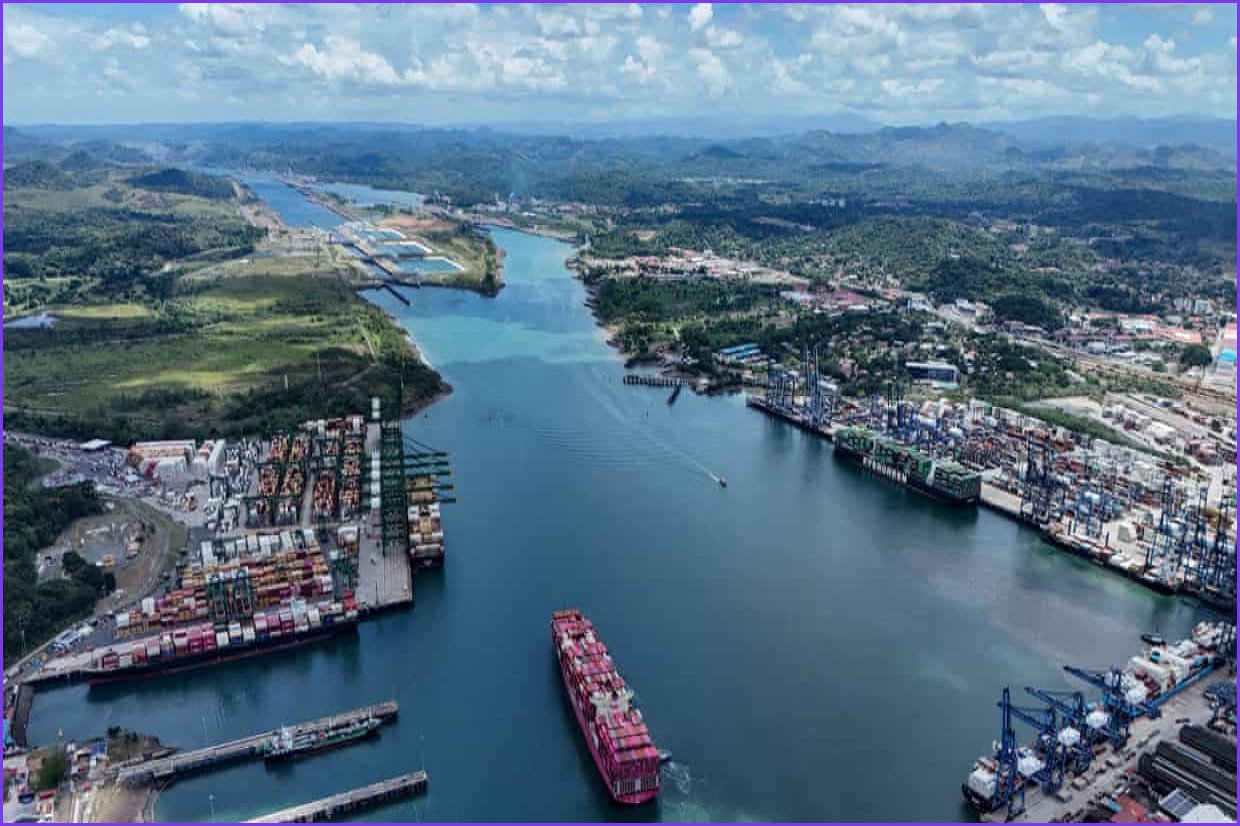
The Panama Canal Authority has announced plans to reduce the number of vessels permitted to navigate the strategic waterway starting next month. The decision comes as Central America faces a severe drought linked to the El Niño phenomenon, which has significantly lowered water levels in the artificial lakes that sustain the canal’s operations.
Beginning September 3, the daily limit for ships will decrease from 36 to 34. A further reduction to 32 vessels per day is scheduled to take effect on September 15. The Panama Canal serves as a vital artery for international commerce, facilitating 5% of global maritime trade and approximately 40% of container traffic destined for the United States. It is a preferred route for large retailers and energy companies moving goods between China, Asia, and the Americas.
According to the canal operator, rainfall in the watershed area between May and August has dropped 34% below the historical average. The authority warned that the ongoing El Niño event, which warms Pacific Ocean surface temperatures and disrupts regional weather, could lead to even lower precipitation levels. To maintain the long-term sustainability of the waterway, the operator has already implemented water conservation measures, including reduced maximum draft limits for the largest ships.
These restrictions mirror challenges faced in 2023, when low water levels forced the authority to cut daily transits from 38 to 22. That situation resulted in significant bottlenecks and forced shipping companies to seek alternative routes. Officials stated that the upcoming reduction will likely increase waiting times for vessels attempting to transit without a pre-existing reservation. Currently, nine out of ten ships use the canal with a reservation, while the remaining slots are auctioned. Competition for these spots has been intense; while average winning bids were once $135,000, one company paid $4 million in April to secure passage.
The canal’s primary users include the United States, China, Japan, Chile, and South Korea. Water management remains a sensitive issue in Panama, as the same lakes that feed the canal are also the primary water source for roughly half of the country’s 4.2 million residents. With this year’s El Niño event appearing to be among the strongest on record, the canal authority has not ruled out additional shipping restrictions in the coming weeks depending on rainfall trends.
In 2023 the water level in the lakes feeding the canal was so low the waterway’s operators cut the daily ship transit number from 38 to 22. Those restrictions led to a bottleneck of ships waiting for their turn to cross and sent companies scrambling to find alternative routes.
On Wednesday, the government of Honduras placed 80% of that Central American country on drought alert.