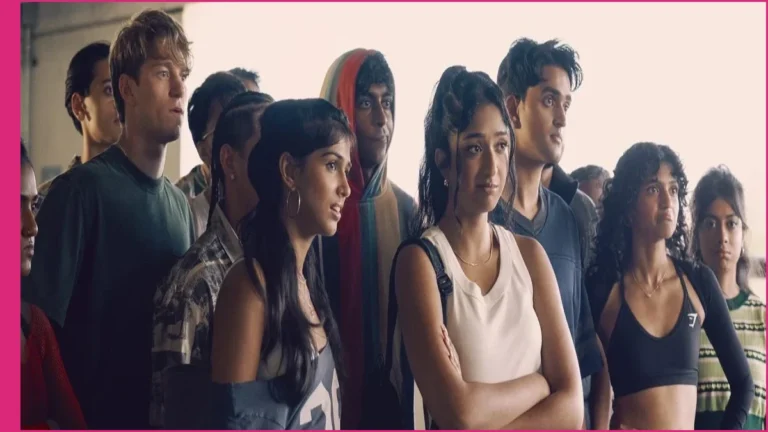
The release of Christopher Nolan's star-studded cinematic epic "The Odyssey" has sparked a massive resurgence in book sales and library checkouts for Homer's 3,000-year-old poem, with Emily Wilson's groundbreaking 2017 translation leading the surge.
According to data from Circana BookScan, year-to-date sales for all translations of the epic have jumped by 76 percent. Digital and audio formats are also experiencing explosive growth. Libby, the e-book lending platform, reports a 217 percent increase in checkouts compared to the same period last year, while Spotify has seen global listens for "The Odyssey" audiobook skyrocket by more than 300 percent. Among the top-selling versions is Gareth Hinds' graphic novel, but no edition has matched the extraordinary demand for Wilson's translation.
Wilson’s edition, published by W.W. Norton, is the single top-selling translation of the year. Emmy Wenstrup, a publicist for the publisher, revealed that domestic sales of Wilson's translation have already crossed the one-million mark this year, with the sales spike beginning immediately after Nolan's film was announced in December 2024. The demand has overwhelmed public libraries. Connor Goodwin, senior manager of public relations at the New York Public Library, noted that Wilson’s version is heavily outpacing all other translations. Within the NYPL system—one of the largest in the United States—Wilson's book represents 90 percent of all physical print holds and 57 percent of digital ebook and audiobook holds.
Nolan's film, currently playing in theaters, has received high praise, with critic Brian Truitt calling it the greatest work on the iconic director's noteworthy resume. While Nolan drew inspiration from multiple translations, he specifically cited Wilson's work in an interview with Empire Magazine last year. Notably, Wilson's 2017 translation remains the only published English translation of "The Odyssey" by a woman.
Wilson's translation is characterized by its accessible, modern vocabulary, incorporating contemporary words like "daddy," "crazy," and "tote bag." This modern linguistic approach carried over into Nolan's film adaptation. The movie's trailer sparked online controversy when Telemachus, played by Tom Holland, referred to Odysseus as "dad." Both Holland and Nolan defended the choice, arguing that the traditional term "father" is no more accurate to the original ancient Greek text. Commenting on the debate, Wilson told LADbible that because all forms of English are modern, perfect linguistic authenticity is impossible "unless you’re going to compose a script entirely in Homeric Greek – which would be very fun but unlikely to do well at the box office."
Beyond its modern language, Wilson's version has been both celebrated and criticized as a feminist translation. In a 2017 essay for The New Yorker, Wilson explained her deliberate choices to convey Penelope's profound grief over her marriage rather than "prettifying or trivializing" her experience. She also deliberately avoided misogynistic language in key passages. For instance, in the scene where Odysseus orders the execution of the female slaves who slept with Penelope's suitors, Wilson uses the word "girls" instead of harsher slurs. She pointed out in her essay that other contemporary translations often frame the slaughter as ordinary and justified, using terms like "disobedient maids," "sluts," or "whores." Wilson wrote that such "verbal abuse… finds absolutely no analogue in the Greek," prompting her to offer a more faithful representation of the original text.