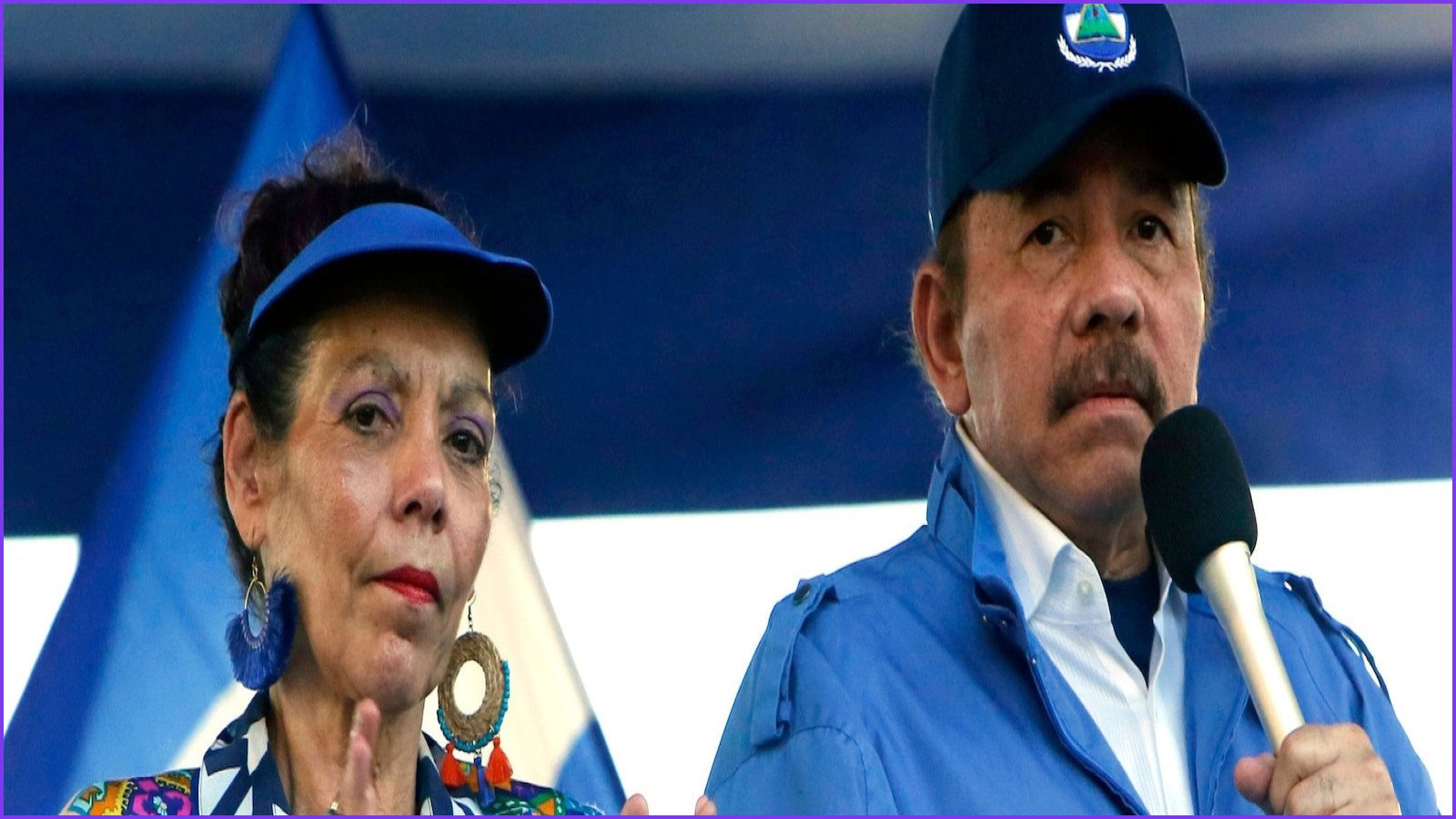
Nicaraguan President Daniel Ortega has announced that the country will not hold elections anytime soon, a declaration that underscores his efforts to extend his nearly 20-year rule and effectively ends any remaining hopes for a democratic vote. The announcement serves to cancel the next scheduled elections, which were originally set for November 2027 following a January 2025 vote by the government-controlled Congress to extend the presidential term by one year.
Ortega made the remarks on Sunday during the anniversary of the Sandinista Revolution, the 1979 event that toppled the Somoza dictatorship and first brought him to power. Since returning to the presidency in 2007, Ortega has systematically rewritten the constitution, dismantled political opposition, and solidified his control over virtually every branch of the Nicaraguan government. Following mass protests in 2018, which resulted in a violent government crackdown that left hundreds dead, Ortega and his wife and co-President, Rosario Murillo, have maintained a firm grip on the nation.
In his speech, Ortega railed against the United States, his long-time adversary, and declared that the era of electoral competition is over. "There won't be anymore elections," he stated, dismissing potential opposition as parties installed by the "Yankees" or the former Somoza regime. He emphasized his position by repeating "Never, never, never" when referring to any future electoral processes. Ortega previously declared himself the winner of the 2021 election—a vote widely viewed as illegitimate by the international community—after jailing all viable candidates who could have challenged him. The United States does not recognize his presidency.
Opponents and human rights groups view the announcement as a significant escalation in Ortega’s efforts to solidify his power. Juan Sebastián Chamorro, a 2021 presidential candidate who was imprisoned until his 2023 release to the United States, stated that the move reveals a long-standing plan to consolidate power under the Sandinista party, similar to one-party systems in countries like China and Cuba. Tiziano Breda, a senior Latin America analyst at the independent conflict monitor ACLED, suggested that Ortega and Murillo are acting out of fear that even the slightest political opening could allow dissent to threaten their control. "Instead of staging a rigged election, they have opted to eliminate electoral competition altogether," Breda added.
Legal experts have also expressed concern regarding the implications of this announcement. Danny Ramírez Ayérdiz, a Nicaraguan lawyer and founder of the Interamerican Center for Legal Assistance in Human Rights, noted that the declaration "reveals the face of a dictatorship that, without any shame, has entrenched itself in power." He warned that the move indicates a potentially higher level of repression against those who demand the removal of the government. According to the Mechanism for Recognition of Political Prisoners, at least 46 people remain behind bars in Nicaragua for political reasons, though the government denies holding any political prisoners.
The government’s broader crackdown has included the closure of more than 5,000 organizations since 2018, most of which were religious, and has forced thousands of citizens to flee the country. Earlier in July, the government stripped a large number of lawyers of their licenses to practice, an action U.N. experts described as a "purge of the legal profession." While the government has previously released hundreds of activists, religious leaders, and politicians to the U.S. and Guatemala—often stripping them of their citizenship and belongings—those released have reported being held in isolation and subjected to physical and psychological torture. Although the government suggested it would release more prisoners following a U.S. military operation involving Venezuela’s Nicolás Maduro in January, there has been little transparency or follow-up, and at least one imprisoned activist has died since that time.