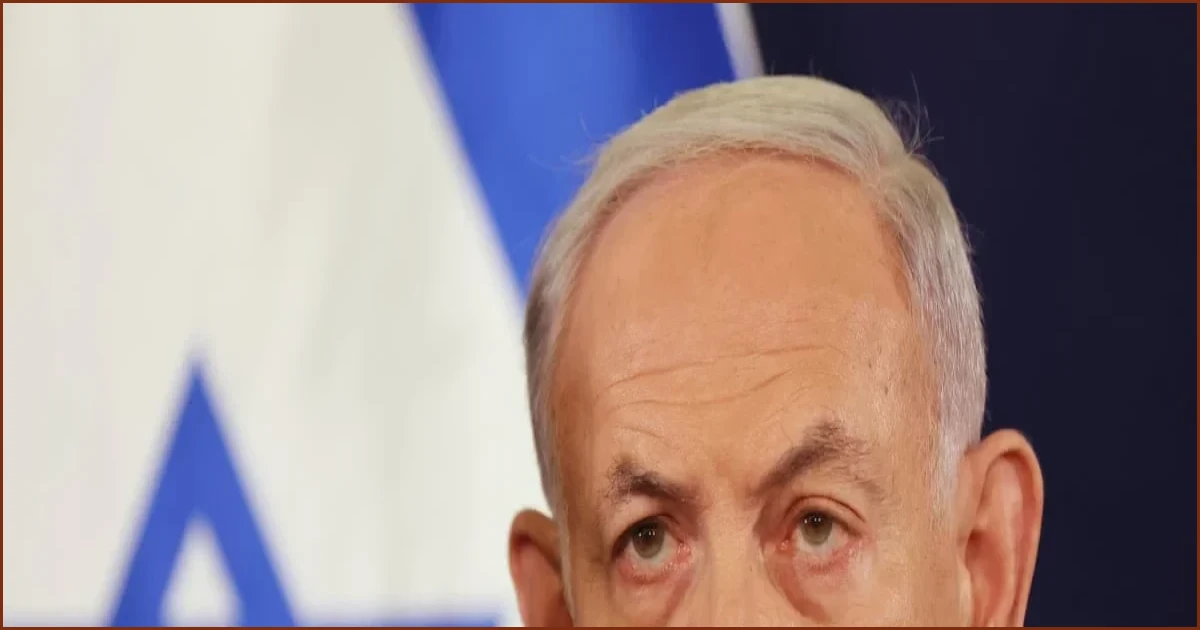
Following the loss of his far-right coalition government's mandate in recent national elections, Israeli Prime Minister Benjamin Netanyahu is making intensive efforts to retain power while serving in a nominal caretaker role. As protracted negotiations proceed over who will form Israel's next administration, Netanyahu is pushing for a "government of national unity" that explicitly excludes Arab political factions, raising widespread concerns across the region and within Israel's political establishment.
The election outcome saw Palestinian-led parties secure an unexpected 19 parliamentary seats on high voter turnout, positioning them to potentially exercise a decisive influence over the formation of the next multiparty coalition government. In response, Netanyahu has promoted unsubstantiated claims of electoral fraud directed at Arab-led parties and repeated non-specific allegations of foreign interference. Official investigators have stated there is no evidence to support these slurs, yet Netanyahu and his media and political allies have continued to repeat them.
Warnings over the potential for civil disturbance have intensified following commentary from Haaretz columnist Yossi Verter. Verter cautioned that Netanyahu's secondary goal is to incite supporters to march on the Knesset on Tuesday, 17 November—the date scheduled for replacing the parliamentary speaker—to disrupt the plenum from convening or encourage outgoing coalition members of the Knesset to blow up the session. The scenario has prompted dismaying predictions and alarm over the future of Israeli governance, drawing comparisons to the 6 January 2021 Capitol Hill insurrection in the United States.
Netanyahu has also faced intense criticism for escalating his rhetoric against Arab participation in government. In a recorded statement, he asserted that any governing coalition reliant on or inclusive of Arab parties would amount to a "government of national suicide" formed with those seeking Israel's destruction to establish a Palestinian state on its ruins. The remarks implicitly framed Arab-Israelis, who account for approximately 21 percent of the total population, as actual or potential Hamas-sympathising terrorists. Netanyahu added in his statement that street flames in Paris and Brussels would pale in comparison to the fire seen in Jerusalem, Tel Aviv, and Haifa, claiming Israel simply would not survive.
Opposition figures have strongly rejected Netanyahu's tactics. Gadi Eisenkot, leader of the primary opposition "change" group who has been granted the first chance to assemble a government, condemned Netanyahu's address during a recent Knesset swearing-in ceremony as shameful and hateful. Eisenkot stated that the speech further demonstrated Netanyahu is unfit to continue in office for even one more minute, calling for urgent action to establish a national emergency government to prevent further societal division and security threats.
Concerns are also mounting that Netanyahu could seek to initiate a new security crisis by renewing military attacks on Iran to boost his political standing and delay a transition of power. Eisenkot sent a formal letter to Netanyahu urging caution, restraint, and national responsibility, warning him not to violate public trust in state institutions and decision-making processes. Prior to the election, Israel Defense Forces Chief of Staff Eyal Zamir and other top military generals reportedly informed US counterparts of beliefs that Netanyahu aimed to draw Washington into a third military confrontation with Tehran in two years.
The political developments coincide with shifting dynamics in the United States, where severe Republican losses in recent midterm elections were partly attributed to the unpopularity and cost of the war with Iran. Vice President JD Vance publicly identified the Iran war and uncritical support for Netanyahu and Israel as key factors behind the poor results. Vance was recently dismissed from his role overseeing Iran negotiations as President Donald Trump insisted talks with Tehran were at an end. Despite internal political backlash, the US continues to enforce military and economic pressure against Iran through an air, land, and sea blockade amid a persistent global oil price crisis.
Netanyahu's push to remain prime minister comes against the backdrop of extensive domestic and international legal challenges. He faces an arrest warrant from the International Criminal Court over alleged war crimes and remains on trial in Israel on corruption charges. Furthermore, his tenure continues to be marked by controversy surrounding judicial overhaul attempts, efforts to muzzle broadcast media, cynicism in election manipulation, and escalating settler violence in the West Bank.
Netanyahu’s bad-loser machinations ape those of Trump after Joe Biden expelled him from the US presidency in 2020. They include wild and unsubstantiated claims of electoral fraud involving Palestinian-led parties, whose unexpected haul of 19 parliamentary seats on a huge turnout has given them a potentially decisive sa
Despite his calamitous, unaccounted-for failure to prevent the 2023 Hamas attacks, the prime minister continues to claim only he, and he alone, can keep Israel safe. After witnessing another panicky, almost hysterical Netanyahu speech at last week’s Knesset swearing-in ceremony, Gadi Eisenkot, leader of the main opposi