Recent reports suggesting that Myanmar has agreed to repatriate hundreds of thousands of Rohingya refugees have been met with skepticism following official denials from Bangladesh. On July 29, Malaysian Prime Minister Anwar Ibrahim claimed that Myanmar had committed to repatriating 300,000 refugees from Bangladesh and an additional 5,000 from Malaysia. However, the following day, Bangladeshi State Minister for Foreign Affairs Shama Obaed clarified that no such proposal had been forwarded to Dhaka, and that the specific issue of repatriating 300,000 individuals had not been discussed between the two nations.
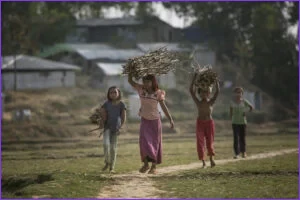
This discrepancy reflects a recurring pattern in Myanmar’s response to the protracted Rohingya crisis, which began following the 2017-2018 "cleansing operations" in Rakhine State. These military actions forced over 750,000 Rohingya to flee to Bangladesh, joining an existing population of approximately 300,000 who had arrived in previous decades. The United Nations Human Rights Council has officially labeled these actions as ethnic cleansing, while the United States has recognized them as genocide. Currently, Bangladesh provides shelter to roughly 1.5 million Rohingya, representing one of the largest refugee populations globally.
Despite the lack of viable local integration options or third-country resettlement, attempts at organized repatriation have consistently failed. A November 2017 bilateral memorandum of understanding (MoU) failed to facilitate a single return, despite pledges to process 300 individuals daily. Similarly, U.N.-mediated agreements in 2018 and subsequent years led to verification efforts and the opening of transit centers, but no official repatriations occurred due to the absence of necessary protection guarantees. A 2023 pilot program, facilitated by Chinese mediation, also stalled before any movement took place, further complicated by the outbreak of conflict in Rakhine State between the Tatmadaw and the Arakan Army.
In April 2025, Myanmar expressed a willingness to repatriate 180,000 verified refugees, a pledge made at a time when the military had lost control of approximately 80 percent of Rakhine State, including the Maungdaw District. Analysts suggest this was likely a symbolic gesture designed to deter Bangladesh from pursuing a U.N.-backed humanitarian channel. As regional pressure from nations like Malaysia—which hosts over 126,000 Rohingya—increases, Myanmar continues to utilize the language of repatriation as a rhetorical tool to deflect international scrutiny.
The current reality on the ground makes such promises effectively impossible to implement. With the Arakan People’s Revolutionary Government and the Arakan Army now controlling roughly 90 percent of Rakhine State, the military-led Union Government lacks the authority to manage returns. Furthermore, the essential conditions for safe and sustainable repatriation—including citizenship, freedom of movement, security, and independent international monitoring—remain entirely absent. Until these structural impediments are addressed, such diplomatic declarations are expected to remain empty gestures rather than actionable policy.