French authorities have confirmed that more than 150 migrants were rescued on Tuesday morning after the boat they were using to cross the English Channel caught fire. According to the French maritime prefecture of the Channel and North Sea, the vessel was attempting to reach the UK when its engine ignited.
A total of 157 people were recovered from the water and are being transported to the port of Boulogne-sur-Mer. Officials have stated that there are no reports of any injuries or deaths among those on board.
The vessel reportedly departed from France on Monday night. The French maritime prefecture stated that during the overnight hours, five individuals on the boat required rescue, but the remaining passengers declined assistance from French patrol boats. In a statement, the prefecture explained that migrants crossing the Channel in small boats are often determined to reach the United Kingdom and typically refuse emergency service aid unless they are in a situation of extreme emergency.
Due to the structural fragility of the vessels used for these crossings, authorities had decided not to intervene further at that stage. However, the situation changed on Tuesday morning when the engine caught fire, causing the vessel's integrity to deteriorate very rapidly.
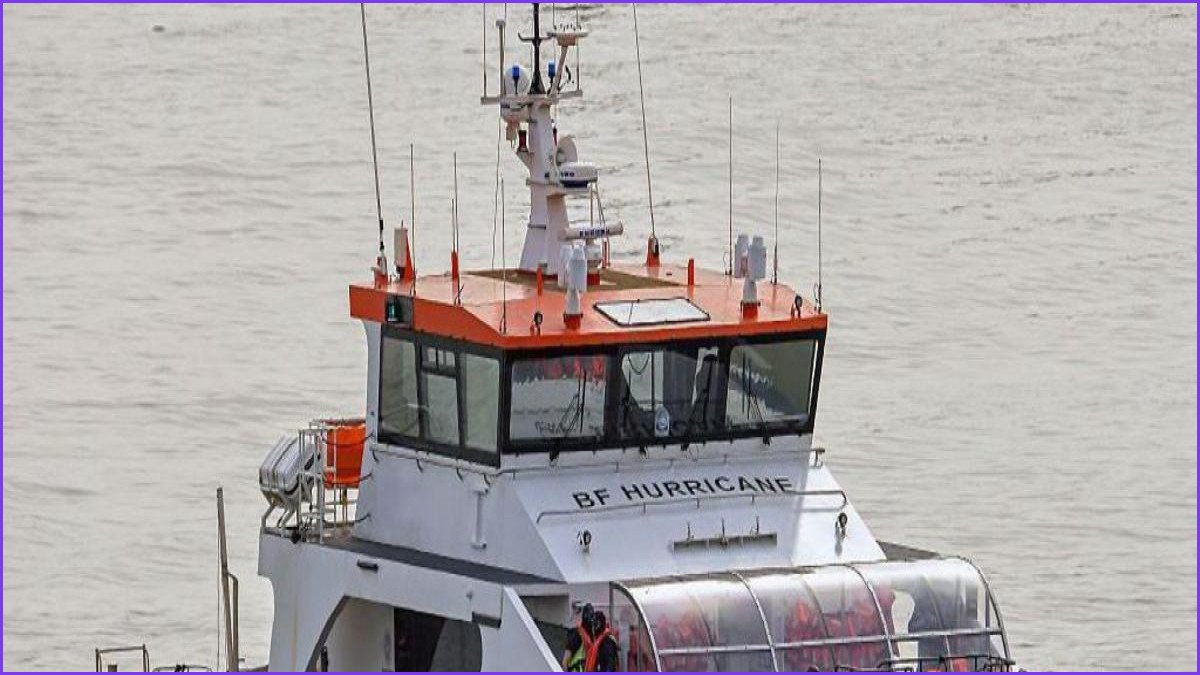
A coordinated rescue operation was launched involving both French and British assets. The response included the RNLI Eastbourne lifeboat as well as the UK Border Force vessels BSC Contender and BSC Courageous. Two French boats were responsible for rescuing 103 migrants, while the British vessels rescued 54.
All 157 individuals were taken to Boulogne-sur-Mer for treatment, with an expected arrival time of 12:30 local time (11:30 BST) on Tuesday. The UK Coastguard confirmed that they assisted in the operation while the vessel was in the French search and rescue region.
This incident occurred just one day after Prime Minister Andy Burnham pledged that his government would be relentless in its efforts to curb the number of people arriving in the UK via small boats. Statistical data indicates that between 1 January and 1 August 2026, 14,526 people crossed the English Channel by small boat, which represents a 43% decrease compared to the same period in the previous year.
Since 2020, these crossings have become the most common method for people detected entering the UK illegally. Nearly all those who arrive by small boat claim asylum, which, under international law, allows them to remain in the country while their applications are processed. Small boat arrivals accounted for 42% of all asylum applications between April 2025 and March 2026.
Experts have raised concerns regarding the safety of these crossings, noting that overcrowding makes the journeys significantly riskier. Boats arriving in the UK between 2 August 2025 and 1 August 2026 carried an average of 67 people, a figure that has more than doubled since 2021. According to the United Nations, at least 84 people died while attempting to cross the Channel in 2024.
Beyond small boat arrivals, 4,535 people were detected entering the UK without permission via other methods—such as hiding in vehicles, traveling on ferries, or through airports—between April 2025 and March 2026, marking a 22% decline from the previous year.
The government has pledged to smash the criminal gangs behind these crossings to further reduce these numbers. Additionally, while some individuals arrive legally on work or study visas and subsequently overstay their limits, the total number of people living in the UK illegally through this method remains unknown.
When considering the overall scale of immigration, small boat arrivals represent approximately 5% of total immigration into the UK from January 2025 to December 2025. People from Eritrea accounted for 18% of all small boat arrivals from April 2025 to March 2026.