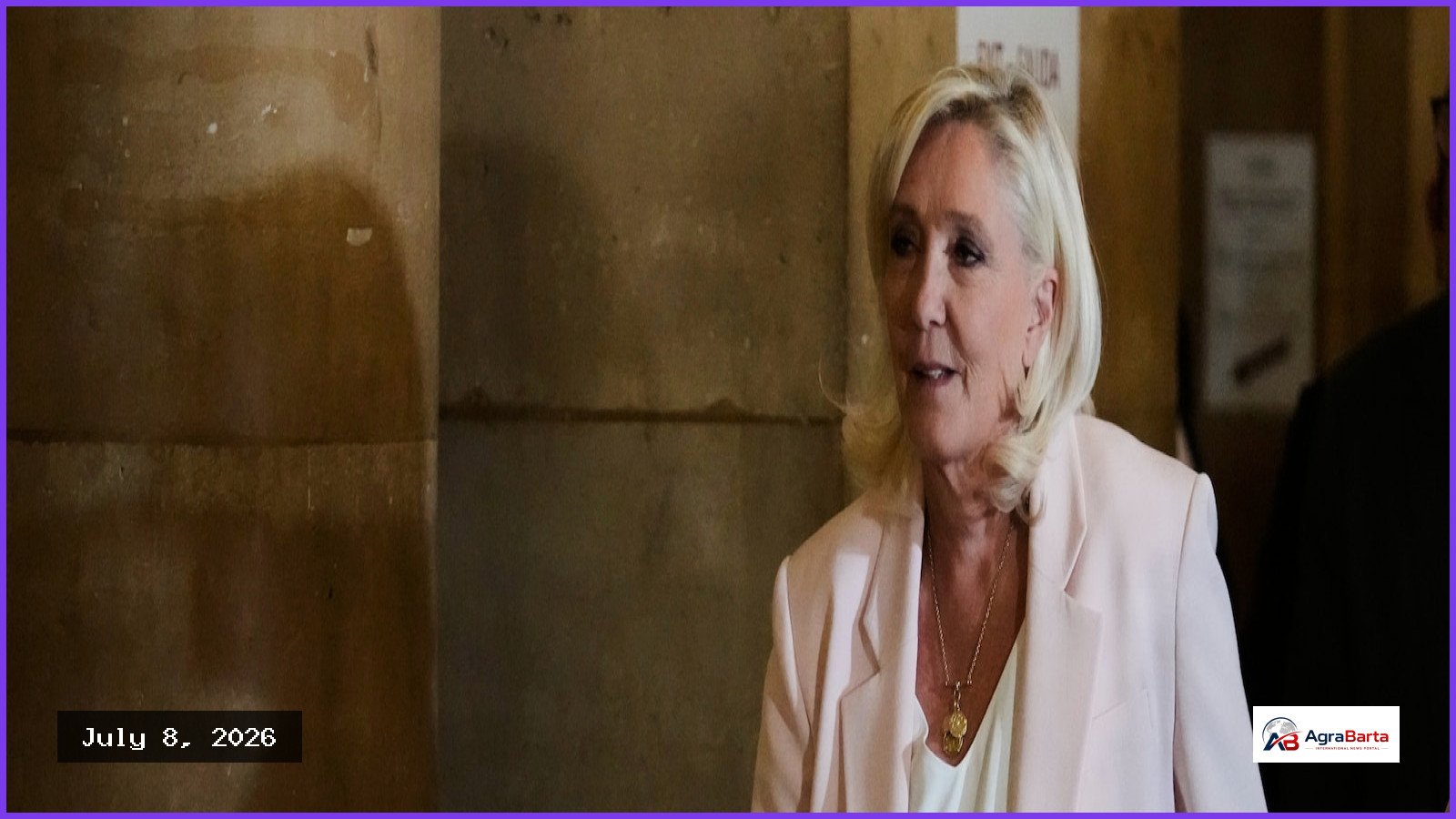
A Paris appeals court recently found far-right leader Marine Le Pen guilty of embezzlement, resulting in a 100,000 euro fine and a modified ban on holding elected office. While the court reduced her initial five-year ban to 45 months, it stipulated that one year of the sentence must be served under house arrest while wearing an electronic monitor. This measure is frequently utilized in France to address the country’s persistent prison overcrowding and deteriorating detention conditions, as noted by the European Committee for the Prevention of Torture.
Under the terms of French electronic home detention, an individual is required to wear an ankle monitor and is prohibited from leaving a designated residence except during time slots authorized by a judge. The specific location and allowed hours of movement are determined by the court or a judge tasked with sentence enforcement. While such a restriction complicates the logistics of running a political campaign, it does not render it impossible. A specialized judge will finalize the details of Le Pen’s monitoring in the coming months, including her permitted location and movement schedule.
The appeals court emphasized that the law allows for sentence reductions of up to six months per year during the adjustment period, potentially even offering a path to conditional release. Depending on when the monitor is fitted, Le Pen could technically be free of the device for the final stretch of the presidential campaign, with the first round of the election scheduled for April 18 and a runoff on May 2. “The appeals court has decided to make a presidential bid possible, so the decision must be respected,” said Céline Bertetto, president of the national association of sentence enforcement judges. “Regarding sentence reductions: For a one-year sentence, there can be a six-month reduction, but she must comply with the permitted hours of movement and pay the criminal fine.”
Le Pen has previously stated that she would not pursue the presidency if forced to wear a monitor, arguing that it would impede her ability to campaign freely. She remarked in an interview with LCI that she could not be dependent on a judge to authorize simple campaign tasks like visiting a market or holding a rally. Precedent exists for this measure; former French president Nicolas Sarkozy wore an electronic monitor last year following his own corruption conviction. During his sentence, Sarkozy was granted specific windows for movement—sometimes between 8 a.m. and 8 p.m., or later on certain days—before eventually receiving conditional release after just over three months.
Asked specifically whether an electronic monitor would be the main obstacle, she replied: “Well, of course. I can’t be dependent on a judge to authorize me to go hold a campaign rally … or to visit a market.”
At the time, French media reported that he was authorized to leave his home between 8 a.m. and 8 p.m. This authorization was reportedly extended until 9:30 p.m. on Mondays, Wednesdays, and Thursdays, to make sure he could attend a separate trial.