Residents and local leaders in Luton have strongly rejected claims by a Conservative Member of Parliament that parts of the town have become "no-go zones" for white people. The controversy arose after remarks made by Blake Stephenson, the MP for Mid Bedfordshire, who lives in a village about 15 minutes outside of Luton. Speaking at the Conservative Party conference, Stephenson asserted that Luton is "a very dangerous place" where certain communities "live in ghettoes" and claimed there are areas where white people refuse to go.
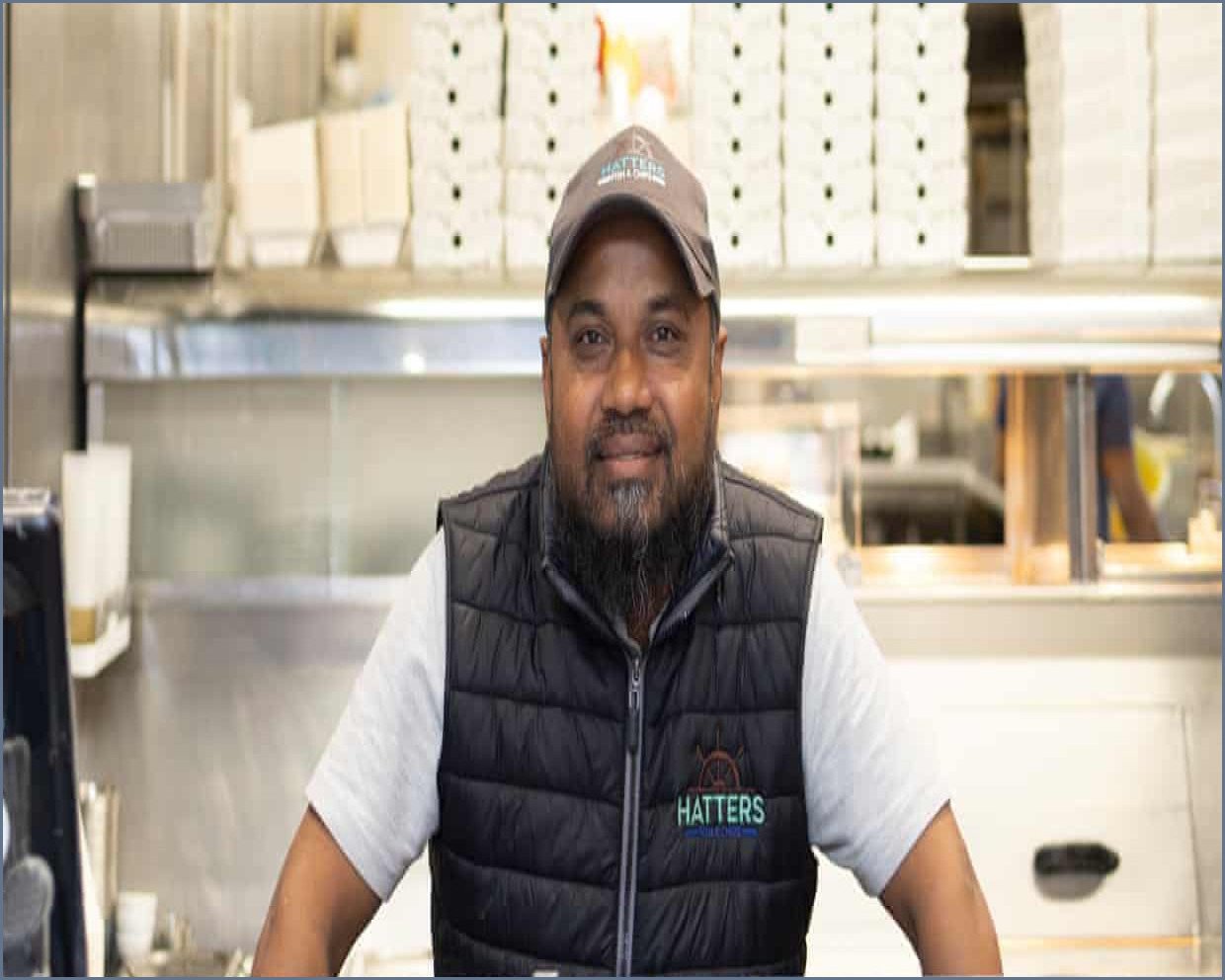
The MP's comments have drawn widespread condemnation across the town, with locals arguing his description bears no resemblance to daily life. In Bury Park, a predominantly Asian district of Luton, business owners and shoppers expressed confusion over the characterization. Tanner Ahmed, affectionately known in the area as "Mr T," questioned the idea that the neighborhood could be considered a "no-go zone" from behind the counter of his fish and chip shop. Ahmed explained that his business was established specifically to serve the thousands of football fans who pass through the area every week to attend matches at Luton Town’s nearby stadium, particularly during the club's recent season in the Premier League.
On the streets of Bury Park, Dunstable Road showed no signs of the tension described by the MP. The busy thoroughfare was filled with activity as shoppers of various ethnic backgrounds visited jewelry stores, restaurants, and food shops selling pakoras and other snacks, or wheeled shopping trolleys through the car parks of major supermarkets like Sainsbury’s and Lidl. Among those working in the area was a white traffic warden who, speaking anonymously, stated they had always felt perfectly safe doing their job, adding that members of the public or local shopkeepers have routinely stepped in to help whenever minor incidents occurred.
Joshua Bozier, a 36-year-old homeless man living in Luton, remarked that he actually feels safer in Bury Park than in the town center, where he has previously been spat at and urinated on. Bozier dismissed the rhetoric of far-right activist Tommy Robinson, whose real name is Stephen Yaxley-Lennon, saying he "spilled a lot of shit." However, Bozier did recall past tensions in the area, specifically pointing to 2009 when a small group of Islamist activists staged a protest against the Royal Anglian regiment's homecoming parade from Afghanistan. Although only a very small fraction of the local Muslim community participated in that demonstration, the event became a prominent symbol for far-right groups.
Luton has long been utilized by far-right figures as a symbol to warn against the alleged dangers of multiculturalism and Islamism. It is the birthplace of the English Defence League (EDL), the street movement launched by Robinson to build his profile. The narrative has also attracted international attention; in July, Australian senator Pauline Hanson visited the town alongside Robinson for a walkabout that was filmed by an Australian television network.
Dr. William Allchorn, an associate professor at Richmond American University and an expert on the far right, noted that the relationship between local Islamist activists and the EDL was "mutually reinforcing." He explained that the confrontations in Luton occurred at a time when anti-Muslim street politics were emerging, allowing Robinson to successfully package local events into a national and international narrative.
Political figures in Luton have united in their criticism of Stephenson's remarks. Sarah Owen, the Labour MP for Luton North, accused the Conservative MP of repeating "rightwing nonsense" similar to that promoted by Robinson. John Tizard, the Labour Police and Crime Commissioner for Bedfordshire, wrote directly to Stephenson, stating that his claims are entirely unsupported by evidence and warned that they resemble the rhetoric used by far-right agitators to divide communities.
Luton’s independent mayor, Javed Hussain, also expressed deep confusion over the claims while walking through Bury Park. Hussain pointed out the coexistence of Christian, Sikh, and Muslim places of worship in the neighborhood and highlighted local regeneration efforts. He described Luton as a highly diverse, vibrant, and multicultural town, adding that people from all backgrounds regularly travel to Bury Park to shop and eat. While acknowledging the high concentration of Asian residents in the district, Hussain emphasized that community relations are a priority for local policymakers. He noted that council research has shown local cohesion is strong enough to have prevented the civil unrest seen in other English towns, though he acknowledged there is always more work to do, such as providing additional support to children from predominantly white council estates and broadening cultural experiences for local school pupils.
According to the 2021 census, 54.8% of Luton's population identified as non-white, making it one of only four areas outside of London where ethnic minority groups formed the majority of the population at that time.
Little if any sign Bury Park is a place where any group might fear to tread, despite Tory MP’s comments to the contrary
“Yes, in this area there may be a large number of people from an Asian background, but people from all over do travel here for all sorts of reasons, whether to shop or eat.”