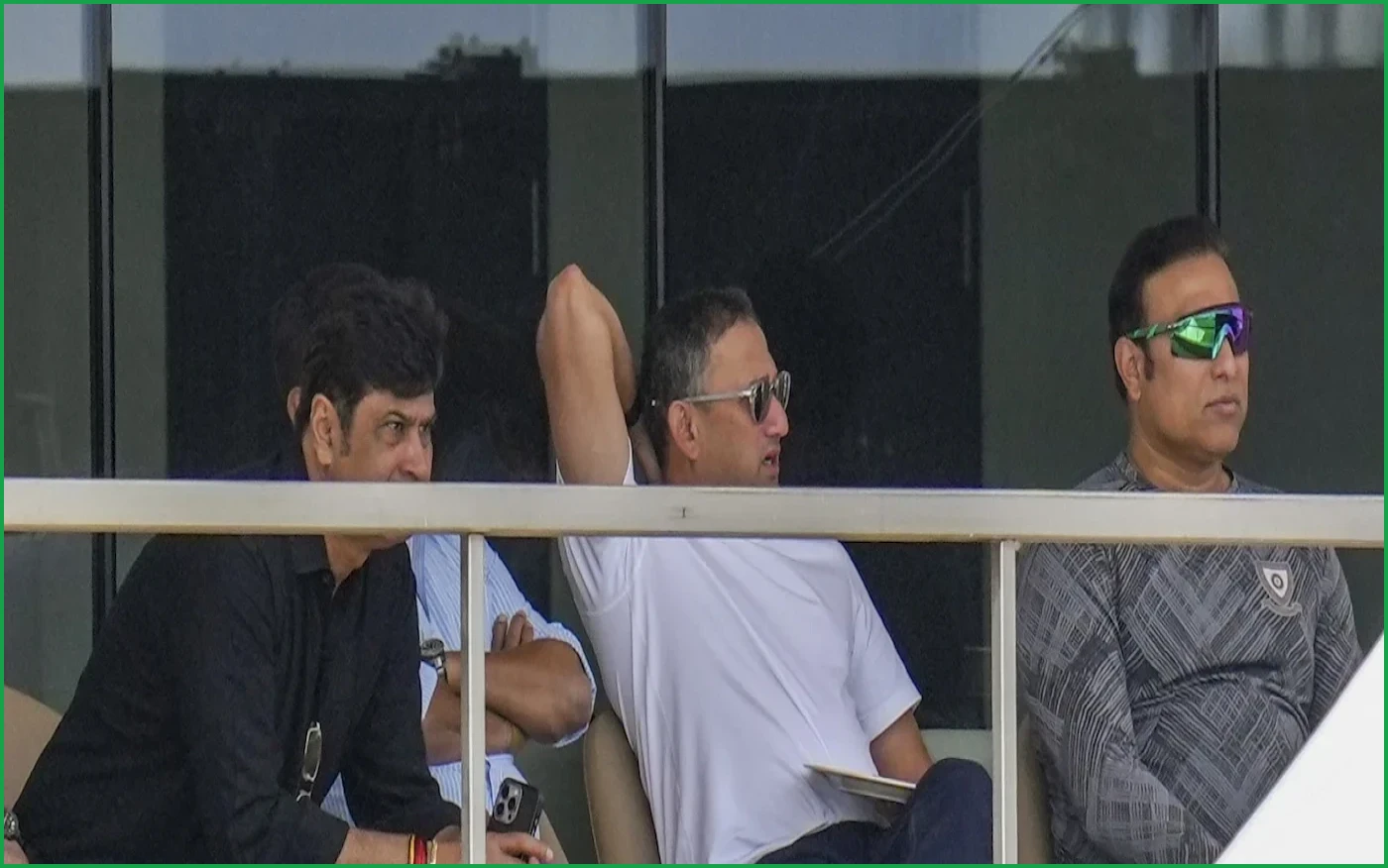
VVS Laxman, head of the BCCI's Centre of Excellence (CoE), has quashed any talk of miscommunication between the CoE, team management, and selectors over player management, while detailing the protocols they have set in stone. On September 5, 2025, during the Duleep Trophy semi-final in Bengaluru, Subroto Banerjee, Ajit Agarkar, and VVS Laxman were seen keeping an eye on the proceedings between North Zone and South Zone, as captured in image 405820.6 (source file 405800, 1280px width).
India will be without at least three first-choice players—Jasprit Bumrah, Sai Sudharsan, and Washington Sundar—for the Test series in Sri Lanka. While Bumrah and Sai Sudharsan have been ruled out entirely, Washington is out of the series opener in Galle from August 15. Auqib Nabi was called in as a late replacement for Bumrah, and Sarfaraz Khan was named as Sai Sudharsan's replacement on Sunday evening.
"There's a brilliant coordination between the COE, the team management of both the teams [men and women], the SSM [Sports Science & Medicine] staff and the selection committees," Laxman said. "The process is that the selector [chairperson] reaches out to the COE asking for the fitness status report [of players]. And we collect the current status and send it to the selection committee chairperson, with a copy to the respective head coach and BCCI."
Bumrah is currently in rehab for a left knee niggle he was nursing since the T20 World Cup earlier in the year, while B Sai Sudharsan is yet to fully recover from a stress reaction on his right big toe. "So Bumrah and Sai Sudharsan were going to be picked for Sri Lanka subject to fitness clearance. If the progression is slow, you communicate to the selection committee chairman and the head coach which is happening seamlessly. And they [players] understand that they're not yet ready to participate in the series. Always it's player-centric and team-centric."
The CoE continues to operate without a Head of Sports Science & Medicine following the resignation of Nitin Patel a year ago. Laxman explained that the vacancy was not due to a lack of effort. "With Andrew Leipus, everything was agreed upon. But at the last minute, he backed off citing family reasons. We then had a panel comprising Dr. Dinshaw Pardiwala, Dr. Ashish Soni and myself, which shortlisted five candidates. An Australian candidate was our top choice, but he too backed out because he couldn't move to Bangalore. We were in touch with another head of Sports Science who worked with the All Blacks. He too initially agreed, but backed out at the last moment. The second and third candidates are already working at the CoE. Now, it is our responsibility to upskill them."
Laxman stressed that the CoE's role is not merely a rehab center. "Whenever the player gets injured in whatever environment, if it is the Indian team, the Indian team physio understands the nature of the injury and then we've got experts and specialists with whom we have got a year-long connection. Once that diagnosis happens, those players are sent to the COE. We clinically examine them through the SSM team. Once the player is ready for the next phase, which is your strength and conditioning, then the S&C coach comes and plays a part. Now, once the next phase starts after the S&C, slowly they go to the skill part and then we build up the load and then we play two RTP matches before we declare the player fit."
"And the whole idea is that when he goes back to the Indian team, men and women, or wherever, including the state teams or whatever teams he is participating, he has to be up and running and from the first match, he has been able to perform to the best of his potential. It is not a machine where the timelines will always be met."
The CoE has focused on integrating technology into their injury management process. "Through this technology, you understand the workload, and all this is there on a regular basis on the AMS [Athlete Monitoring System]," he said. "Like the bowling workload for a fast bowler. And I think our learning is the stress injuries or the injuries happen not because a fast bowler is bowling too much. It happens that the fast bowler is not bowling enough. So there's a sweet spot we have for each and every fast bowler across the contracted, the targeted, and the under-19s, and there's a weekly monitoring of that load. So you give them X number of deliveries which they have to bowl in a week, and then through the GPS, we get the information whether they have been able to fulfil that or not. Remote monitoring is something which is very, very critical."
![Image 30: [L to R] Subroto Banerjee, Ajit Agarkar and VVS Laxman keep an eye on proceedings, North Zone vs South Zone, Duleep Trophy semi-final, Bengaluru, 2nd day, September 5, 2025](https://img1.hscicdn.com/image/upload/f auto,t ds wide w 1280,q 70/lsci/db/PICTURES/CMS/405800/405820.6.jpg)
1400GMT The story has been updated to reflect Sarfaraz Khan's inclusion as a replacement