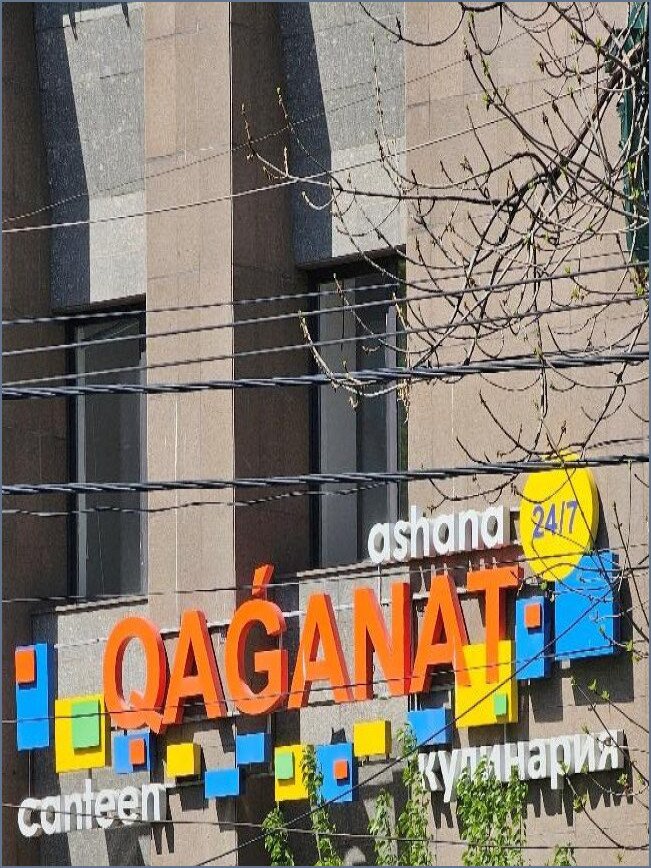
Kazakhstan's ongoing transition from the Cyrillic script to the Latin alphabet, initiated in 2017 under the country's first president, Nursultan Nazarbayev, is scheduled for full implementation by 2031. Designed solely for the Kazakh language, the reform aims to strengthen national identity and restore phonetic pronunciation distorted by the Soviet-imposed Cyrillic script. However, this linguistic shift has triggered intense geopolitical anxiety within Russian media, where it is frequently framed as a direct threat to Moscow's regional influence.
A striking example of this reaction occurred following a July 2025 analysis of over 200 articles on the script reform. In response, Vladislav Makarov published an article titled "Latin Poison for Kazakhstan" in the Russian nationalist outlet Ritm Evrazii. Makarov expressed "the bewilderment among Russians caused by Kazakh officials’ stubborn desire to ban the Cyrillic alphabet." He argued that transitioning to the Latin script has not elevated Moldovan or Azerbaijani cultures globally, claiming instead that the alphabet serves to "tie [post-Soviet republics] to their new overlords." Makarov justified Moscow's intense interest by asserting that Kazakhstan has been "connected to the Russian World for centuries."
This reaction highlights a broader pattern in how Moscow conceptualizes its sphere of influence through the "Russian world" (Russkiy Mir). This ideological and geopolitical framework is designed to foster political loyalty, cultural belonging, and hierarchy, positioning the Russian language, the Cyrillic alphabet, and a shared history as unifying pillars. State-run institutions like the Russian World Foundation actively promote these concepts in Central Asia. An analysis of 77 articles published between 2001 and 2025 across mainstream Russian outlets such as Gazeta.Ru, Lenta.Ru, and Kommersant, as well as nationalist platforms like Regnum and Ritm Evrazii, reveals how heavily the Russian world concept is weaponized to criticize Kazakhstan's alphabet reform.
A central theme in this media discourse is the fusion of the "Russian world" with imperial and Soviet nostalgia, which often manifests as a denial of Kazakh sovereignty. For instance, a 2021 article by Lenta.Ru claimed that Kazakhstan's very existence is a product of Soviet benevolence, asserting that the Bolsheviks "turned Kazakhs into a nation and gifted them a state" and that Kazakh "statehood, culture, and script were all created in Moscow." Consequently, the transition to a Latin script is framed as a sign of historical ingratitude toward Russia as the Soviet Union's successor.
This resentment also extends to how Kazakhstan interprets its own history. A 2017 Lenta.Ru article voiced frustration over Kazakh history textbooks that critically examine the Soviet era, particularly the devastating 1930s famine that claimed the lives of over 1.5 million people, representing one-third of the ethnic Kazakh population at the time. The outlet labeled the alphabet reform as a "symbolic distancing from Russia’s legacy in Kazakhstan," pointing also to the renaming of Soviet geographical locations. Similarly, a 2017 article in Vedomosti described Russia as a "metropole" from which post-Soviet nations are attempting to break away due to fears of being "swallowed by the 'Russian world.'"
Within this framework, Russian media treats the Cyrillic alphabet not merely as a writing system, but as a visual and symbolic border of Russian civilizational power. When countries seek to change their script, Moscow's rhetoric shifts from viewing Russian as a shared transnational commodity to treating it as an endangered asset requiring protection—a phenomenon scholar Lara Ryazanova-Clarke terms "inverse transnational pride." Russian outlets have repeatedly characterized the reform as "an offensive against the Russian language and Cyrillic," using militaristic language to imply a direct attack on Russian influence. Media reports claim the reform will trigger a mass outmigration of ethnic Russians, destabilize the country's demographics, and split "the Kazakh nation into two parts" by alienating those who prefer Russian-language information.
To further delegitimize the reform, Russian commentators rely on a strict linguistic hierarchy that positions Russian as a superior, indispensable language of global knowledge and Kazakh as merely "colloquial in nature." Proponents of this view argue that academic and scientific development in post-Soviet states is impossible without Russian proficiency. This perspective has also found echoes among some Kazakh figures; in 2017, nationalist outlet Regnum quoted Kazakh writer and publicist Seydakhmet Kuttykadam stating that "the Kazakh language and literature will fade away without its donor-language," referring to Russian.
Beyond linguistic arguments, Russian media frequently securitizes the script change by framing it as a geopolitical shift orchestrated by hostile external forces, specifically Western powers or Turkiye. In 2010, the outlet KM.Ru claimed the transition was a form of "preparations for a transformation of public consciousness to adapt it to European civilizational standards." Similarly, a 2021 piece in Nezavisimaya Gazeta alleged that "Anglo-Saxons" were using the Latin alphabet to secure "total control over defeated and enslaved peoples."
The narrative also targets Kazakhstan's relations with the broader Turkic world. In his 2025 piece, Makarov questioned whether the Latin alphabet would truly bring Kazakhs closer to other Turkic nations, asking, "would a Turk from Istanbul really feel closer to a Kazakh than a Russian from Chelyabinsk?" This line of questioning attempts to portray Kazakhstan's ties to Turkiye as politically manufactured, while framing its connection to Russia as natural and historical. By attributing the reform to external manipulation, Russian media systematically strips Kazakhstan of its sovereign agency, portraying its domestic linguistic choices not as independent national decisions, but as the work of foreign conspirators.