The historical foundation of the relationship between Japan and the People’s Republic of China (PRC) has undergone a profound transformation. While diplomatic relations were only normalized in 1972, the two nations established an unofficial trade mechanism as early as 1962, allowing for bilateral commerce despite a lack of formal recognition. This early engagement occurred against the backdrop of Cold War tensions, with Japan often pursuing a China policy that moved faster than the preferences of its primary ally, the United States.
Throughout the 1960s, Washington remained staunchly anti-communist and discouraged Japan from pursuing ties with the PRC. The 1971 announcement of Richard Nixon’s planned visit to China caused significant friction in Tokyo, as it represented a sudden shift in policy that caught Japanese officials off guard. Following normalization, however, both nations entered a period of cooperation driven by a shared distrust of the Soviet Union. During the 1980s, Japan provided significant industrial assistance to China, viewing the relationship through the lens of mutual geopolitical interests.
A major turning point occurred on June 4, 1989, following the Tiananmen Square crackdown. While Japan suspended its aid programs, it notably resisted participating in the full-scale sanctions imposed by the U.S.-led Western bloc. At the G7 summit in Paris, Japan played a pivotal role in preventing China’s total international isolation, advocating for a return to cooperation through economic and political reform. For decades, the bilateral relationship was characterized by the mantra of “hot economics and cold politics,” where trade continued to thrive despite political differences.
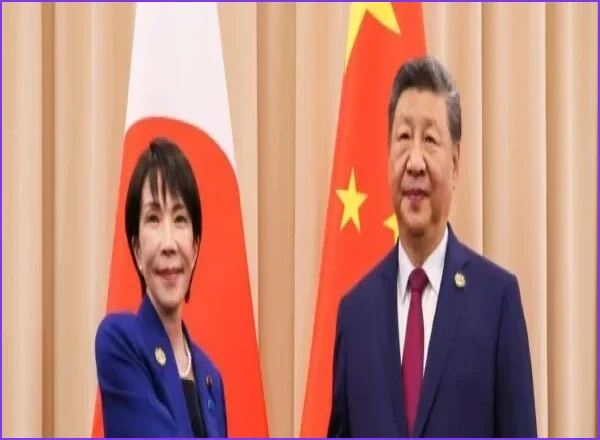
Today, that dynamic has shifted toward what many describe as “cooling economics and colder politics.” The current strain is partly attributed to statements made in late 2025 by Prime Minister Takaichi Sanae, who suggested the potential deployment of Japan’s Self-Defense Forces should a crisis arise regarding Taiwan. While supporters viewed her remarks as bold, critics labeled them insensitive to Beijing’s red lines. Following her electoral victory in early 2026, China has responded with increased pressure, including targeted export controls on dual-use technologies and critical minerals.
The impact is particularly visible in the rare earth sector, where China controls approximately 90 percent of global refining capacity. Furthermore, the detention of Japanese employees in mainland China over allegations regarding rare earth magnet exports has created significant uncertainty for Japanese firms. While Tokyo remains open to a reset, it is simultaneously prioritizing economic security and supply chain resilience, as outlined in Takaichi’s “updated free and open Indo-Pacific” vision. This strategy emphasizes partnerships with like-minded nations to mitigate the risks posed by over-dependence on Beijing.
This policy pivot is also marked by a generational shift within the Liberal Democratic Party. Older political leaders who once viewed investment in China as a moral obligation to address historical grievances from the late 1930s to the end of World War II are gradually leaving the political stage. They are being replaced by a younger, more hawkish generation of conservatives who prioritize hedging against China and strengthening ties with Taiwan. As evidence of this trend, both Takaichi and Ishiba Shigeru visited Taiwan prior to assuming the premiership. Ultimately, the era of prioritizing China’s integration into the global order at any cost appears to have ended, as Japan now focuses on navigating the current, more challenging geopolitical reality.