Japan's upper house of parliament has approved controversial changes to the imperial succession law, cementing a system that continues to exclude women from inheriting the Chrysanthemum Throne. This vote follows a previous approval by the lower house, passing legislation aimed at preserving the shrinking and aging royal family's numbers while strictly maintaining male-only succession.
Under the newly passed revisions, princesses will now be allowed to retain their royal status within the imperial family even after marrying commoners. However, while they will continue performing official public duties, they remain entirely barred from the line of succession. Additionally, the legislation allows the imperial family to adopt male-line descendants from former, defunct branches of the royalty. Although these adopted men—who were born as commoners—cannot personally ascend the throne, any future male offspring they produce will be legally eligible to become emperor.
Critics argue that the convoluted rules are designed specifically to block women from the throne. Seiichiro Noboru, a former Japanese diplomat with close ties to the imperial family, stated that the revision has a "very clear objective: to prevent the future emergence of a female emperor." Noboru pointed out that the complex adoption framework is unnecessary, saying, "The crucial point is that if a female emperor were recognized, we wouldn't need to resort to such a complex adoption line." He also argued that blocking women violates constitutional protections against gender-based discrimination.
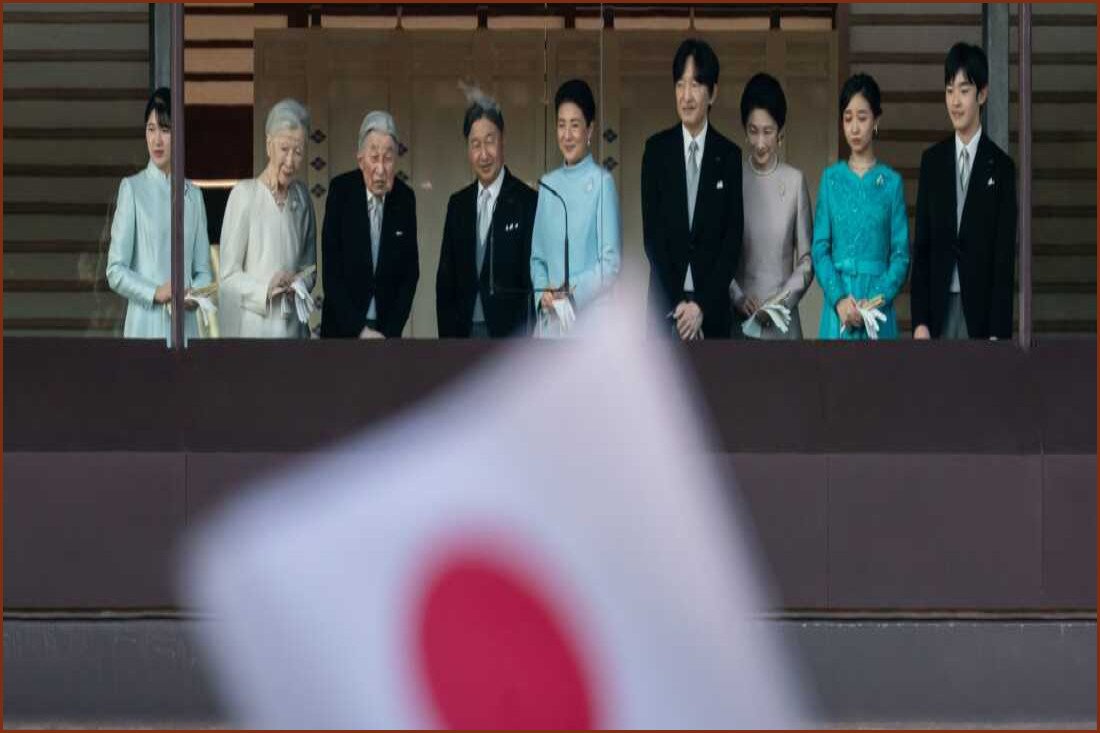
The imperial family is currently facing a demographic crisis, with only one young heir remaining: 19-year-old Prince Hisahito, the nephew of the 66-year-old Emperor Naruhito. This shortage of male heirs has sparked a widespread public sense of crisis regarding the monarchy's survival. The most prominent candidate for the throne in the eyes of many is Princess Aiko, the 24-year-old only child of Emperor Naruhito. Princess Aiko, who holds a degree in Japanese literature and works full-time for the Japanese Red Cross Society, enjoys immense popularity, drawing thrilled crowds during her public appearances. Public opinion polls indicate that between 60% and 90% of the Japanese public supports the idea of allowing a female emperor.
Despite overwhelming public support, political leaders remain opposed. Japan's first female prime minister, Sanae Takaichi, has strongly defended the male-only tradition. Speaking at a party convention on October 21, 2025, Takaichi asserted, "The unparalleled historic fact that the imperial line has been maintained through the male line for 126 generations is the foundation of the emperor's authority and legitimacy."
However, the historical record shows that female rule is not entirely unprecedented. Over nearly twelve centuries, Japan has had eight female emperors. Like Princess Aiko, these female rulers were descended from the male line, being the direct children or grandchildren of a male emperor. This practice of allowing female emperors only ended in 1889 with the enactment of the first Imperial Household Law by the Meiji government. Meiji leaders envisioned the emperor as the commander-in-chief of the imperial military, the patriarch of a "family-state," and a semi-divine descendant of Shinto deities. Concurrently, the Meiji civil code rendered married women legally powerless, preventing them from owning property or signing contracts without their husbands' consent.
To ensure the survival of the male line amidst high rates of infertility and infant and maternal mortality, the Meiji government relied on concubines as a safety valve. This practice was so common that nearly half of Japan's 125 emperors were born to concubines, described as being "of illegitimate descent" in a 2005 government advisory panel report. In modern Japan, Noboru emphasizes that the constitution places sovereignty with the public rather than ancient tradition. Pointing to Article 1 of the Japanese Constitution, which states that the Emperor's position is determined by the will of the people, Noboru remarked, "What the government is attempting to do clearly runs counter to public opinion."
Emperor Naruhito himself has addressed the issue with extreme caution, as the constitution forbids the figurehead monarch from intervening in politics. During a press conference last month, the Emperor expressed his hope that "the discussions about securing an adequate number of imperial family members can gain the understanding of the people." This domestic debate unfolds at a significant moment for Japan, which is currently discarding its post-war military restraints and seeking to project itself globally as a stable, reliable defender of a rules-based international order, making the political stability of its constitutional monarchy a matter of international relevance.
Japan's Emperor Naruhito leaves following a ceremony to proclaim his enthronement to the world at the Imperial Palace in Tokyo in 2019. Tomohiro Ohsumi/Getty hide caption
Japan's Emperor Naruhito leaves following a ceremony to proclaim his enthronement to the world at the Imperial Palace in Tokyo in 2019. Issei Kato/Pool/Anadolu Agency via Getty Images hide caption