The ongoing conflict in Gaza has become a dominant and divisive issue within the Democratic party, significantly influencing races across the United States ahead of the upcoming midterm elections. This tension, which contributed to notable losses in the 2024 presidential election, is now being amplified by progressives seeking to capitalize on growing anti-war sentiment and Israel’s declining popularity.
A recent debate for a competitive US Senate seat in Michigan starkly illustrated these internal party divisions. Michigan Democratic contender Abdul El-Sayed directly addressed the influence of pro-Israel groups like the American Israel Public Affairs Committee (Aipac), stating they are spending against him. El-Sayed criticized the continued funding of wars he believes serve special interests, such as annexing Lebanon or conducting genocide in Gaza.
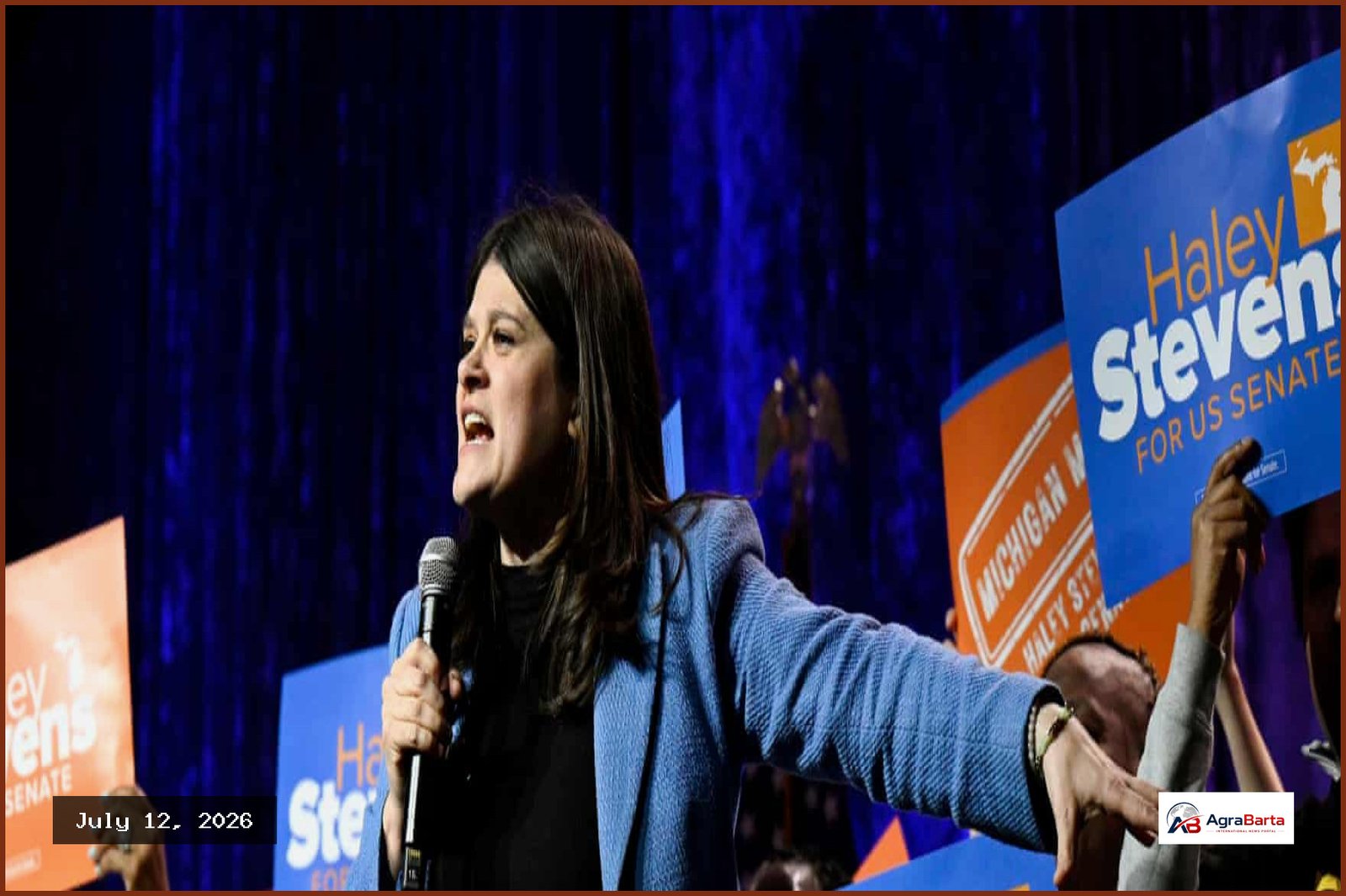
In response, Haley Stevens, a moderate US representative who is benefiting from pro-Israel spending in the same race, asserted her independence. She countered that Israeli Prime Minister Benjamin Netanyahu was publicly criticizing her, but emphasized her commitment to standing up to Israel when necessary. “No one owns my vote and no one owns my policies,” Stevens declared, highlighting her record of fighting for Michigan.
The delicate balance of rhetoric and policy regarding Israel has become a critical litmus test for candidates. In Michigan, the prominent role of foreign wars and substantial political spending in primaries has been particularly evident. El-Sayed has linked these conflicts to domestic affordability issues, advocating for investment in US healthcare, schools, and infrastructure over overseas military aid. His campaign has also highlighted Stevens’ past statements, including one suggesting Israel appears in her dreams.
The United Democracy Project, an Aipac-affiliated Super Pac, has reportedly spent approximately $11 million to support Stevens or oppose El-Sayed in the Michigan primary, with further ad buys planned. Patrick Dorton, a spokesperson for the Aipac Super Pac, stated their goal is to ensure pro-Israel Democrats have a voice in the primary process and to counter what he described as an “insidious attempt by fringe left socialists to drive pro-Israel Democrats out of the party.” He drew a parallel to the UK Labour party’s struggles, vowing not to let a similar situation occur within the US Democratic party.
Despite such efforts, pro-Israel groups are facing increasing challenges nationwide. In New York, several Democratic socialist candidates who openly opposed the war in Gaza have defeated incumbents. Similarly, a Democratic socialist in Colorado who spoke out against the conflict was victorious against a long-term representative. A doctor with experience working in Gaza also won a Democratic primary in New Jersey. While pro-Israel groups in Illinois attempted to influence Democratic primaries through PACs with unassuming names, their efforts were largely unsuccessful.
However, establishment-backed candidates, some supported by Aipac-affiliated groups, continue to secure victories in various races. Adrian Boafo, for instance, won a Democratic primary in Maryland with millions in support from pro-Israel organizations.
Tali deGroot, vice-president of political and digital strategy for J Street, a liberal pro-Israel and pro-peace lobby group, noted that foreign policy typically does not rank among the top five voter concerns in general elections. However, she added, it is an area where Democratic primary voters can discern differences between candidates. “A candidate’s willingness to buck the status quo of our foreign policy is a good example, a good symbol for them to show that they’re going to be willing to buck the status quo on all kinds of issues that people care about right now,” deGroot explained.
The ultimate impact of these issues on the general election, particularly in swing districts and states, remains uncertain. However, the war in Gaza, coupled with high gas prices, keeps these topics prominent in the news and on voters’ minds. For some voters, a clear stance on Gaza is a fundamental requirement of a progressive platform.
The debate surrounding Israel’s war in Gaza intersects with other key progressive concerns, including economic affordability and the influence of money in politics. Andy Levin, a former congressman who lost his seat to Stevens in 2022 after significant Aipac spending, believes that taking a position on Israel and Palestine reflects authenticity. He stated, “The Gaza issue almost exemplifies now the questions about authenticity and truth-telling in politics that the people are caring about.”
Francesca Hong, a democratic socialist state representative in Wisconsin running for governor, views support for Palestine as a matter of integrity. She noted that while some voters prioritize the Israel-Palestine issue, others recognize the connection between economic hardship and military spending. “Voters understand that a politician unwilling to fight against the massacre of children abroad (which we’re funding), they won’t stand up for folks back home,” Hong commented.
Darrin Madison, a democratic socialist state representative in Wisconsin, echoed concerns about special interests influencing elections, citing examples like Elon Musk’s substantial spending in a state supreme court race. He stated that affordability is consistently the number one concern for voters he meets, followed closely by questions about candidates being influenced by special interests.
DeGroot suggested that there should be space for nuance, allowing candidates to discuss the rights and needs of both Israelis and Palestinians, and to evolve their positions. However, she also observed that some discourse on the topic can devolve into bullying. Scott Wiener, a state senator running for Congress in California, recounted being harassed by protesters at a trans pride march, describing attempts to “corner me, touching me or trying to physically bully me out of a public event.”
In Democratic primaries, the Israel-Gaza war is a significant issue, igniting strong emotions. Misty Ramsey, a delivery driver from Macomb County, Michigan, shared that a song by Macklemore about a five-year-old girl killed in Gaza prompted her to research the conflict further, feeling the public had been “conditioned to not care.” She expressed strong disapproval of pro-Israel stances.
Ali Fawaz, an independent voter in Dearborn, Michigan, highlighted the direct ties many in his community have to Palestine and Lebanon, making them particularly sensitive to candidates’ positions on the issue. He expressed frustration with both major parties for their support of Israel and the significant spending by pro-Israel groups in elections, noting a lack of change in Middle East policy over the past 25 years regardless of the president.
Levin described a broader anti-establishment sentiment pushing back against Democratic inaction and a rejection of cautious, centrist candidates. He argued that seeking the middle ground is futile when many voters are disengaged, believing neither party will address their needs. “Are you awake? Are you paying attention? Do you see how mad Republican and Democratic primary voters are? They’re sick of it,” Levin stated.
Kat Abughazaleh, who ran in a Democratic primary for Congress in Illinois, found that voters frequently raised the Israel-Palestine issue, viewing it as a “litmus test for a lot of reasons.” As a Palestinian, she observed that Gaza was discussed equally in both the most conservative parts of her district and in Chicago.
Madison also characterized the issue as a litmus test for a candidate’s willingness to support marginalized communities. “If you aren’t willing to take that stance, what other communities are you willing to abandon? Is that folks of color, rural communities, working-class communities?” he questioned.
The United Democracy Project, an Aipac-affiliated Super Pac, has spent about $11m to boost Stevens or oppose El-Sayed so far, with more ad buys slotted for the last few weeks of the primary, which is set for 4 August. The group is one of the biggest spenders in congressional elections.
Ali Fawaz, 34, an independent voter in Dearborn, Michigan, said most people in his community have direct ties to Palestine or Lebanon, and seen their families affected by Israel’s attacks, making them more attuned to how candidates talk about the issue. There’s frustration at both parties for aiding Israel and over out