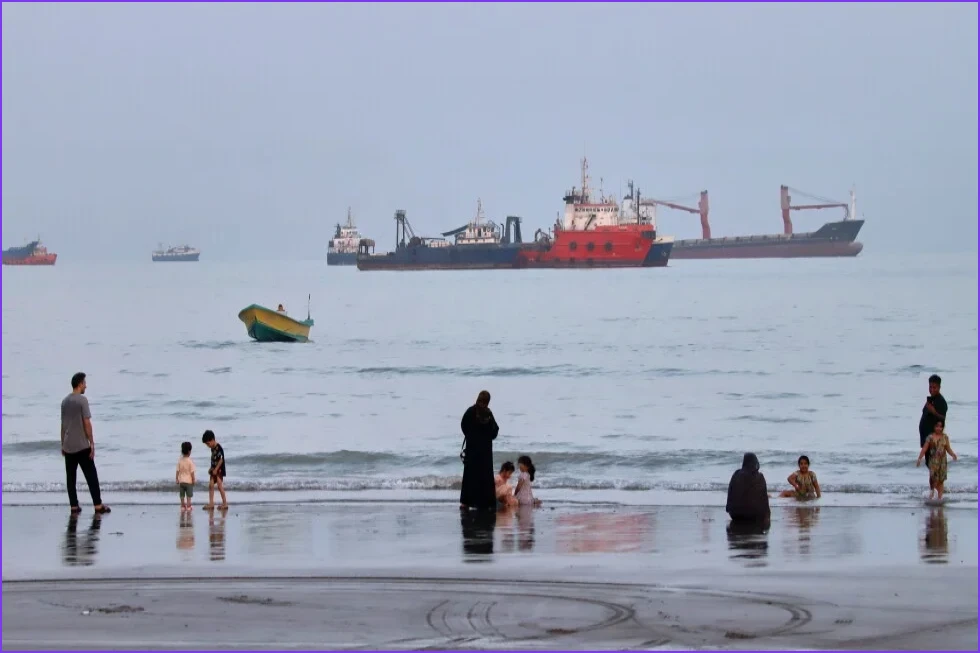
Iran is currently negotiating an agreement with Oman that would ban military vessels from transiting the Strait of Hormuz, according to a statement from Iran’s deputy foreign minister. The potential deal emerges as the two nations attempt to manage commercial shipping traffic through the critical waterway, which has remained largely closed for nearly six months since the outbreak of the war with Iran.
Under the proposed framework, inbound commercial shipping traffic heading into the Persian Gulf would utilize Iranian waters. Meanwhile, outbound commercial traffic would navigate a route passing partly through Iranian waters and partly through Omani waters, Iranian Deputy Foreign Minister Kazem Gharibabadi announced on state television late Tuesday. The negotiations represent a significant effort to regulate the vital maritime corridor amidst ongoing regional instability.
Diplomatic activity is expected to intensify on Thursday as Qatari Foreign Minister Sheikh Mohammed bin Abdulrahman Al Thani travels to Tehran. The Qatari Foreign Ministry announced on social media platform X that the visit aims to explore methods to de-escalate regional tensions and establish conditions that are conducive to dialogue. Tehran has confirmed these upcoming talks, which Majed Al Ansari, a spokesperson for the Qatari agency, said will also cover the "freedom of navigation" in the Strait of Hormuz and the necessity of returning to the pre-war status quo.
In a telephone interview with Al Jazeera on Wednesday, the U.S. president expressed confidence regarding the ongoing conflict, asserting that the United States is "winning very big" as the war with Iran approaches its six-month mark. He emphasized that he has "no time schedule" for the military campaign, stating he will do "whatever it takes." In a separate interview on Wednesday, Trump commented on the status of Iran's supreme leader, Ayatollah Mojtaba Khamenei, stating he believes Khamenei is "very seriously wounded" but still alive. Mojtaba Khamenei assumed the leadership role after his father, Ayatollah Ali Khamenei, was killed at the beginning of the war. Due to his severe injuries, the younger Khamenei has remained entirely out of the public eye.
The economic ramifications of the conflict continue to ripple across the region. Iranian Foreign Minister Araghchi criticized the "economic onslaught" recently declared by U.S. Treasury Secretary Scott Bessent. In a letter obtained by the media, Araghchi argued that the U.S. sanctions represent a deliberate campaign targeting Iranian civilians through the "intentional deprivation of access to food, medicines, medical equipment, energy and other necessities." Araghchi warned that international silence regarding such coercive measures risks normalizing violations of the United Nations Charter and international law. Meanwhile, the war's impact on commercial aviation was highlighted by Dubai International Airport, which reported a sharp decline in passenger numbers. The major global travel hub recorded 13 million passengers in the second quarter of 2026, bringing its first-half total to 31.5 million—a 31.3% drop compared to the same period last year.
Military deployments also continue to stretch resources, with Thai officials confirming on Tuesday that the U.S. aircraft carrier USS Abraham Lincoln will make a port stop in Thailand following its grueling deployment in the Middle East. Officials did not specify the date or location of the stop due to security concerns, but the carrier's record-setting deployment during the Iran war has sparked internal concerns regarding the deteriorating mental health of its crew.
Simultaneously, the fragile ceasefire in the nearly three-year Israel-Hamas war faces ongoing strain from continued military action in Gaza. On Wednesday, an Israeli airstrike targeted a tent housing displaced people in southern Gaza, killing one person and wounding at least four others, according to Gaza Health Ministry officials. The Israeli military stated it had targeted a "military operative" but did not provide additional details. Palestinians in Gaza have reported an increase in deadly Israeli strikes, while Israel maintains that its operations specifically target Hamas and other militant groups.
The disconnect between diplomatic progress and the situation on the ground was highlighted at the United Nations Security Council on Wednesday. Nickolay Mladenov, the head of Trump's Board of Peace, warned council members that the gap between agreed-upon frameworks and actual events is the primary threat to the peace process. Mladenov noted that Israeli strikes have persisted since the peace roadmap was accepted, resulting in ongoing civilian casualties. He remarked that while the ceasefire technically holds and overall casualties have decreased, a situation where "civilians are still buried" does not offer the people of Gaza a true sense of peace.
In response, Israel’s deputy U.N. ambassador, Noa Furman, affirmed to the Security Council that Israel remains committed to Trump's 20-point peace plan. However, Furman emphasized that the complete disarmament of Hamas must occur before any reconstruction efforts in Gaza can begin, adding that Israel is collaborating closely with the U.S. and the Board of Peace to meet this objective.
The threat of renewed violence has also impacted daily life for children in Gaza. Parents reported that children are dismantling their kites after Israel warned it would escalate military strikes in response to toys flying across the border into southern Israel. In past years, kites and balloons carrying incendiary materials have been launched from Gaza, starting fires in Israeli agricultural fields and communities. While Hamas has downplayed the threat posed by the kites, families in southern Gaza beach tents were seen taking the wood, plastic, and cloth toys apart. Local resident Atiya Abu Samhan lamented that the children have lost their education, childhood, and the simple enjoyments they once had.
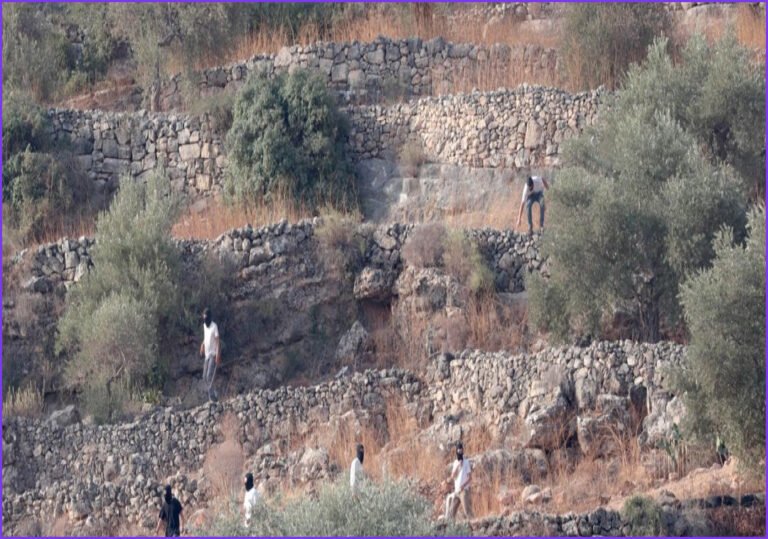
In the West Bank, Israeli Prime Minister Benjamin Netanyahu announced on Tuesday that his government has legalized more than 104 settlements and set up 160 farming outposts since he returned to office in 2022. Netanyahu has prioritized settlement expansion, which is widely considered illegal under international law, ahead of Israel's upcoming election. The occupied West Bank, home to approximately 3 million Palestinians and more than 500,000 Israeli settlers, has experienced a severe escalation in violence alongside the expanding Israeli presence.