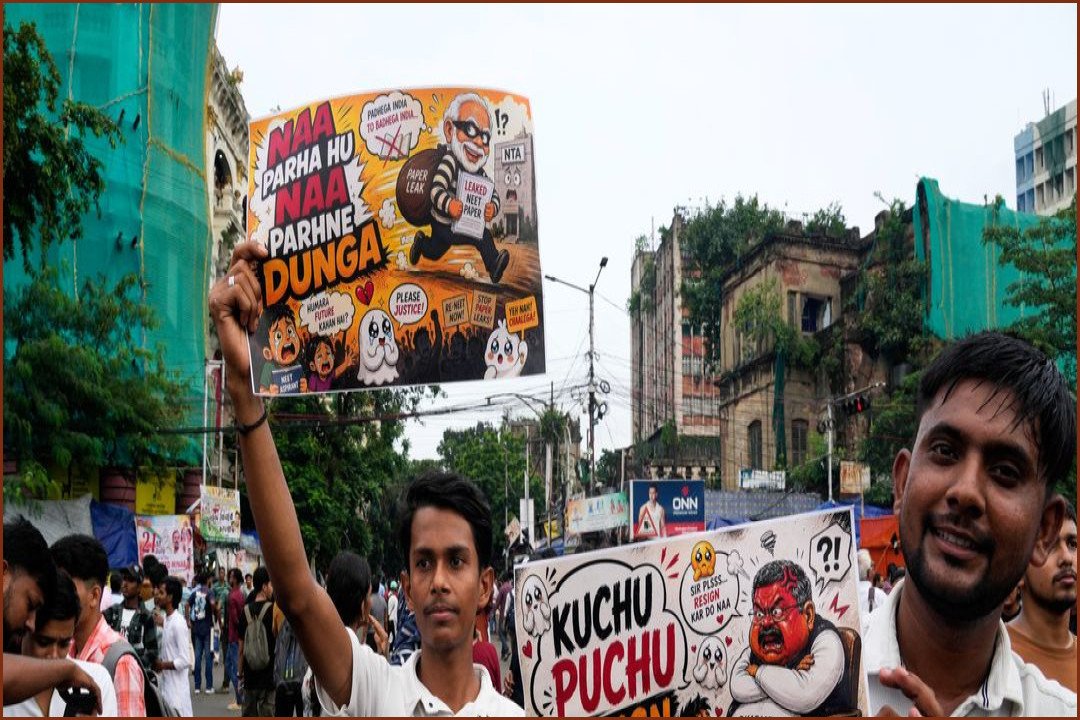
Celebrations broke out in Delhi following the resignation of India's Education Minister Dharmendra Pradhan, who stepped down after days of sustained, youth-led protests. The demonstrations were triggered by examination paper leaks in May that affected an estimated 2 million students. This resignation is viewed by analysts as a significant, albeit rare, challenge to the image of invincibility cultivated by Prime Minister Narendra Modi.
Prime Minister Modi has long built his political brand on the perception of unshakeable control and the belief that his government is immune to pressure from street protests. Abhijeet Dipke, founder of the Cockroach Janta Party, criticized the BJP, noting that for years the administration claimed resignations did not occur under their leadership. As tens of thousands of students camped at Jantar Mantar and police utilized tear gas against those marching toward Parliament, the government initially remained silent.
Jairam Ramesh, general secretary of the opposition Congress party, pointed out that Modi did not break his silence until July 23, and even then, his video message failed to address the student protests or the police brutality reported during the demonstrations. Political analyst Aditya Menon observed that the focus of the public outcry had shifted from the Education Minister directly to the Prime Minister himself. While the government previously reversed course on farm laws in 2020 after 18 months of protests, the response to this student movement has been faster, though the political consequences could be more severe.
Critics suggest the government's strategy of ignoring the protests created cracks in Modi's image. Even Ratan Sharda of the Rashtriya Swayamsevak Sangh, the ideological parent organization of the BJP, publicly criticized the party's media team for a failure to manage the protest narrative. A significant cultural shift was noted by many observers, as the slogan "Modi must resign" was openly chanted in the capital for the first time in his 12-year tenure. Rahul Gandhi, the Congress leader who was detained while marching toward the Prime Minister's residence, has demanded that those responsible for the police actions against students be held accountable and that Modi issue a personal apology.
While the minister has departed, the political atmosphere in India has undergone a transformation. A generation that was raised on the narrative that Modi does not yield has now witnessed a change in the government's stance, signaling that the fear once felt by protesters has shifted toward the administration itself.
Celebrationserupted in Delhi after India's Education Minister Dharmendra Pradhan quit after days of sustained youth-led protests demanding his resignation for examination paper leaks in May that affected about 2 million students.The resignation marks a rare but significant blow to Prime Minister Narendra Modi’s image of invincibility.For a prime minister who built his authority on the image of unshakeable control and whose political brand rests as much on Hindu nationalist fervour as on the perception that no street protest can move him,analysts sayresignation is a rare and stinging defeat.The founder ofthe CockroachJanta Party(CJP),Abhijeet Dipke, taking a dig at Modi’s BJP, said on Saturday,"We all made this happen together.
Twelve years, one month and 24 days after Narendra Modi was sworn in, the words "Modi must resign" were uttered full-throatedly for the first time without fear, in front of witnesses and cameras, on the streets of the national capital,Al Jazeeranoted.The fear, the outlet concluded, had switched sides.