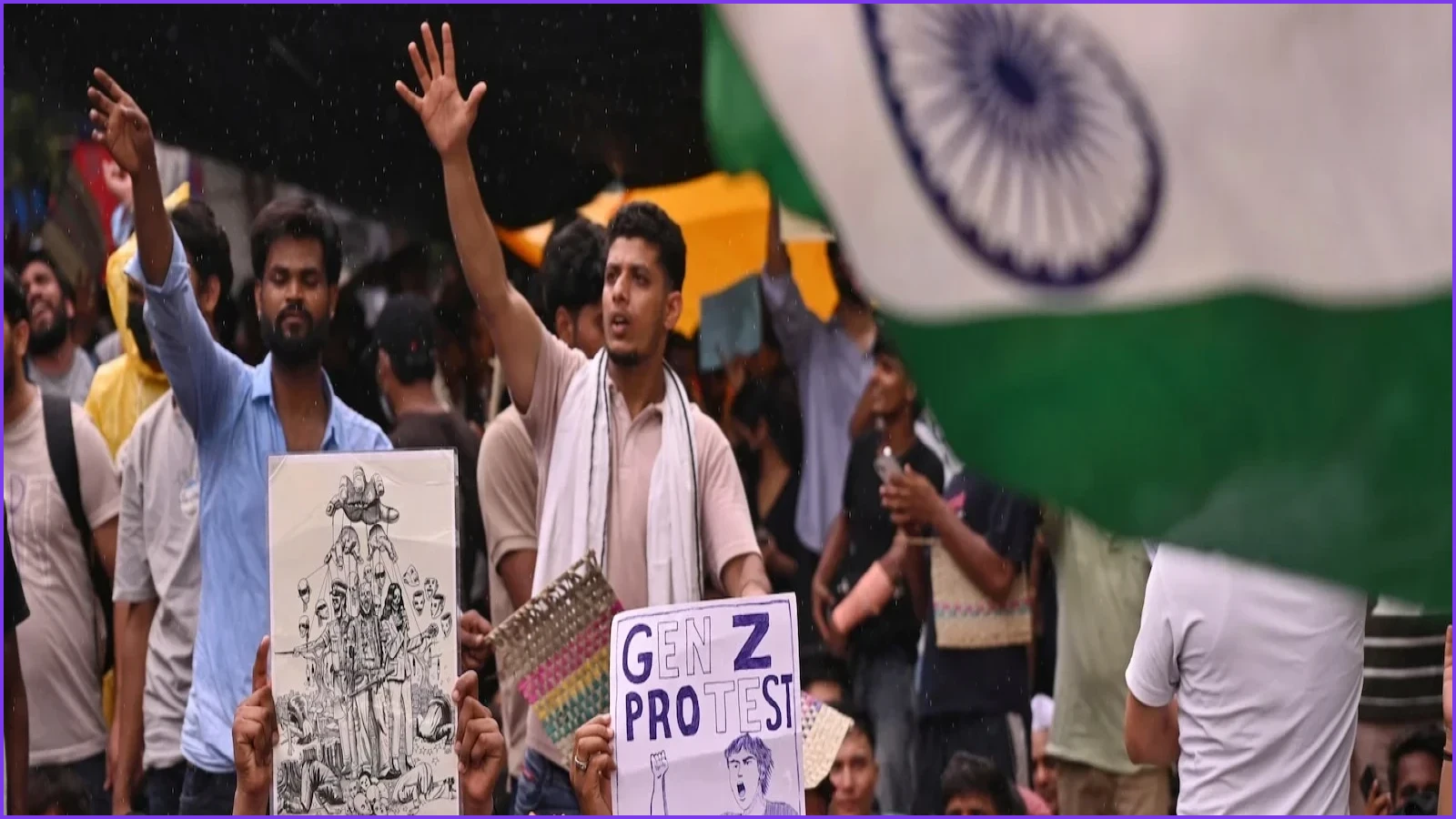
A youth-led protest movement in India has achieved a significant political victory, forcing the resignation of Education Minister Dharmendra Pradhan. The demonstrations, which gained momentum over several weeks, were spearheaded by young citizens who rallied under the banner of the "Cockroach Janta Party." This outcome marks a rare instance where Prime Minister Narendra Modi’s government has yielded to public pressure after more than 12 years in power.
Political analyst Nilanjan Mukhopadhyay, who authored a biography of the Prime Minister, described the resignation as a notable defeat for Mr. Modi. According to Mukhopadhyay, the success of the movement has effectively lowered the threshold of fear for citizens, emboldening people to protest against a government that has long faced accusations of suppressing dissent. The protests initially began in May as a satirical campaign centered on a single demand: the resignation of the education minister following leaks of critical exam papers that impact the futures of many young Indians.
As the movement spread, it evolved from a specific grievance into a broader demand for government accountability, transparency, and action regarding youth unemployment and the state of public institutions. The demonstrations were largely driven by young, urban Indians who utilized digital-first organizing strategies to coordinate their efforts. Mukhopadhyay noted that this was the first time student-led protests sustained enough momentum to force a major government concession without the involvement of established political parties.
Saurav Das, a spokesperson for the Cockroach Janta Party, emphasized that the group intends to remain a public watchdog rather than transition into a political party. He noted that an administration that had remained unmoved for over a decade was finally forced to respond when the youth united. While the movement has undeniably dented the image of Prime Minister Modi as a leader insulated from public pressure, it remains to be seen whether this energy will manifest as votes against the ruling Bharatiya Janata Party.
The government's response has shifted since the movement's inception. While officials initially dismissed the protests as insignificant, the growing size of the crowds eventually forced a change in approach. Prime Minister Modi has since spoken of forgiving those who mocked him, a move viewed as an attempt to reconnect with younger audiences. Furthermore, the Bharatiya Janata Party has begun increasing its outreach to Gen Z, with some lawmakers even adopting youth slang in parliamentary speeches.
The movement also saw widespread solidarity, with protests occurring in multiple cities and supporters providing food and supplies to demonstrators in New Delhi. The cause received public backing from opposition leaders, rights activists, and various Bollywood celebrities. Neha Bora, a student leader who participated in a hunger strike in the capital, stated that the movement proved ordinary citizens could still hold those in power accountable. She asserted that ministers must serve the people or face the consequences of their actions.
The resignation of education minister Dharmendra Pradhan last month, however, was a notable exception, experts say. Pressured by the “Cockroach” movement, the concession underscored the rising political influence of India’s population younger than 25, who make up nearly half the country, and a shift toward digital-firs
His party has expanded its outreach to Gen Z through online campaigns, with some party lawmakers adopting youth slang in public appearances, including speeches in Parliament. Many of India's cabinet members are 60 or older.