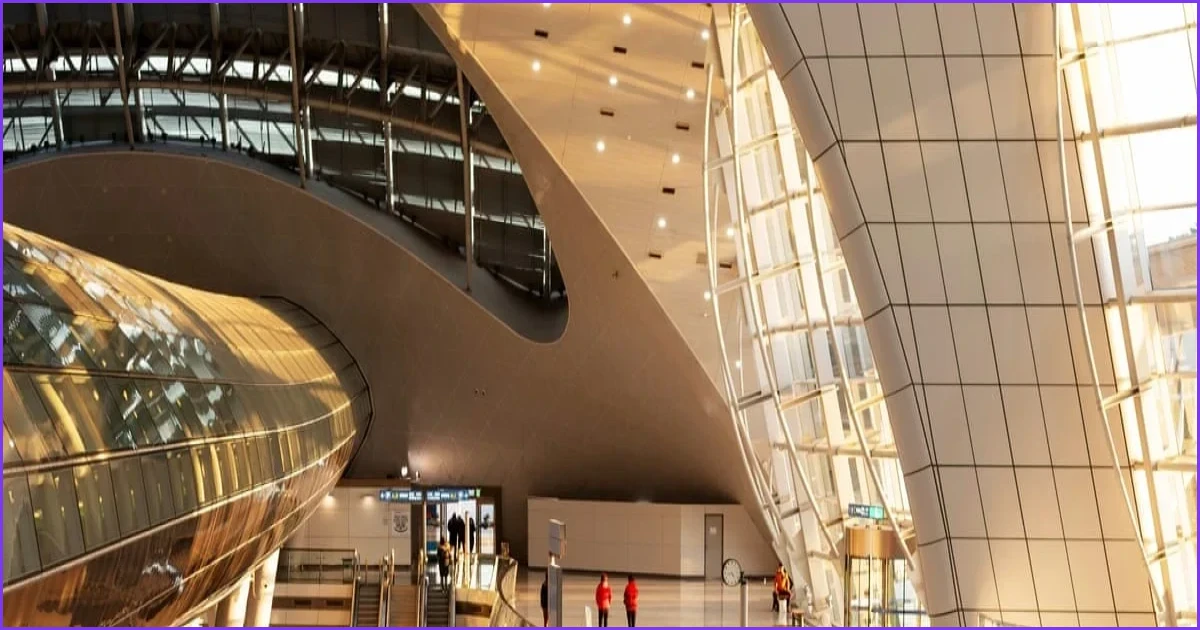
South Korea’s Incheon airport has ascended to the position of the world’s busiest airport for international passengers, a shift fueled in part by widespread travel disruptions across the Middle East. According to preliminary data provided by the Airports Council International (ACI), the main gateway located approximately 30 miles west of Seoul managed 38.39 million international passengers during the first half of 2026.
This performance marks the first time Incheon has reached the top of the international rankings since its opening in 2001. The facility has steadily climbed the global charts, moving from 10th place in 2002 to fifth in 2018, and holding third place throughout 2024 and 2025. In the current rankings, Incheon outperformed London’s Heathrow, which recorded 37.79 million international passengers, and Singapore’s Changi airport, which saw 34.53 million.
The Incheon International Airport Corporation (IIAC) attributed a portion of this growth to the ongoing US-Iran conflict. This regional instability has weakened the dominance of traditional Middle Eastern hubs like Dubai, resulting in a redirection of transfer traffic toward alternative routes through East Asia. Overall, Incheon saw a 6.3% year-on-year increase in international passenger traffic, supported by a significant rise in foreign visitors, who accounted for 39.3% of the airport’s total passengers during the first half of the year, up from 35.2% in 2025. This proportion hit a record 44.4% in the second quarter, driven largely by increased travel from Japan and China.
While Incheon serves 101 airlines flying to 183 cities, the airport has also expanded its capacity to 106 million passengers annually following a four-phase project completed in late 2024. Kim Beom-ho, the acting president of IIAC, credited the achievement to government support, public encouragement, and the dedication of airport staff. Meanwhile, Heathrow reported a record 40 million total passengers for the first half of the year, though its capacity to the Middle East dropped by 16.5% due to the regional conflict. Additionally, South Korea maintains the world’s busiest air route, with the corridor between Gimpo airport and Jeju island recording 14.4 million scheduled seats in 2025.