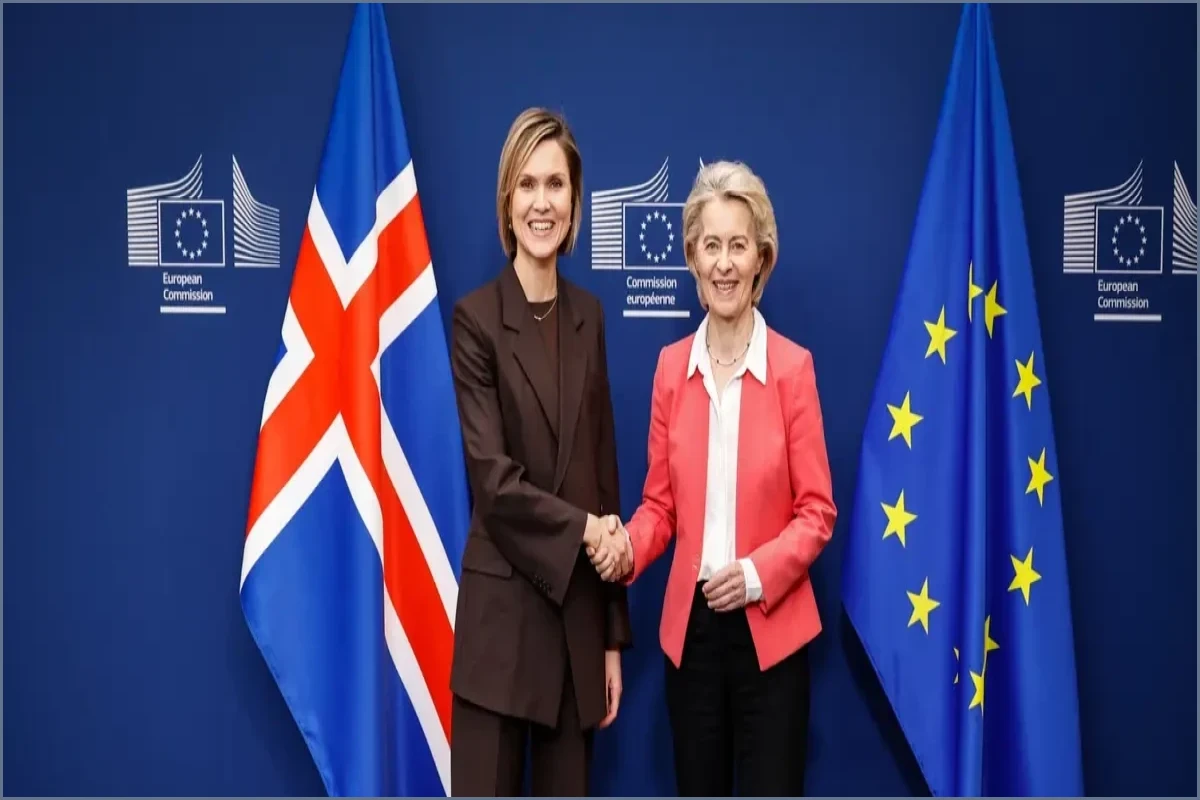
Iceland is revisiting the prospect of joining the European Union, a move spurred by shifting geopolitical realities and heightened security concerns. Although the Nordic nation, which has a population of nearly 390,000, formally applied for membership in 2009 following its financial sector collapse, those talks were suspended in 2015. Crucially, the application was never officially withdrawn, keeping the door open for a potential return to the negotiating table. However, public opinion on the island remains split, with a July poll showing 53 percent support for the move against 47 percent in opposition.
If Iceland were to proceed, its position would differ significantly from other candidates because it is already a member of the European Economic Area (EEA) and the border-free Schengen Area. Despite this, Tobias Etzold, a senior adviser at the Brussels-based European Policy Centre, highlights potential hurdles. He notes that as a small, young democracy, Iceland might struggle to wield influence, particularly in critical areas like fisheries, and face domestic reluctance regarding the surrender of sovereignty.
Beyond Iceland, there are ten other states currently seeking EU entry: Albania, Bosnia and Herzegovina, Kosovo, Montenegro, North Macedonia, Serbia, Turkey, Ukraine, Moldova, and Georgia. While all except Kosovo are officially recognized as candidates, the path to membership involves rigorous alignment with EU democratic values, the rule of law, and administrative reform across 33 negotiation chapters. At the time Iceland’s previous talks were paused, 27 chapters had been opened and 11 concluded.
The timeline for other aspirants varies. Montenegro, Albania, and Serbia are currently the most advanced in negotiations and could potentially access the bloc by the end of the decade. This progress is not without controversy; the European Parliament and several member states have expressed concern over Serbia’s alleged democratic backsliding and rule-of-law issues. Meanwhile, talks with Turkey remain frozen due to human rights and rule-of-law concerns, and accession for Ukraine, Moldova, and Georgia, while initiated following Russia's aggression, faces the practical reality that no country can join while involved in an active war.
Institutional expansion also raises broader questions about decision-making within the EU, particularly regarding voting rights and the requirement for unanimity. As Etzold points out, increasing the number of members with diverse political and geographical interests could make the decision-making process more cumbersome. In response to these pressures, Germany and France proposed in 2023 that the EU could develop in tiers, potentially creating an 'associated' member category for countries like those in the EEA, Switzerland, or even the UK.
But Icelanders are still divided about the decision. A July poll indicated support for "yes" at 53 percent and 47 percent for "no".
Who will be the next country to join the EU?