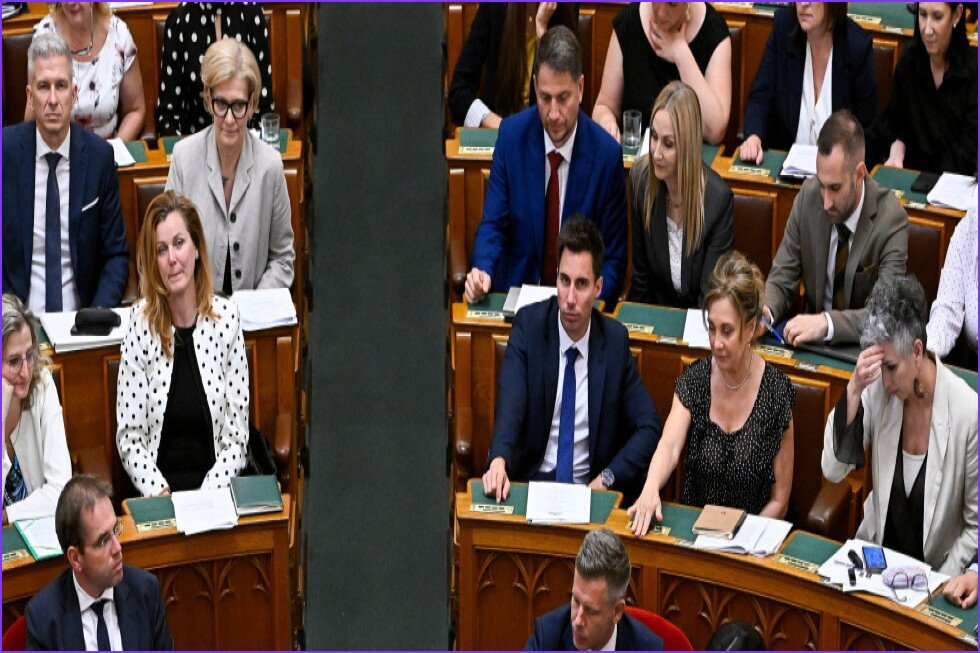
Hungary’s Parliament voted on Monday, July 13, 2026, to pass a constitutional amendment aimed at removing President Tamás Sulyok from office. The legislative action is part of a broader set of political reforms initiated by the new government, which intends to dismantle the political system established during the 16-year tenure of former Prime Minister Viktor Orbán. The amendment, described by proponents as a measure for “restoring rule-of-law democracy,” passed with 139 votes in favor and six against within the 199-member Parliament. While members of the pro-European, center-right Tisza party celebrated with a standing ovation, deputies from Orbán’s far-right Fidesz party boycotted the session.
Prime Minister Péter Magyar, who holds a two-thirds majority in Parliament following his landslide electoral victory in April, stated that the vote effectively closes an era and signals the start of a transformation of the Orbán legal system. Following the vote, Magyar told a news conference that his government had received a clear mandate from the Hungarian people to carry out these changes. For the amendment to become law, President Sulyok must sign it within five days. Although the president has not yet indicated his intentions, the Tisza party has declared its commitment to launching an impeachment procedure should he refuse. Magyar has consistently argued that Sulyok failed to perform his duties by not opposing the antidemocratic policies of the previous government, a stance he maintained throughout his campaign. Sulyok has thus far resisted calls to resign from his position.
Beyond the removal of the president, the new legislation introduces several judicial reforms, establishes an office tasked with investigating financial abuses that occurred under the Orbán administration, and implements a 12-year term limit for lawmakers. Fidesz caucus leader Gergely Gulyás, who announced his resignation following the vote because the term limit would prevent him from serving in the next national election, criticized the amendment as an unprecedented assault on the democratic order. Gulyás argued that the move breaks up the legal system and undermines the rule of law. Fidesz supporters have organized protests, including a planned candlelight vigil at the parliament building on Monday evening, to voice their opposition to what they termed the “tyranny” of the current government.
The role of the Hungarian president is largely ceremonial, yet it carries the responsibility of signing legislation and the authority to refer bills to the Constitutional Court. Supporters of the new administration have expressed concern that Sulyok, as an appointee from the previous era, could utilize these powers to hinder the current government’s agenda. Since taking office in May, Prime Minister Magyar has moved aggressively to remove political appointees and heads of institutions associated with the former regime. Recent actions include the suspension of the public television and radio news service, which the government labeled a “propaganda factory,” and the closure of the Sovereignty Protection Office, an entity critics previously accused of intimidating independent media and political dissenters.
Viktor Orbán, who was traveling to the United States for the final matches of the World Cup on Monday, responded to the parliamentary vote by posting a photograph of Prime Minister Magyar on social media with the caption, “Democratic Hungary: 1990-2026,” referencing the period since the country transitioned from state socialism. Last week, Fidesz also staged a protest against the reforms that drew approximately 3,000 people, though Orbán did not attend that event.