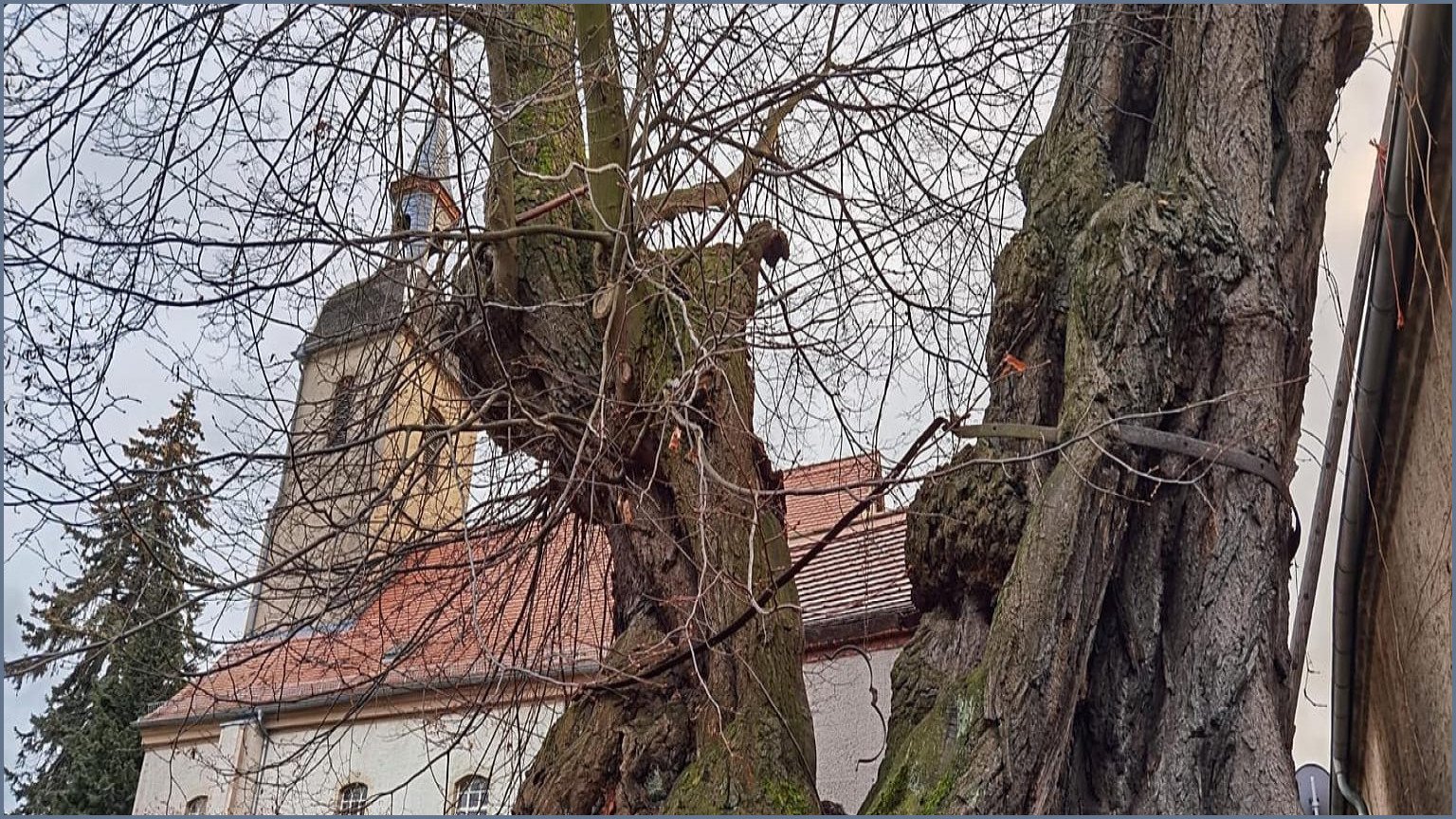
In the quiet village of Großpörthen, situated approximately five kilometres south-east of Zeitz in Saxony-Anhalt, a remarkable winter lime tree stands as a silent witness to centuries of local history. Positioned beside the village church, this impressive specimen is estimated by experts from the German Dendrological Society to be between 700 and 900 years old. With a trunk circumference of roughly 9.85 metres and a height of about twelve metres, it is widely considered the thickest known winter lime tree in Germany.
Beyond its botanical significance, the tree is famous for its historical function as a site for legal proceedings and public punishment. A rusty iron collar still attached to its trunk serves as a stark reminder of the era when public pillory punishments were a standard component of judicial practice. These iron collars, which were locked around the necks of convicted individuals, were documented across the German-speaking world as early as the 14th century.
This method of "shame" or "honour" punishment remained a common occurrence throughout the late Middle Ages and the early modern period, with records of its use persisting in German legal sources well into the 18th century. The primary intent behind this practice was public humiliation, aimed at destroying an offender's reputation, often in conjunction with corporal punishment. Depending on the specific judgment, those subjected to the pillory were sometimes forced to wear signs detailing their crimes, which ranged from minor theft, slander, and insults to disturbing the peace or violating moral norms and cheating on weights and measures.
Determining the exact age of the tree remains a challenge due to the natural thickening and overgrowth of the trunk, which has been exacerbated by its unusual location on a slope. Despite suffering significant damage in the mid-20th century, when a large portion of its trunk reportedly broke off, the lime tree has since recovered and is currently in good health.
While the Großpörthen tree is a notable landmark, Germany’s second-oldest tree is a summer lime located in Upstedt, Lower Saxony. Although the Upstedt tree served as a court tree in the 13th century, there is no evidence that it was ever utilized as a pillory like the winter lime in Großpörthen. The title of Germany's oldest tree recently shifted to a 1,100-year-old yew situated on an alpine pasture in the Allgäu.