Europe is currently navigating a fractured wildfire crisis as conditions vary significantly across the continent. While the most critical danger shifted to Greece this Sunday, major blazes in France and Spain have begun to stabilize, though the risk of renewed flare-ups remains a persistent concern for emergency services.
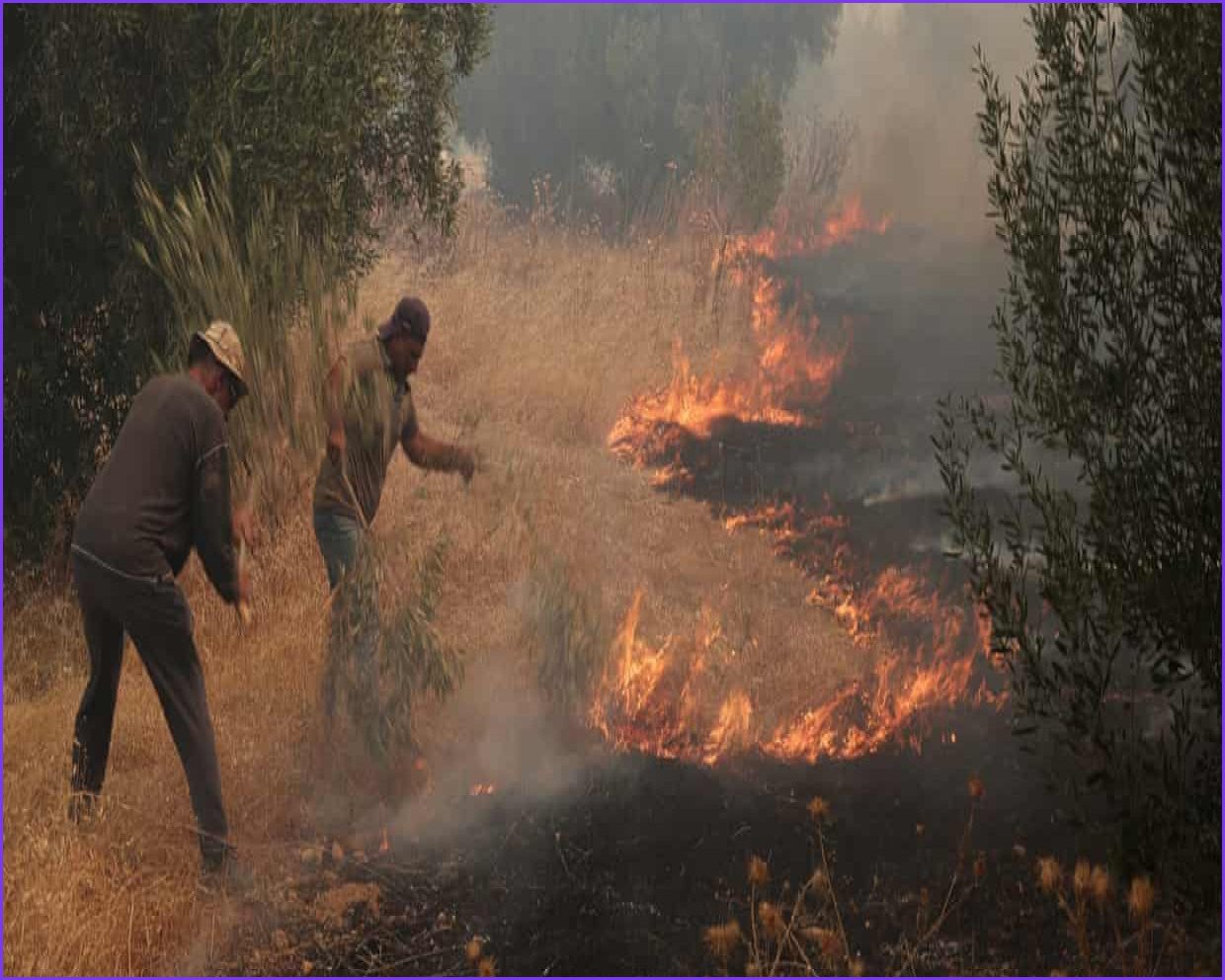
In Greece, gale-force winds have complicated firefighting efforts, driving flames deeper into western Attica. The fires are currently threatening villages and an industrial district located outside the city of Megara. Authorities have been forced to issue evacuation orders for the communities of Kandili, Agia Skepi, and Toutouli. Prime Minister Kyriakos Mitsotakis has been briefed on the situation, with officials expressing particular concern for Porto Germeno, a seaside community situated on the Gulf of Corinth. The fire, which originated on Friday near Agios Vasileios, has moved through the forested mountains west of Athens, with wildfire meteorologist Theodore Giannaros estimating that between 40 and 50 square kilometers (15 to 19 square miles) have been affected. Nearly 500 firefighters and 23 aircraft have been deployed, though violent gusts have frequently prevented aerial crews from collecting water from the sea. Local farmer Minas Tzortzanis described the devastation as total, noting the loss of a pristine forest.
The situation in Greece carries a somber historical weight, recalling the 2018 wildfire in Mati that claimed 104 lives. To facilitate emergency escapes, authorities previously evacuated 254 people by sea from Agios Vasileios on Friday and another 12 from Porto Germeno on Saturday, utilizing the coast as a last-resort route when roads become blocked by smoke and fire.
Meanwhile, in France, the massive Gironde fire has been contained, though it continues to burn across 420 square kilometers (162 square miles) of forest. While 224,000 people were previously forced to flee in what may be the largest peacetime evacuation in French history, the prefecture noted that the fire’s advance is now fixed. Despite this, the region remains under the highest red forest-fire alert due to dry conditions and high temperatures. The prime minister, Sébastien Lecornu, said France’s wildfires were generally under control but cautioned that conditions remained highly changeable. Additional support is arriving from Lithuania, Ukraine, and French Polynesia to bolster the nearly 3,000 firefighters already on the ground. In the south-eastern Var department, a separate fire near the Gros Bessillon hills has been stabilized, though it remains uncontained. Roughly 2,500 people were evacuated in that region, which has seen four major fires since July 19, including one that forced actor George Clooney and his family to evacuate earlier in the week. More than 1,170 sq km (452 sq miles) have burned across France since the beginning of the year.
Spain’s major fires have also ceased their advance, providing some relief to the region. Collectively, the disasters in France and Spain have displaced approximately one-third of a million people. According to the EU’s Copernicus Climate Change Service, Europe has warmed at more than twice the global average since the 1980s. Scientists at World Weather Attribution have concluded that human-caused climate breakdown doubled the likelihood of the extreme fire conditions currently impacting the continent.
Firefighting aircraft supported crews working to keep the flames away from villages among the vineyards, olive groves and wooded hills of the region known as Green Provence.
About 2,500 people were evacuated as the fire threatened communities.