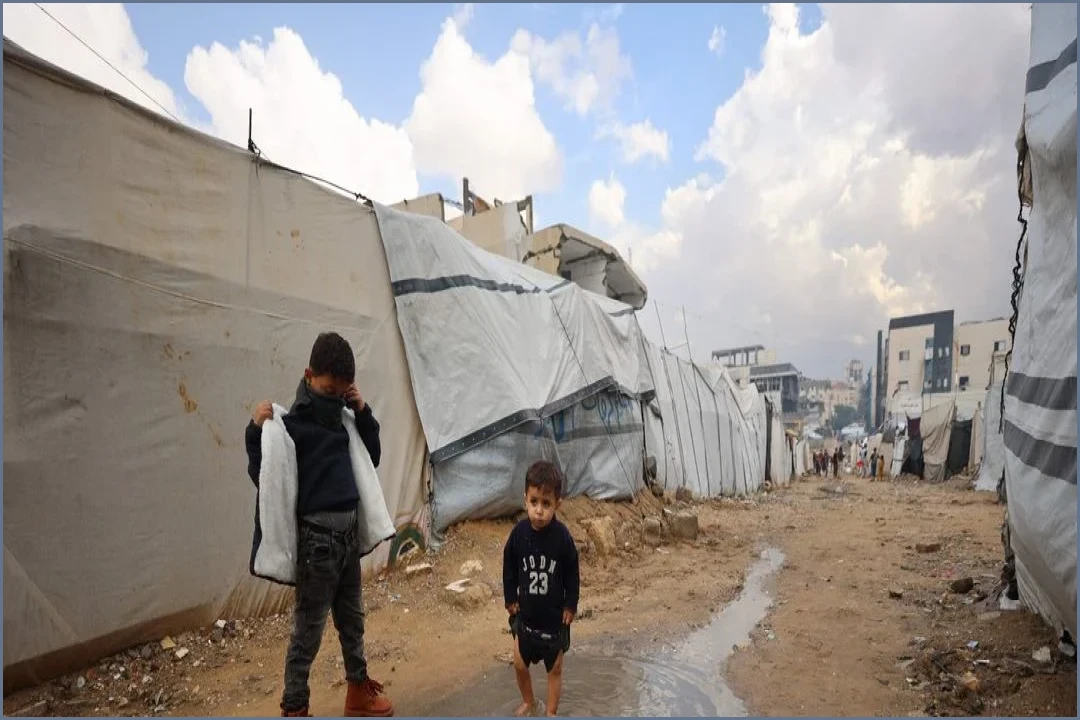
The World Health Organization (WHO) has issued a stark warning regarding a surge in respiratory illnesses across Gaza, noting that the situation is expected to deteriorate further following heavy rains that have flooded tens of thousands of tents housing displaced Palestinians. According to Dr. Reinhilde Van De Weerdt, the WHO representative in Palestine, the data already reflects significant pressure on the healthcare system, with acute respiratory infections currently 33,000 cases higher than they were at this time last year.
Health officials attribute the rise in infections to a combination of poor living conditions and severe overcrowding, as the population is increasingly compressed into smaller areas. This density has been exacerbated by the Israeli military's expansion of control, specifically through the advancement of the "Yellow Line," a demarcation originally established under a US-brokered ceasefire in October. Dr. Van De Weerdt explained that these conditions make the human-to-human transmission of viruses much more likely.
Currently, respiratory infections account for 11 percent of all medical consultations in the region. The WHO anticipates that the combination of cold weather, ongoing flooding, inadequate shelter, and poor ventilation will push these numbers even higher. Dr. Van De Weerdt emphasized the severity of the outlook, stating that the impact of just a few days of rain serves as a warning for the coming months, noting that "the worst really is yet to come" as winter has not yet fully set in.
The WHO estimates that nearly a million displaced people in Gaza are living in areas exposed to flooding, with 400,000 of them located in zones considered to be at extremely high risk. The agency further warned that standing water creates breeding grounds for mosquitoes and pests, while dampness encourages the growth of bacteria and mould, which are primary drivers of respiratory infections, particularly among young children. Meanwhile, COGAT, the Israeli military agency responsible for coordinating aid, has stated that equipment intended for the reconstruction of Gaza will only be permitted to enter once Hamas has been fully disarmed.
While some medicines are reaching the territory, the WHO reports significant challenges in obtaining laboratory supplies, which are essential for diagnosing patients before treatment. The agency has issued an urgent appeal for laboratory equipment to be allowed into Gaza to prevent a public health catastrophe.