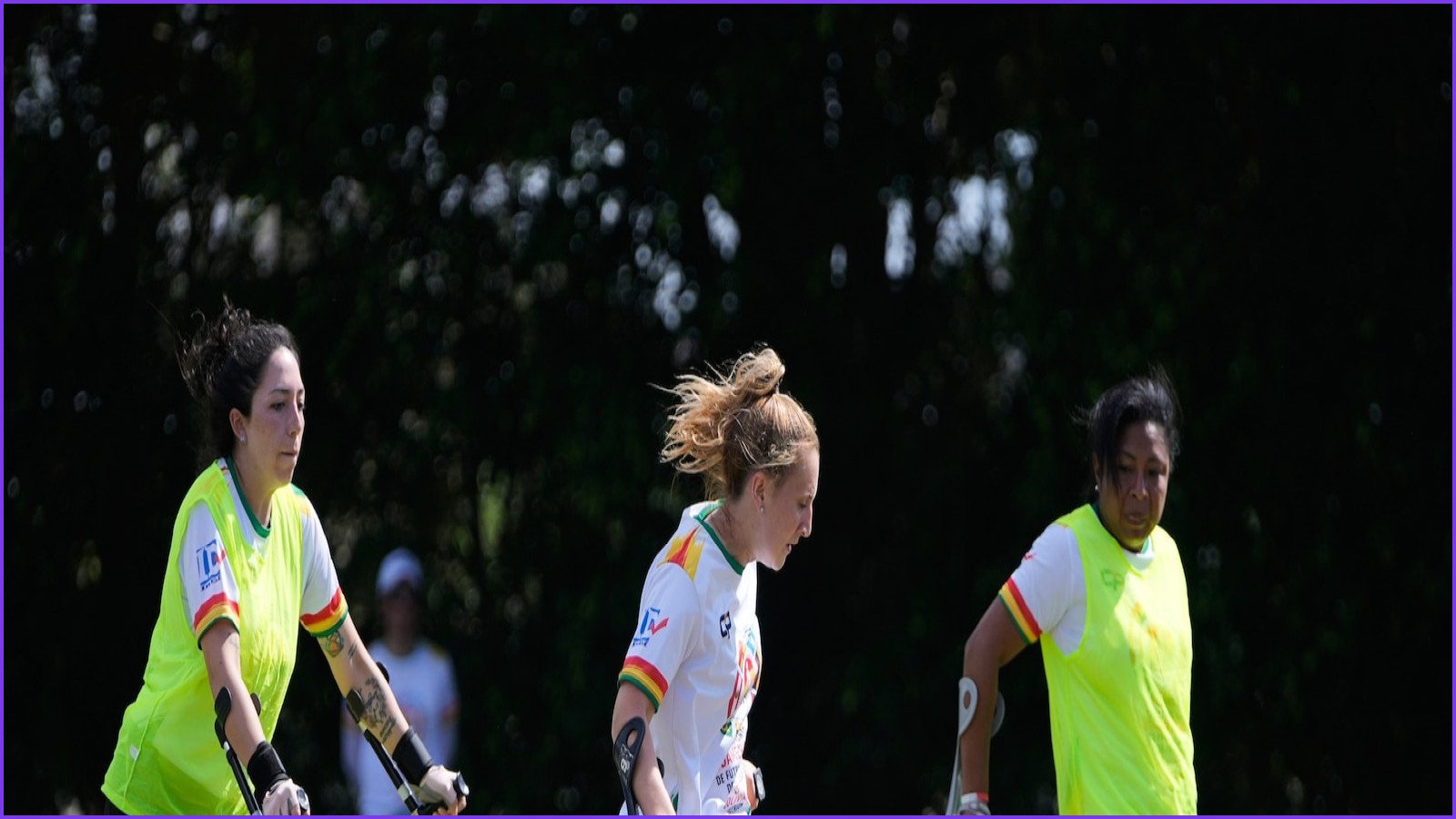
In the lowland city of Santa Cruz, Bolivia, a group of women recently completed a five-day training camp that serves as a milestone for the future of international amputee soccer. Nearly three dozen participants from 10 different countries—including Brazil, Argentina, Colombia, Ecuador, and host nation Bolivia—gathered to refine their skills in sprints, corner kicks, and defensive maneuvers. While the intensity on the pitch mirrored the high-stakes environment of the ongoing 2026 FIFA World Cup, the athletes faced unique challenges, with goalkeepers making saves using only one arm and field players navigating the grass on crutches.
This initiative represents the first training camp of its kind in South America for female amputees aspiring to compete in the 2027 Women's Amputee Football World Cup. Organized by the World Amputee Football Federation in partnership with local authorities and nonprofits, the camp provided comprehensive instruction on tactics, ball control, and the specific rules of the sport. Under official regulations for the seven-a-side tournament, all prosthetic limbs must be removed before matches begin, and while athletes use crutches to move across the pitch, they are prohibited from using them to touch the ball.
The training sessions were supported by elite athletes, including members of the U.S. Women’s National Amputee Soccer Team. Amie Donathan, a 21-year-old from the U.S. team who was born with one leg, described the experience as indescribable, noting that the community of amputees adapts quickly to physical challenges. For many participants, the sport provides both a physical outlet and a sense of belonging. Filomena Luna, a 50-year-old mother of six who lost a leg at age 11 due to an infection, emphasized that the training has been transformative. She hopes to eventually represent Bolivia on the international stage, stating that soccer has become an important escape for her.
The women’s version of the sport is still evolving, following the inaugural World Cup held in 2024, where Colombia claimed the title. While men have competed in international amputee soccer since the 1980s, with a World Cup held every four years, the women's game is now gaining momentum globally. Lidia Mayser, president of the sports council for the Santa Cruz region, stated that the goal is to help women realize their athletic dreams while working to establish a national federation and a competitive team for Bolivia ahead of the 2027 tournament, which is scheduled to take place in Poland.
The sport has grown steadily in recent decades, particularly in places scarred by war like Gaza and Rwanda.