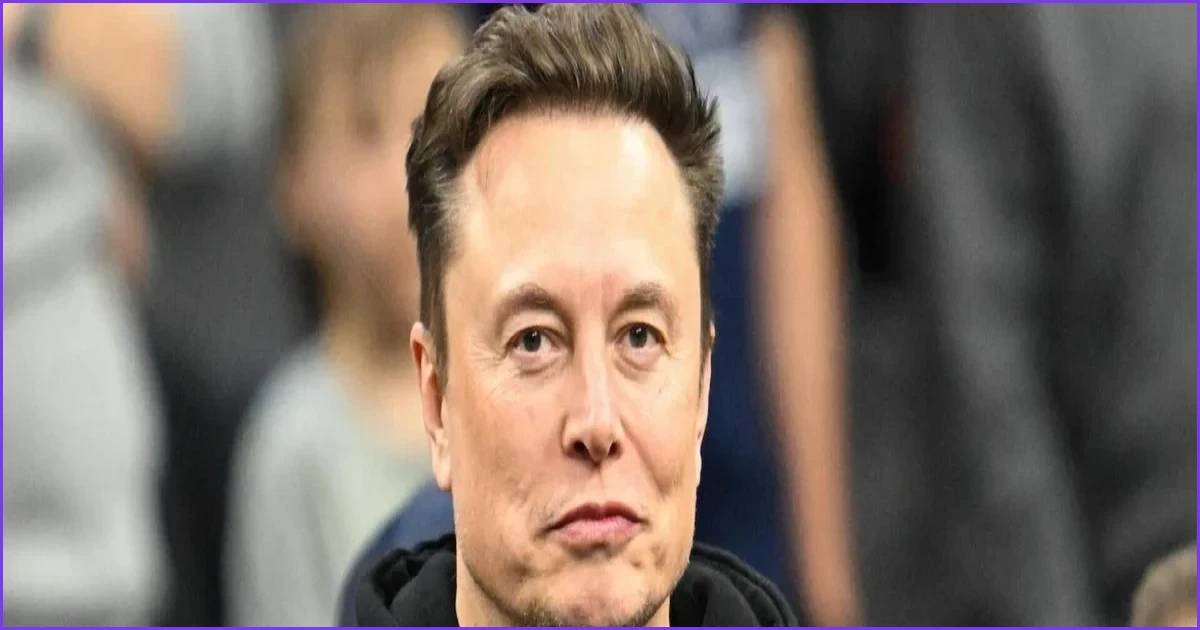
A decision by Elon Musk led to severe restrictions on Ukraine's access to SpaceX's satellite communications network, following multiple discussions between the billionaire executive and administration officials. Sources familiar with the matter indicated that Musk sought clarity regarding President Donald Trump's perspective on the ongoing war before issuing the order, driven in part by his distaste for SpaceX being perceived as profiting from the continued conflict between Russia and Ukraine.
How the order to curtail the service was technically executed remains unclear.
The sudden slowdown in satellite connectivity late last week has directly disrupted Ukrainian defense operations, impairing long-distance drone navigation, site protection efforts, and precision targeting across active combat zones. Ukrainian military sources reported that SpaceX imposed the restrictions on Starshield unilaterally, resulting in sudden technical difficulties that impeded fast-moving aerial operations.
Starshield is a specialized, military-grade satellite communications system developed by SpaceX for the U.S. government and its allies, relying on low-Earth orbit infrastructure similar to its civilian counterpart, Starlink. While standard Starlink terminals carry a speed limit of 70 km/hr above which signal quality rapidly degrades, Starshield normally operates without artificial speed caps and functions at speeds reaching 160 km/hr or higher.
Cruising at 160 km/hr or faster, Ukrainian strike drones rely on Starshield as the primary backbone for mid-range attacks. However, recent disruptions caused connection drops at speeds as low as 90 km/hr, rendering crucial drone platforms inoperable.
The operational degradation has imposed significant military and financial damage on Ukrainian forces. Dimko Zhluktenko, a drone pilot and analyst within the Armed Forces of Ukraine, estimated that the technical limits have cost the nation tens of millions of dollars in equipment losses and strategic setbacks. Ukrainian President Volodymyr Zelenskyy noted that the sudden speed caps prevented military units from utilizing Starshield to intercept incoming Russian Shahed attack drones.
Writing on social platform X, Zelenskyy warned that Russian forces were actively seeking to exploit connectivity disruptions affecting Ukraine's defense systems.
The disruptions have sparked confusion and conflicting statements within Washington. President Donald Trump stated on Monday that he was seeking details about who authorized the slowdown, telling reporters, "I don't know who it was, but I'd like to find out." Meanwhile, Defense Secretary Pete Hegseth denied that the Pentagon initiated any reduction in satellite capabilities.
Hegseth explained that the U.S. military had not issued directives or pulled back support, noting that Starlink retains the option to enforce compliance with its terms of service while adding that the U.S. wishes Ukrainian forces success.
Addressing the situation on X, Musk emphasized that SpaceX licenses Starshield technology directly to the U.S. government, asserting that government authorities hold ultimate operational oversight. "Any limits on speed or usage are decided by the US military and ultimately POTUS," Musk stated. Musk did not respond to direct requests for further comment.
The curtailment of critical communications has drawn sharp opposition from U.S. lawmakers. A bipartisan group of senators has formally requested that the Department of Defense's inspector general conduct an investigation into the matter. Republican Rep.
Mike Turner of Ohio publicly called for accountability, stating during a weekend television appearance, "There needs to be an investigation, we need to find out who these people are because lives are at risk and lives are lost over these things."
Diplomatic efforts to resolve the service disruption are ongoing. Zelenskyy confirmed that he discussed the Starshield and Starlink situation directly with U.S. Secretary of State Marco Rubio, emphasizing that full functionality needs to be restored. In a separate interview, Zelenskyy noted that while maximum operational speeds were set at 161 km/hr, operational constraints remained in place.
The satellite issues coincide with broader Ukrainian concerns regarding slowed deliveries of key interceptor missiles and unannounced Russian military strikes.
In response to questions regarding military support, a senior Pentagon official affirmed that there has been no change to Department of War policy concerning intelligence sharing or enabled capabilities provided to Ukraine by European allies. Nonetheless, broader diplomatic relations remain strained as President Trump has voiced growing frustration with Zelenskyy over peace negotiations.
Trump, who argues the conflict drives up global energy prices, recently granted waivers on Russian diesel purchases and waived certain sanctions against Moscow.
Although Trump recently announced a proposed "energy ceasefire" between the warring nations, strikes on infrastructure have continued, leading Zelenskyy to state that Ukraine will continue targeting Russian oil refineries as long as Russian attacks persist. Expressing his ongoing skepticism toward the Ukrainian leadership, Trump remarked, "I'm not a big fan of Zelenskyy."
The Wall Street Journal was first to report on Musk's order.
Regular Starlink terminals have a 70 km/hr speed cap, that is, the speed at which internet can be used in a vehicle in motion. At rates faster than the cap, the internet degrades and is no longer usable.